The Ocean's Secret Eyes: How Deep-Sea Fish See in Eternal Twilight
- Nishadil
- April 14, 2026
- 0 Comments
- 4 minutes read
- 33 Views
- Save
- Follow Topic
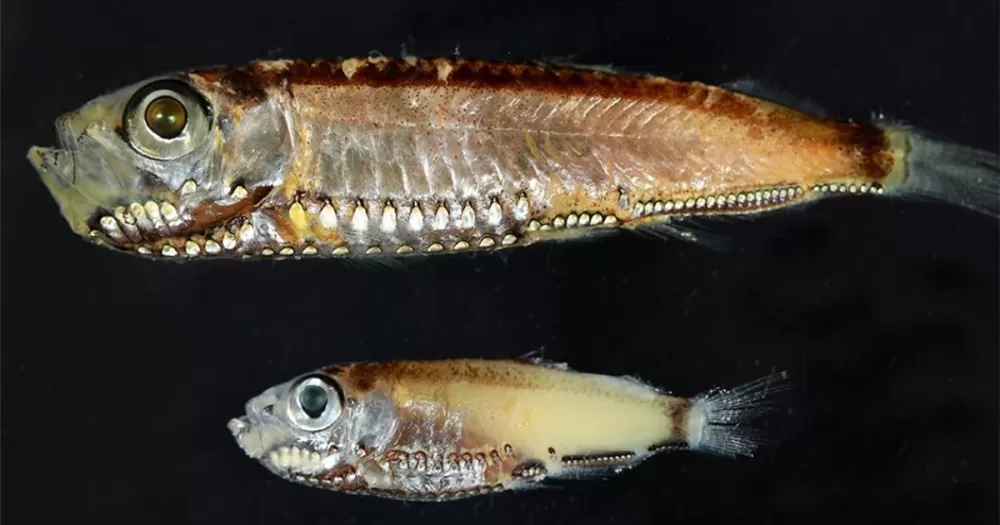
Unveiling Hybrid Rods and Cones: A Revolutionary Discovery in Deep-Sea Vision
Deep beneath the waves, where sunlight never reaches, a remarkable evolutionary adaptation allows certain fish to perceive their world. Scientists have uncovered "hybrid" photoreceptor cells, blending the functions of rods and cones, challenging our long-held understanding of vision and shedding light on the extraordinary survival mechanisms of deep-sea life.
Imagine a world where sunlight is nothing but a distant, forgotten memory. A realm of perpetual twilight, or more accurately, utter darkness. That's the reality for creatures living in the deep ocean, hundreds, sometimes thousands, of meters beneath the surface. For us, seeing in such conditions would be impossible. Our eyes, built for bright, colorful days, simply aren't equipped. But deep-sea fish? They don't just survive; many thrive down there, and scientists have just uncovered an incredible secret behind their extraordinary vision.
For decades, maybe even centuries, our understanding of vision has been fairly straightforward, at least in broad strokes. We learned about two main types of photoreceptor cells in our eyes, and indeed, in the eyes of most vertebrates: rods and cones. Rods, those super-sensitive workhorses, are fantastic for detecting dim light – think moonlit nights – but they sacrifice color perception. Cones, on the other hand, are your vibrant, detail-oriented cells, great for bright conditions and crucial for seeing the world in all its glorious hues. It’s a neat division of labor, right?
Well, it turns out nature, especially in the extreme environments of the deep sea, loves to throw us a curveball. Researchers have made a truly fascinating discovery: certain deep-sea fish possess what they’re calling "hybrid" rods and cones. Yes, you heard that right – cells that seem to blend the best, or perhaps most essential, features of both traditional photoreceptor types. It's a bit like finding a creature that's part bat, part bird, if you can imagine the visual equivalent for cellular biology!
Take the silver spinyfin, for instance, or the mirrorwing gasteropelecidae – these aren't your average aquarium fish. Living in the abyssal zone, they operate in a world where every photon of light is precious. What these studies have revealed is that their eyes contain photoreceptor cells that, while looking somewhat like cones morphologically, possess the genetic machinery and pigment (like rhodopsin, typically found in rods) to be incredibly sensitive to dim light. They essentially get the super-sensitivity of a rod but with the faster response times and potentially even some limited color discrimination that we usually associate with cones.
Think about the evolutionary pressure here. If you’re living in a realm where light sources are rare flashes from bioluminescent organisms – say, a potential meal or a dangerous predator – you need eyes that can catch every single photon. But simply having a ton of rods might not be enough. If you could also get a bit of that cone-like sharpness or the ability to distinguish different wavelengths of faint light, even subtle variations, it would be a massive advantage. This is where these hybrid cells come into play, offering a visual edge in an otherwise visually impoverished environment.
The implications of this discovery are pretty profound. It challenges our long-held textbook definitions of rods and cones and suggests a much more fluid, adaptive evolutionary pathway for vision than we previously imagined. It means that, over millennia, faced with the unique challenges of the deep sea, life found an ingenious way to rewrite the rules of vision. These fish didn't just tweak existing systems; they seemingly fused them, creating something entirely new and incredibly effective.
So, the next time you picture the vast, dark expanse of the deep ocean, remember those extraordinary eyes. Eyes that don't conform to our conventional understanding, but instead, beautifully illustrate the boundless innovation of evolution. It just goes to show, doesn't it, that even in the darkest corners of our planet, life continues to surprise us with its remarkable adaptations, pushing the boundaries of what we thought was possible.
- UnitedStatesOfAmerica
- News
- Science
- ScienceNews
- Evolution
- Fish
- DeepOcean
- Vision
- MarineBiology
- UniversityOfQueensland
- DeepSeaFish
- UniversityOfQueenslandResearch
- Rhodopsin
- Photoreceptors
- TwilightZone
- LarvalDeepSeaFish
- FlexibleVisualSystems
- VertebrateVisionScience
- DeepSeaFishVision
- EvolutionaryVisionFlexibility
- NewVisionDiscovery
- LowLightVision
- HybridPhotoreceptorCells
- ConeSpecificGenes
- DeepSeaEnvironment
- PhotoreceptorCellFunction
- RetinaCellResearch
- RodConePhotoreceptors
- MarineExpeditions
- HybridRods
- HybridCones
- AdaptiveVision
Editorial note: Nishadil may use AI assistance for news drafting and formatting. Readers can report issues from this page, and material corrections are reviewed under our editorial standards.