The Nuclear Renaissance: Swappable Cores Paving the Way for a New Era of Energy
- Nishadil
- October 18, 2026
- 0 Comments
- 4 minutes read
- 8 Views
- Save
- Follow Topic
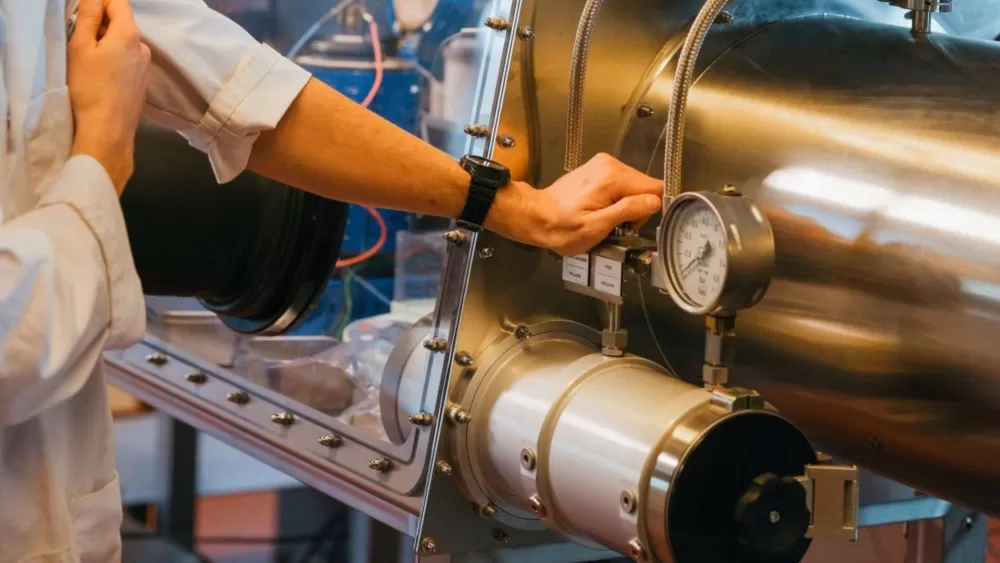
Terrestrial Energy's IMSR Pioneers Swappable Reactor Cores, Aiming for a 50-Year Nuclear Power Revolution
North Carolina-based Terrestrial Energy is challenging conventional nuclear design with its Integral Molten Salt Reactor (IMSR), featuring modular, swappable cores designed to simplify maintenance, extend plant life, and reshape the economics of clean energy.
Imagine a future where nuclear power isn't about lengthy, complex refueling shutdowns, but rather quick, almost modular replacements. That’s precisely the audacious vision Terrestrial Energy, a forward-thinking company based out of North Carolina, is bringing to life with their Integral Molten Salt Reactor (IMSR) design. It’s a genuinely exciting shift, focusing on something rather ingenious: swappable cores that could fundamentally redefine how we approach nuclear energy.
At its heart, the IMSR concept is incredibly elegant. Think of it like swapping out a car engine after years of service, rather than painstakingly replacing individual parts. This design integrates the reactor core and its primary heat exchanger into a single, sealed unit. This entire 'engine' is engineered to operate efficiently for about seven years. Then, instead of a traditional, drawn-out refueling process, the whole unit is simply replaced with a fresh one. The power plant itself, a robust piece of infrastructure, is built to last a remarkable 50 years. This approach, you see, promises to dramatically simplify maintenance, boost operational efficiency, and, crucially, slash costly downtime – a stark contrast to older designs, like the MIT Nuclear Reactor Laboratory, which, for example, typically refuels three to four times a year.
Now, getting innovative nuclear technology off the drawing board and into operation isn't just about brilliant engineering; it's also about navigating a famously complex regulatory landscape. Terrestrial Energy is making a bold, strategic move, having recently petitioned the Nuclear Regulatory Commission (NRC) on October 8th. Their argument? That building the non-nuclear 'Thermal and Electric Facility' (TEF) portion of their plant first shouldn't, by definition, count as nuclear construction. If they can convince the NRC to agree, it could potentially allow them to generate revenue much sooner, tackling that notorious 'decade-long cash burn' that often plagues large-scale nuclear projects. It's a clever strategy, really, designed to accelerate deployment and de-risk investment, but whether the NRC will ultimately see eye-to-eye with them on this remains one of the big questions hanging over this innovative approach.
This isn't just a standalone idea, of course; it's part of a much larger, global push towards next-generation nuclear energy, often referred to as 'Generation IV' reactors. This international effort, championed by the Generation IV International Forum (GIF) — an initiative born from the US Department of Energy back in 2000 — brings together nations from the US to Japan, Canada to the EU. They’re all collaborating, sharing R&D, to develop nuclear power that’s safer, more efficient, and ultimately more sustainable. While some Gen IV designs, like certain 'battery' model reactors or Lead-cooled Fast Reactors, boast impressive core lives of 15-20 years, the IMSR's 7-year swappable core offers a unique blend of longevity and modularity that truly sets it apart. It’s also worth noting, just for context, that the Gas-cooled Fast Reactor (GFR) stands out among these as the only Gen IV design currently without a direct operating predecessor, which just goes to show how much groundbreaking work is happening across the board.
The molten salt reactor concept itself has a fascinating history and tremendous promise. The very idea of using liquid fuel, or fuel dissolved in a liquid salt, offers inherent safety advantages and potentially more efficient fuel utilization. Companies like Thorizon, collaborating with TNO in the Netherlands, are actively engaged in crucial materials research for these very reactors, pushing the boundaries of what’s possible with molten salts and addressing the engineering challenges of working with such unique mediums.
So, what does all this mean for our collective energy future? Well, if Terrestrial Energy's IMSR succeeds in its ambitious goals, it could fundamentally change the economics and deployability of nuclear power. By streamlining maintenance, potentially reducing initial construction timelines, and offering a robust, long-lasting power plant with a simpler 'core swap' model, it directly addresses some of the biggest hurdles nuclear energy faces today. It’s about making nuclear energy not just safe and clean, but also more practical, predictable, and appealing for a world hungry for reliable, carbon-free power. It’s a compelling vision, to be sure, and one that many are watching very closely indeed.
Editorial note: Nishadil may use AI assistance for news drafting and formatting. Readers can report issues from this page, and material corrections are reviewed under our editorial standards.