
The Market's Shifting Tides: Why Late March Marked a Crucial Turning Point
- Nishadil
- April 21, 2026
- 0 Comments
- 5 minutes read
- 32 Views
- Save
- Follow Topic
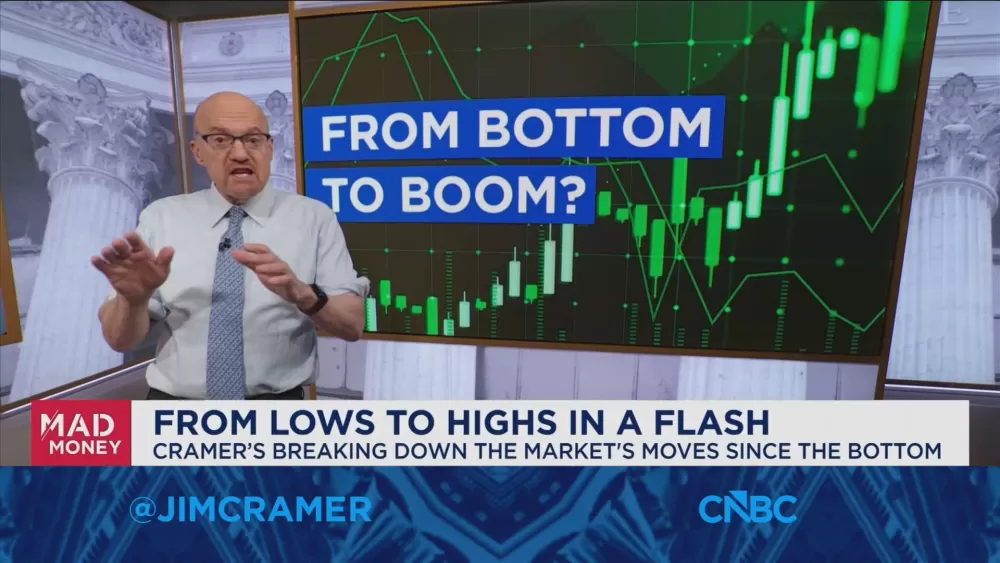
Jim Cramer Pinpoints Late March as the Moment Everything Changed for Investors
Jim Cramer argues that late March 2026, when expectations for interest rates peaked, fundamentally altered the market's trajectory, shifting from widespread fear to cautious optimism and new growth opportunities.
You know, there are moments in financial history that, in hindsight, just scream 'turning point.' And according to the ever-watchful Jim Cramer, for the year 2026, late March was precisely that moment. It wasn't just another day on the calendar; it was, as he put it, when the market's deepest fears about interest rates finally peaked, setting the stage for a dramatic shift in investor sentiment and, ultimately, market direction.
Think back to the mood leading up to that point. It felt like everyone was walking on eggshells, right? The air was thick with anxiety. Inflation was a boogeyman, and the Federal Reserve, in its determined fight, seemed ready to hike rates indefinitely. Bond yields were soaring, recession fears were practically a daily headline, and many investors found themselves paralyzed, unsure where to turn. Every piece of economic data, every Fed official's utterance, was scrutinized, dissected, and often interpreted as a harbinger of doom. It was, to put it mildly, a tough environment, especially for growth stocks and anything sensitive to borrowing costs.
But then, late March arrived. What does Cramer mean by the 'rate peak' then? It’s not necessarily that interest rates physically hit their absolute highest point that very day, but rather that the market’s expectation of future rate hikes reached its absolute zenith. It was the moment, that collective 'Aha!' where the consensus shifted from 'how much higher can they possibly go?' to 'okay, this is probably as bad as it's going to get on the rate front.' The most aggressive rate hike scenarios, the ones that kept us up at night, started to fade from the realm of possibility. That's a huge psychological hurdle cleared.
And here's the thing about psychology in the markets: it’s everything. Once the fear of perpetually rising rates began to recede, even slightly, it unlocked something profound. It was a sigh of collective relief, a quiet acknowledgment that perhaps the worst-case scenario had already been priced in, or at least wouldn't get worse. This isn't to say all problems vanished overnight, but the narrative started to change. Instead of obsessing over when the next hike would come, people began to cautiously wonder when the Fed might pause, or even, dare I say it, cut rates down the line. That's a monumental shift in focus.
With this pivot in perception, the market began to re-evaluate. Assets that had been brutally punished purely because of higher discount rates – think tech stocks, innovative growth companies, or even some cyclical businesses – suddenly looked less terrifying, perhaps even attractive again. The focus slowly, gradually, shifted from the overarching macro fear back towards individual company fundamentals. Strong balance sheets, compelling products, and genuine growth stories started to regain their luster, rather than being overshadowed by the relentless march of interest rates.
Cramer, with his keen eye for market dynamics, likely saw this palpable shift unfolding. He’s often ahead of the curve in identifying these underlying currents. His insight underscores a crucial lesson: the market often turns when sentiment is at its absolute worst, not when all the good news is out. It’s about anticipating the psychological bottom, seeing the early cracks in the wall of worry that others are still building. Those who were paying close attention in late March 2026, Cramer suggests, had a chance to position themselves for what came next.
Now, while rates were undoubtedly the main catalyst, it’s rare that a market turning point is just one thing. This shift in late March might also have coincided with subtle signs of inflation easing, or corporate earnings proving surprisingly resilient despite the challenging economic backdrop. The rate peak simply acted as the crucial hinge, allowing other positive, albeit nascent, factors to finally come into play and influence the broader market narrative. It’s almost like the market needed permission to look for good news again, and the peaking rate expectations provided it.
So, what's the takeaway for us, the everyday investors? Cramer’s observation is a powerful reminder that market bottoms often occur amidst peak pessimism. It highlights the importance of not just reacting to headlines, but trying to understand the underlying psychological and fundamental shifts. Identifying these turning points isn't easy, but being prepared to act when others are still panicking – or when the very thing causing the panic shows signs of peaking – can be incredibly rewarding. It means looking for opportunities even when the overall mood feels bleak, trusting your analysis, and maintaining a diversified, thoughtful approach.
Ultimately, late March 2026, as championed by Jim Cramer, wasn't just another data point; it was, he argues, a pivotal moment, a fundamental and psychological pivot that redefined the market's trajectory. It’s a classic example of how a shift in one key variable – in this case, interest rate expectations – can unlock a whole new chapter for investors, proving once again that market cycles are as much about human emotion as they are about cold, hard numbers.
Editorial note: Nishadil may use AI assistance for news drafting and formatting. Readers can report issues from this page, and material corrections are reviewed under our editorial standards.













