The ‘Lost’ Venomous Primate That’s Still Sneaking Into Indonesian Gardens
- Nishadil
- October 23, 2026
- 0 Comments
- 3 minutes read
- 13 Views
- Save
- Follow Topic
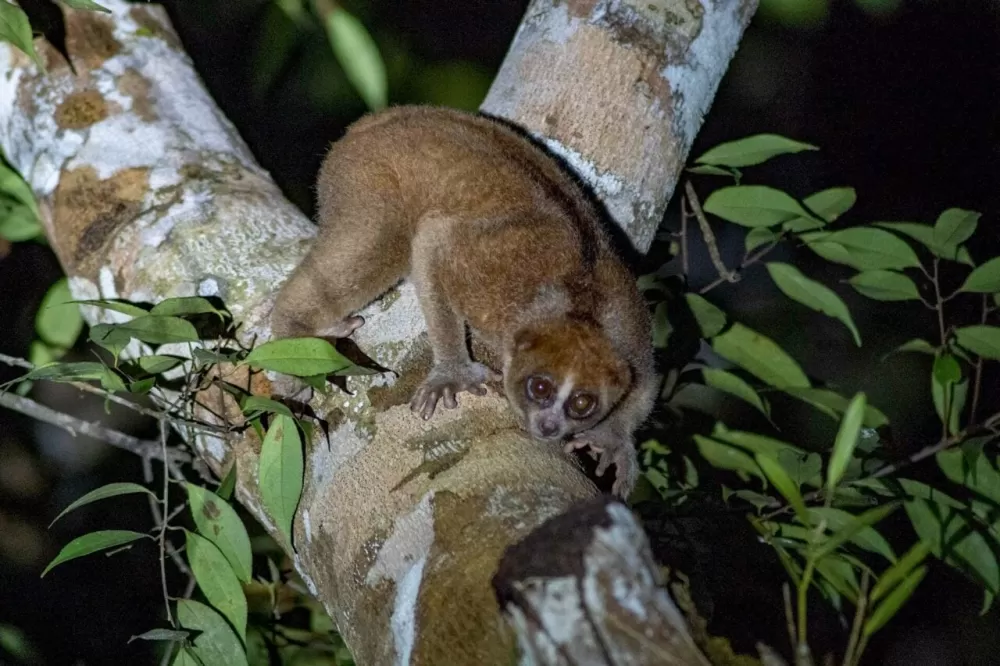
After 89 years of presumed extinction, the Bangka slow loris is back on the radar – and it’s showing up in backyards.
A series of rescues by Indonesia’s Alobi Wildlife Rescue Center prove the critically endangered, venom‑bearing Bangka slow loris isn’t extinct, but it’s teetering on the brink.
For almost a century the Bangka slow loris (Nycticebus bancanus) was a phantom – a tiny, wide‑eyed primate that vanished from scientific records after 1937. Most people assumed it was gone, perhaps a footnote in an old field guide. Yet, beginning in 2015, a modest wildlife rescue outfit on the island of Bangka started turning up the little creature in the most unexpected places.
Alobi Wildlife Rescue Center, a small but dedicated team, began picking up stray lorises that had wandered into gardens, clung to power lines, or ended up in the hands of local traders. Over a decade they catalogued roughly ninety individuals that matched the distinctive fur pattern and coloration of the Bangka species. When they compared notes with taxonomists, the picture became crystal clear: the species was not extinct – it was merely hiding in plain sight.
What makes the Bangka slow loris especially unsettling is its rare venom. Unlike any other primate, it produces a toxin in a gland on the inside of its upper arm. When the loris licks the gland, the venom mixes with its saliva, turning a bite into a potentially deadly sting. In humans the reaction can be severe enough to trigger anaphylactic shock. It’s a bizarre, almost cinematic defense mechanism that few mammals possess.
Size‑wise the Bangka is on the smaller end of the slow loris family, topping out at about ten inches (25 cm) long. Its compact build, combined with nocturnal habits, makes it a master of stealth. Yet the very environments it now inhabits – crowded villages, fragmented forests, and sprawling oil‑palm plantations – have forced it into closer contact with people.
Alobi’s records paint a vivid, if unsettling, portrait of this interaction. Sixteen rescued individuals were found rummaging through backyards or perched on porch railings. Another five turned up in local wildlife markets, while a handful were discovered tangled in fences or snarled in electric wires, some suffering burns that resembled second‑degree injuries. Even a dog attack was documented.
“It’s astonishing how a charismatic, unmistakable primate could slip through the scientific net for so long,” said Timon Glaw, a biodiversity researcher and co‑author of the new study published in Spixiana. “Bangka Island is just an hour’s flight from Jakarta – a megacity – yet we knew next to nothing about the loris living right under our noses.”
The reasons for its near‑invisibility are not just biological. Illegal tin mining and aggressive conversion of forest to oil‑palm have shredded the loris’s natural habitat, pushing the animals into human‑dominated landscapes. “We’re glad to add to the scientific record, but the species is still on the brink,” said Langka Sani, director of Alobi. “Protection of the remaining forest patches is now more urgent than ever.”
Conservationists stress that documenting the species is only the first step. The International Union for Conservation of Nature (IUCN) still lists the Bangka slow loris as Critically Endangered, and the new findings do not automatically improve its outlook. Researchers call for systematic population surveys, genetic analyses to gauge diversity, and, above all, legal safeguards for the dwindling forest refuges.
In the meantime, the little venomous primate continues its nocturnal wanderings, occasionally slipping through an open window or scaling a garden wall, reminding us that nature can be both fragile and surprisingly resilient.
Editorial note: Nishadil may use AI assistance for news drafting and formatting. Readers can report issues from this page, and material corrections are reviewed under our editorial standards.