The Kosi's Untamed Heart: A Costly Lesson in Taming a Wild River
- Nishadil
- December 03, 2025
- 0 Comments
- 4 minutes read
- 68 Views
- Save
- Follow Topic

When Embankments Fail: The Kosi River's Enduring Struggle Against Human Intervention
Explore the Kosi River's notorious history, the ambitious yet flawed project to contain it with embankments, and the profound, often tragic, human and ecological consequences that continue to unfold.
Ah, the Kosi River – often dubbed the 'Sorrow of Bihar,' and for very good reason. This isn't just any river; it's a living, breathing geological force, notorious for its dramatic shifts in course and the devastating floods it unleashes. For centuries, perhaps even millennia, the Kosi has been carving its own intricate, braided path, depositing an astonishing amount of silt across a vast, gently sloping fan as it descends from the mighty Himalayas. It's this very nature, this wild unpredictability, that has historically made life along its banks a constant gamble, a dance with the elements.
Enter the mid-20th century, a time when human ingenuity and a desire to control nature seemed boundless. The Kosi Project, launched with grand ambition, aimed to 'tame' this erratic river. The core idea? Embankments. Construct massive earthen walls on either side, confine the river, stabilize its course, and protect the fertile plains of Bihar from its annual fury. One might imagine the sheer relief and hope that swelled among the local populace when these formidable barriers began to rise. Finally, a solution! Or so it seemed.
But alas, human ambition, however well-intentioned, often collides with the relentless, long-term logic of nature. What started as a valiant effort to safeguard lives and livelihoods has, over the decades, inadvertently created a new, complex set of problems. Here's the rub: by trapping the Kosi between these fixed embankments, engineers essentially prevented the river from performing its natural, millennia-old ritual of depositing sediment widely across its floodplain. Instead, the river began to choke on its own prodigious load of silt, depositing it within the confines of the embankments.
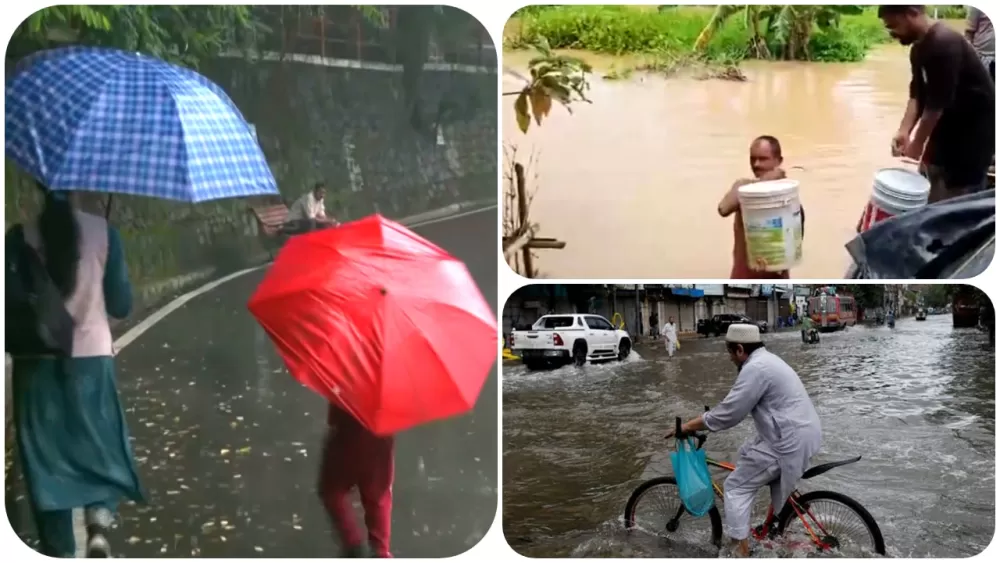
And what's the consequence of that, you ask? Well, the riverbed itself began to rise – year after year, slowly but surely. Imagine a river flowing not through the land, but increasingly above it, held precariously in place by man-made walls. This elevated riverbed creates immense pressure, making the surrounding plains prone to waterlogging even when the river isn't officially 'flooding.' Water seeps through, it finds its way, turning once-arable land into marshy, unproductive stretches. When the embankments do eventually breach, which they inevitably do under such immense pressure, the devastation is often far more catastrophic than a 'natural' flood might have been, unleashing years of pent-up energy and water onto unprepared communities.
Beyond the immediate engineering challenges, however, lies a profound human story. Thousands of people, many of whom have lived along the Kosi for generations, now find themselves trapped – literally and figuratively – between the river and its embankments. Their ancestral lands no longer receive the natural, enriching silt that once revitalized the soil, leading to declining agricultural productivity. They live in constant fear, vulnerable to sudden breaches, their homes and lives hanging by a thread. The despair, the displacement, the constant threat of losing everything – it's a stark reminder, really, of the immense human cost when our 'solutions' create new vulnerabilities.
The Kosi's saga is a poignant illustration of our sometimes hubristic attempts to impose rigid control on dynamic natural systems. It forces us to ask tough questions: Can we truly 'tame' a river with such a powerful, inherent geological rhythm? Or is a more adaptive, holistic approach needed – one that respects the river's natural processes, perhaps even working with its shifting patterns rather than trying to force it into an unyielding straitjacket? The Kosi continues to teach us, through its powerful currents and its shifting sands, that understanding and humility might just be our most effective tools in the long, complex dance with nature.
Editorial note: Nishadil may use AI assistance for news drafting and formatting. Readers can report issues from this page, and material corrections are reviewed under our editorial standards.