
The Heart of Time and Space: Ranking Doctor Who's Most Iconic Regenerations
- Nishadil
- December 18, 2025
- 0 Comments
- 6 minutes read
- 51 Views
- Save
- Follow Topic
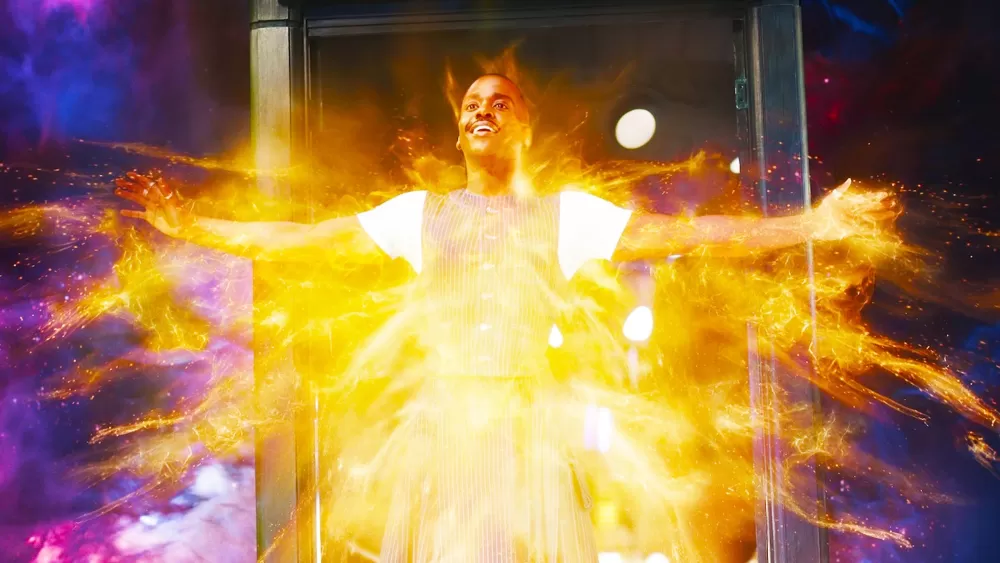
From Heartbreak to Heroics: A Deep Dive into Doctor Who's Most Memorable Regeneration Scenes
Explore the pivotal moments where the Doctor changes faces, examining the emotional weight, narrative impact, and enduring legacy of each iconic regeneration in Doctor Who's rich history.
There's nothing quite like a Doctor Who regeneration, is there? It’s not just a clever plot device to swap out actors; it’s the very heartbeat of the show, a profound, often gut-wrenching moment that truly defines its longevity and adaptability. Every time the Doctor's body glows, shimmers, and reshapes, we’re not just saying goodbye to a beloved face; we're witnessing a death, a rebirth, and the fascinating continuation of a single, extraordinary life across all of time and space. And honestly, some of these transitions just hit differently, don’t they?
Think back to the very beginning, that groundbreaking moment when William Hartnell, frail and tired, faded into Patrick Troughton. It was revolutionary for television, a stroke of genius that allowed the show to endure. The special effects might seem quaint by today's standards – just a shimmering face – but the concept itself was utterly breathtaking. It set the stage for every subsequent change, proving that the Doctor truly could be anyone, anywhere, any time. It wasn’t flashy, but its quiet innovation deserves immense credit, laying the bedrock for decades of transformations.
Moving into the classic era, we saw some truly iconic transitions. Jon Pertwee's farewell to usher in Tom Baker was steeped in an almost spiritual calm, a gentle passing of the torch. Then, of course, there’s Tom Baker himself, who, after a record-breaking run, dramatically plunged from the Pharos Project radio telescope, uttering those memorable, if slightly enigmatic, last words. That one felt like a seismic event, ushering in the youthful charm of Peter Davison. These were moments of grand theatre, full of portent and often tinged with sacrifice, truly cementing the emotional weight of what it meant for the Doctor to "regenerate."
Now, not every regeneration has been a perfectly smooth landing, let's be honest. Some, like Colin Baker’s rather abrupt and off-screen transformation into Sylvester McCoy, felt a bit… well, clumsy. It wasn't quite the narrative closure fans had come to expect, leaving a sense of missed opportunity. Similarly, Paul McGann's turn in the TV movie, while visually striking and introducing the idea of the Doctor fighting the process, had its own unique quirks. But even in these less-than-perfect moments, you see the show grappling with its own mythology, trying new things, and sometimes, that experimentation is just as vital as the flawless execution.
When Doctor Who burst back onto our screens in 2005, regeneration found a whole new lease on life, dripping with raw emotion. Christopher Eccleston's Ninth Doctor, having just saved Rose and absorbed the Time Vortex, gave us a truly poignant goodbye. "You were fantastic. Absolutely fantastic. And do you know what? So was I!" he declared, with a wry smile and a tear, before transforming into David Tennant's Tenth. That moment wasn't just a regeneration; it was a triumphant declaration of the show's return, brimming with hope and new beginnings.
And then there’s the Tenth Doctor’s departure. Oh, my word. David Tennant’s "I don't want to go" is probably one of the most heart-wrenching lines ever uttered in the show's history. It was drawn out, full of defiance against the inevitable, and absolutely soaked in tragedy. Seeing a Doctor fight so hard against his own fate, knowing the immense sacrifice he’d just made, made his transformation into Matt Smith's Eleventh Doctor an incredibly powerful, albeit tearful, viewing experience. It perfectly captured the idea that while regeneration brings new life, it also entails a profound loss, a moment of profound existential dread.
Matt Smith's exit as the Eleventh Doctor brought a different kind of bittersweetness. Facing a renewed regeneration cycle thanks to the Time Lords, his final speech was a poetic, reflective farewell to Clara and his very self, full of wisdom and the weary joy of a long life. The visual spectacle of the regeneration energy crackling through the TARDIS console and then exploding outwards, delivering Peter Capaldi's Twelfth Doctor with a wonderfully grumpy outburst, felt earned and truly grand. It was less about sadness and more about the beauty of change.
Peter Capaldi’s Twelfth Doctor gave us perhaps one of the most beautiful and resolute regeneration speeches, championing kindness and "never be cruel, never be cowardly." His initial resistance, fighting against the change, only made his eventual acceptance more impactful. His transition to Jodie Whittaker, the first female Doctor, was not just a character change; it was a cultural moment, a bold statement about the show's enduring ability to evolve and reflect the world around it. The sheer joy and wonder in Whittaker's eyes as she tumbled through space encapsulated that fresh start beautifully.
More recently, we've seen Russell T. Davies push the boundaries of regeneration even further, with Jodie Whittaker’s Thirteenth Doctor unusually regenerating back into a familiar face, David Tennant, only for him to then bi-generate into Ncuti Gatwa's Fifteenth Doctor. It's a fascinating, unexpected twist, perhaps designed to literally show the Doctor shedding old trauma and embracing a new era. These latest transformations are still fresh in our minds, sparking endless discussions and reminding us that even after all these years, Doctor Who can still surprise us and reinvent its most fundamental concept.
Ultimately, whether it’s a quiet fade, a dramatic explosion, or an emotional outburst, each regeneration leaves its unique mark. They are the moments that truly highlight the Doctor's immortal journey, the sacrifices made, the lessons learned, and the perpetual promise of new adventures. These aren't just special effects; they're emotional anchor points for generations of fans, defining not only who the Doctor is, but also who they might become next. And that, really, is the enduring magic of Doctor Who.
Editorial note: Nishadil may use AI assistance for news drafting and formatting. Readers can report issues from this page, and material corrections are reviewed under our editorial standards.


