
The Great Shift: Why Developers Are Embracing Website Builders Over Custom Stacks
- Nishadil
- April 21, 2026
- 0 Comments
- 5 minutes read
- 27 Views
- Save
- Follow Topic
From Bespoke Code to Builder Blocks: Why Developers Are Ditching Custom Stacks (and When They Absolutely Shouldn't)
Developers are increasingly opting for modern website builders over traditional custom code stacks. This shift highlights a growing pragmatism in web development, driven by efficiency, cost, and speed, though custom solutions still hold their ground for specific needs.
Remember the good old days of web development? Or perhaps, depending on your perspective, the not-so-good days. For years, the mantra was 'build it yourself.' We'd meticulously craft every element, dive deep into custom code stacks – LAMP, MERN, MEAN, pick your poison – and emerge, victorious but often exhausted, with a truly bespoke website. It was a badge of honor, a testament to a developer's raw skill. But let's be honest, it was also a massive time sink, a budgetary black hole, and, more often than not, a maintenance headache that lingered long after launch.
Fast forward to today, and something genuinely fascinating is unfolding in the web development landscape. Developers, those very same folks who once championed the bespoke build, are increasingly turning their backs on complex custom stacks in favor of modern website builders. And you know what? It makes a whole lot of sense. This isn't about laziness; it's about pragmatism, efficiency, and ultimately, delivering value faster.
Think about it: the traditional custom stack approach meant juggling a dizzying array of technologies. You'd have your database, your server-side language, a frontend framework, maybe a separate content management system – all needing to be configured, integrated, secured, and constantly updated. It was a symphony, yes, but one that required a conductor, an entire orchestra, and a huge amount of rehearsal time. Each layer added complexity, each dependency a potential point of failure. The initial setup alone could eat up weeks, if not months, before any actual feature development even began. And don't even get me started on the ongoing maintenance and patching!
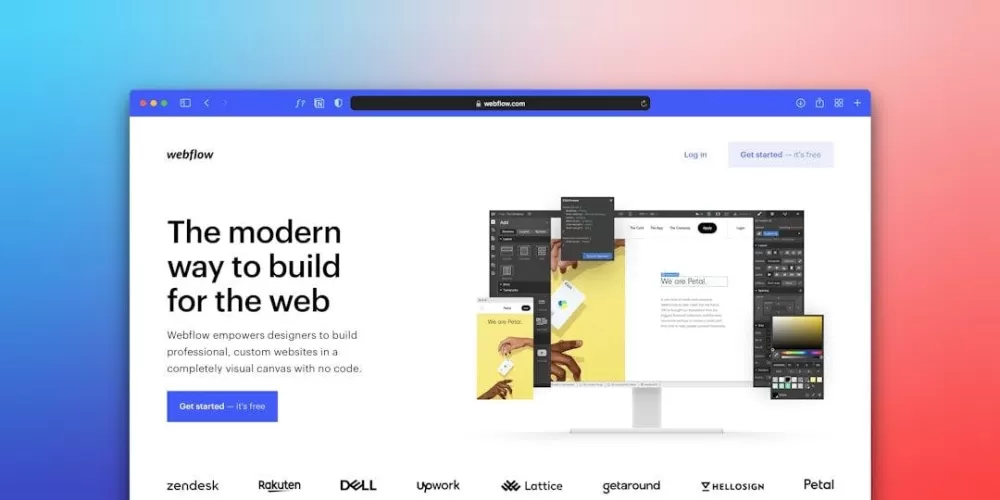
Enter the modern website builder. We're not talking about the clunky, restrictive platforms of yesteryear. Today's builders – think Webflow, Framer, Plasmic, even the more evolved versions of Wix, Squarespace, or Duda – are sophisticated beasts. They offer visual development environments that are powerful enough for designers, yet extensible enough for developers. They abstract away much of that underlying infrastructure, handling hosting, security, and many performance optimizations out of the box. Suddenly, that multi-week setup process shrinks to a matter of hours or days. Features can be prototyped and deployed at lightning speed.
The beauty lies in their evolving capabilities. These platforms aren't just for simple brochure sites anymore. They're integrating with APIs, offering custom code blocks, and providing more granular control than ever before. For a developer, this means less time wrestling with server configurations or database schemas, and more time focusing on unique features, user experience, and the actual business logic that truly differentiates a project. It’s about leveraging pre-built, optimized components and focusing energy where it truly counts, rather than reinventing the wheel with every single project.
But here’s the crucial caveat, because it's not a one-size-fits-all solution, and developers know this deeply. There absolutely are times when a custom stack isn't just preferable, but downright essential. If your project demands highly complex, unique business logic that no builder can reasonably encapsulate – think specialized financial algorithms, intricate data processing workflows, or novel social networking features – then a custom solution is likely your only path. Similarly, if you need extremely granular control over performance, security at a proprietary level, or deep, custom integrations with legacy systems that simply aren't exposed via standard APIs, then you're looking at a bespoke build.
Furthermore, projects requiring massive, ultra-high-scale infrastructure or those dealing with incredibly sensitive, proprietary data that demands a self-hosted, air-gapped environment might find builders too restrictive. The moment a builder's inherent limitations become a bottleneck, impeding rather than accelerating your vision, that's when you know it's time to break free and build it from the ground up. It’s about understanding the trade-offs.
So, for what kinds of projects are these modern builders truly shining? Marketing sites, portfolios, small to medium-sized e-commerce ventures, internal tools, rapid prototyping, and even many content-heavy blogs. These are the sweet spots where the speed, cost-effectiveness, and efficiency gains are simply too significant to ignore. It allows businesses to get to market faster, iterate quicker, and allocate valuable developer resources to truly challenging problems rather than repetitive infrastructure setup.
Ultimately, this isn't a declaration of death for custom stacks. Far from it. Instead, it’s a maturation of the web development ecosystem. Developers are becoming more pragmatic, more discerning about their tool choices. It's about picking the right instrument for the job at hand. Sometimes that instrument is a meticulously crafted Stradivarius, built from scratch with unparalleled precision. Other times, it's a high-tech, multi-functional synthesizer that can create a beautiful symphony with incredible speed and efficiency. The shift simply means acknowledging that for a vast and growing number of projects, the latter is proving to be the smarter, more effective choice.
Editorial note: Nishadil may use AI assistance for news drafting and formatting. Readers can report issues from this page, and material corrections are reviewed under our editorial standards.












