The Geopolitical Chessboard: Unpacking Trump's Latest Assertions on Middle East De-escalation
- Nishadil
- March 21, 2026
- 0 Comments
- 3 minutes read
- 31 Views
- Save
- Follow Topic

Trump Declares US-Israel-Iran Conflict 'Winding Down,' Citing Robust American Strategy
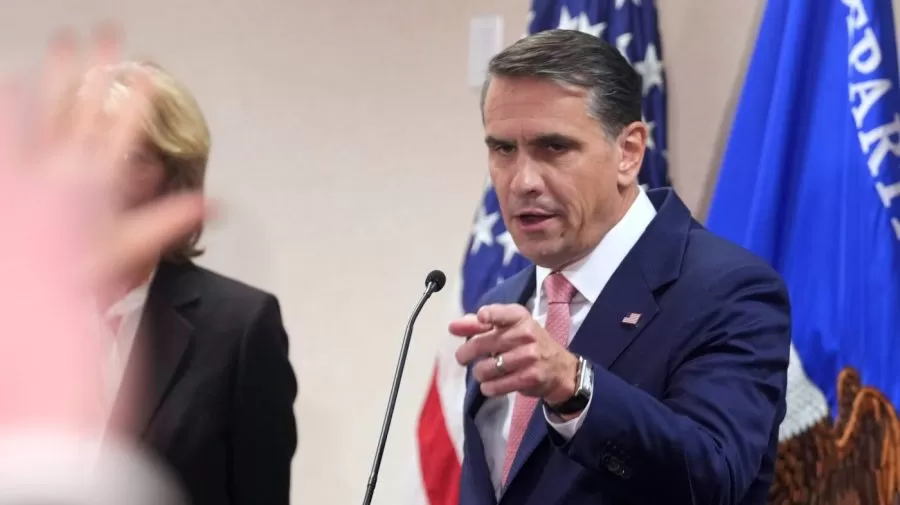
Former President Donald Trump recently shared his assessment that the volatile situation involving the United States, Israel, and Iran is actively de-escalating. He credits a distinct American approach and firm pressure for curbing Iran's military ambitions, hinting at a new phase in regional dynamics.
It's never a dull moment, is it? Just when you thought the geopolitical waters in the Middle East couldn't get any choppier, or perhaps, unexpectedly calmer, former President Donald Trump has once again stepped into the spotlight, offering his characteristic take on a highly sensitive issue. His recent pronouncement? That the brewing tensions, indeed, the potential for a wider conflict involving the U.S., Israel, and Iran, are actually 'winding down.'
Now, this isn't just some casual remark; it’s a significant assertion, especially given the ongoing complexities of the region. Trump, never one to shy away from bold statements, has attributed this supposed de-escalation to what he describes as a vigorous American strategy, one focused squarely on applying pressure and, crucially, reining in Iran's considerable military ambitions. You know, that firm hand he so often talks about.
For years, the shadow of a direct confrontation between these powers has loomed large. The intricate dance of diplomacy, sanctions, and military posturing has kept analysts and policymakers on edge. So, for a figure as influential as Trump to declare things are 'winding down' certainly gives one pause. It begs the question: what exactly is he seeing, or what actions does he believe have contributed to this shift?
He seems to suggest that a consistent, unwavering approach – perhaps reminiscent of his 'maximum pressure' campaign during his presidency – has proven effective. The idea is that by denying Iran resources, isolating them diplomatically, and projecting undeniable strength, their capacity, and perhaps even their will, for aggressive military endeavors have been curtailed. It's a classic Trumpian narrative: strong leadership leads to favorable outcomes, even in the most intractable global disputes.
Of course, Israel’s security is always a central pillar in any discussion about Iran. The long-standing alliance between the U.S. and Israel means that any perceived threat from Tehran’s nuclear program or its regional proxies is a shared concern. Trump’s comments, therefore, inherently touch upon the notion that American efforts are not only safeguarding U.S. interests but also ensuring the security of its key allies, particularly Israel, from what has often been portrayed as an existential threat.
The 'Iran military effort' he references is, naturally, a broad category. It encompasses everything from their ballistic missile program to their support for various non-state actors across the Middle East. If indeed, these efforts are being 'wound down,' as Trump claims, it would represent a pretty substantial shift in the regional power balance. It's a hopeful thought, certainly, for anyone weary of perpetual conflict.
But let's be realistic for a moment. Geopolitics rarely unfolds with such clean, definitive endings. The Middle East, in particular, is a tapestry woven with historical grievances, shifting alliances, and deep-seated ideological divides. While a de-escalation would be welcomed by all, the path to genuine peace and stability is usually a long, winding, and often frustrating one. Trump's optimistic assessment, while perhaps reflecting a desired outcome or a particular strategic vision, inevitably invites scrutiny.
Ultimately, whether this 'winding down' is a tangible reality on the ground, a political projection, or a strategic declaration remains to be fully seen. But one thing is clear: when Donald Trump speaks about the future of the Middle East, the world listens, and the ripple effects are felt far and wide. It certainly gives us all something to think about as we watch these incredibly complex dynamics continue to evolve.
Editorial note: Nishadil may use AI assistance for news drafting and formatting. Readers can report issues from this page, and material corrections are reviewed under our editorial standards.