The Fed's Unwavering Course: Why Leadership Changes May Not Mean Policy Overhauls
- Nishadil
- April 22, 2026
- 0 Comments
- 3 minutes read
- 33 Views
- Save
- Follow Topic
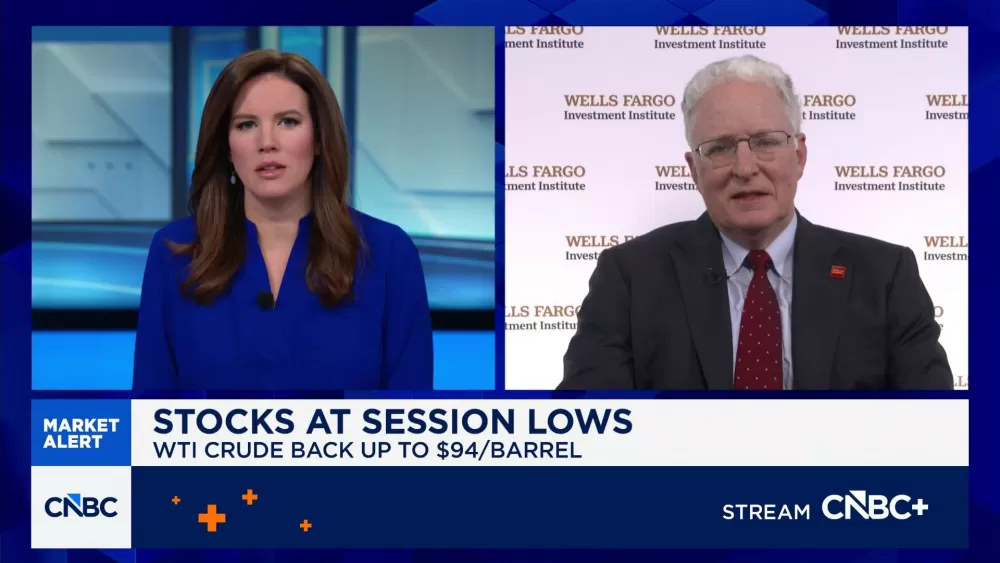
Wells Fargo's Paul Christopher Sees Stability, Not Sweeping Shifts, with New Fed Chair
Amidst speculation about a new Federal Reserve chair, Wells Fargo's Paul Christopher argues against expectations of drastic monetary policy changes, emphasizing the institution's inherent stability and consensus-driven approach.
There's always a buzz, isn't there, when talk turns to leadership changes at institutions as pivotal as the Federal Reserve. The mere mention of a new Fed chair can send ripples through financial markets, sparking endless speculation about potential shifts in monetary policy. Will they be a hawk or a dove? Will they prioritize inflation or employment? It's a natural human tendency to anticipate a dramatic change with a new face at the helm.
However, Paul Christopher, who serves as the Head of Global Market Strategy at Wells Fargo Investment Institute, offers a decidedly calmer perspective. He's on record stating that we shouldn't really be bracing ourselves for any grand, sweeping alterations to monetary policy, even with a fresh leader taking the reins. It's an interesting take, one that pushes back against the common narrative of inevitable disruption.
So, why this expectation of continuity? Well, the Federal Reserve isn't just one person making decisions in a vacuum, you see. It's a robust institution, built on committees, extensive research, and a very deliberate, consensus-driven approach. The Chair, while incredibly influential and the public face, operates within a framework established over decades. They lead a team, and policy is forged through collective deliberation by the Federal Open Market Committee (FOMC). It's not a dictatorship; it's a collegial body.
Think about it: the Fed’s dual mandate—pursuing maximum employment and maintaining stable prices—remains constant, regardless of who's in charge. While the specific strategies and tactics might evolve subtly over time, the overarching goals are deeply embedded in the institution's DNA. A new chair isn't likely to suddenly abandon these foundational principles. Instead, they typically inherit a deeply considered policy framework and are more inclined to fine-tune it rather than overhaul it entirely. Policy changes at the Fed tend to be incremental, almost glacial in pace, precisely because of the immense impact they have on the global economy.
What this suggests for investors and everyday folks alike is a potential for greater predictability. If we're not facing a radical policy pivot every time there's a leadership transition, it reduces one significant source of market uncertainty. This isn't to say there won't be new challenges or different interpretations of economic data. Of course there will. Each chair brings their own nuances, their own communication style, and perhaps a slightly different emphasis on certain economic indicators. But the fundamental direction, the core philosophy of navigating the economy towards stable growth, is expected to hold firm.
Christopher's view, then, provides a reassuring anchor. It reminds us that institutional stability often trumps individual personality in the long run, especially in critical economic bodies. While the headlines might try to drum up excitement about a new era, the underlying machinery of monetary policy is designed for steadiness. And in the often turbulent world of finance, a little bit of expected continuity can be a very welcome thing indeed.
Editorial note: Nishadil may use AI assistance for news drafting and formatting. Readers can report issues from this page, and material corrections are reviewed under our editorial standards.