The Enduring Battle for Women's Representation: Rijiju's Sharp Rebuke to Congress
- Nishadil
- April 18, 2026
- 0 Comments
- 2 minutes read
- 29 Views
- Save
- Follow Topic
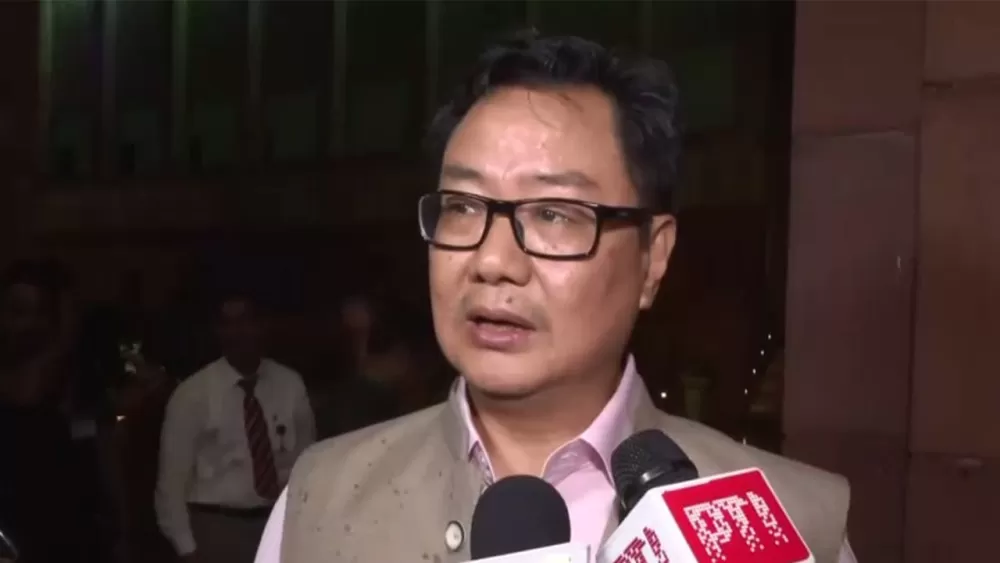
Kiren Rijiju Slams Congress: Labels Party 'Anti-Women' for Allegedly Blocking Reservation Bill
Union Minister Kiren Rijiju has issued a blistering critique of the Congress party, accusing them of actively obstructing the Women's Reservation Bill and declaring their actions as fundamentally 'anti-women,' reigniting a contentious debate on a long-pending legislative reform.
You know, when a Union Minister speaks, especially with such conviction, it really makes you sit up and take notice. Kiren Rijiju, never one to mince words, has unleashed a rather potent attack on the Congress party, essentially calling them out for what he perceives as a deliberate attempt to stonewall the crucial Women's Reservation Bill. His accusation? That their actions are not just political maneuvering, but frankly, anti-women at their core.
It's a strong charge, isn't it? Rijiju's remarks highlight a deeply frustrating, long-standing issue in Indian politics: the elusive dream of ensuring adequate representation for women in our legislative bodies. This Women's Reservation Bill, for those unfamiliar, is a proposed piece of legislation that seeks to reserve a significant percentage of seats for women in both the Lok Sabha (the lower house of India's Parliament) and all state legislative assemblies. It's a bill that has seen numerous attempts at passage, each met with its own set of political hurdles and, sadly, repeated failures over decades.
The Minister's frustration seems palpable. He's essentially pointing fingers, suggesting that the Congress, despite its public posturing on gender equality, is hypocritically creating obstacles behind the scenes. And let's be honest, the political landscape in India often sees parties accusing one another of obstruction, but to label a party's actions as 'anti-women' on such a pivotal bill? That's taking the criticism to a whole new level, implying a fundamental lack of commitment to women's empowerment rather than just parliamentary disagreement.
For many, this bill isn't just about quotas; it's about shifting the very dynamics of power and giving half of the population a rightful, proportionate voice in shaping the nation's future. Imagine the impact of more women in decision-making roles, bringing diverse perspectives to policy-making, governance, and development. It could genuinely be transformative for society as a whole. Yet, here we are, still debating and battling over its implementation.
So, as the political temperature rises, Rijiju's comments serve as a stark reminder of the persistent struggle to push this vital reform across the finish line. It begs the question: how much longer will women have to wait for their equitable place in India's legislative halls? And more importantly, can our political class finally unite on this critical issue for the sake of true gender parity?
Editorial note: Nishadil may use AI assistance for news drafting and formatting. Readers can report issues from this page, and material corrections are reviewed under our editorial standards.