
The Digital Jester: How an AI Satirist Molds Political Grandstanding into Hilarious Lego Laughing Stocks
- Nishadil
- April 22, 2026
- 0 Comments
- 3 minutes read
- 25 Views
- Save
- Follow Topic
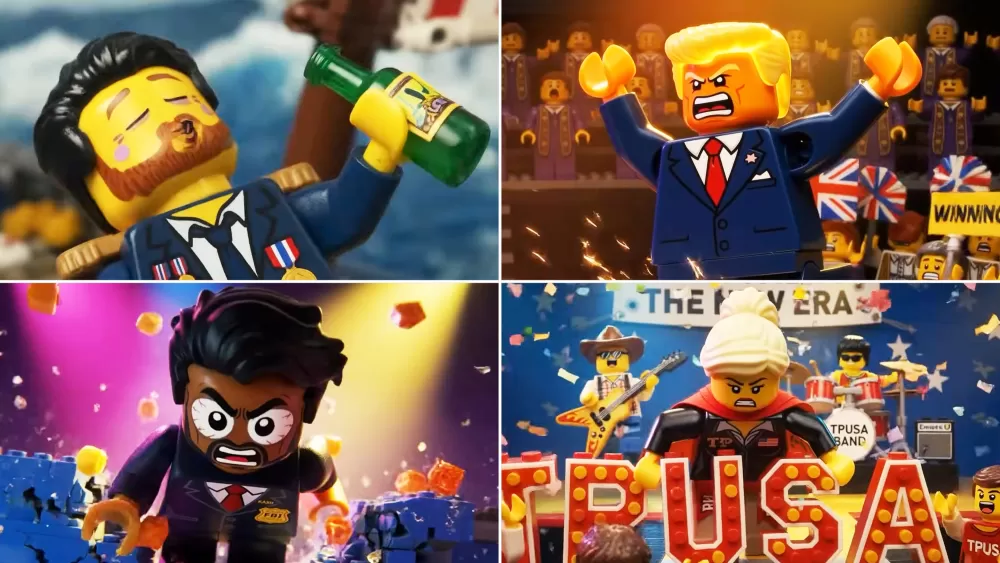
Plastic Pundits: Meet the AI Satirist Turning MAGA Figures into Absurd Lego Minifigures
Explore the viral world of an anonymous digital artist, 'Lego Goons,' who uses generative AI to transform prominent political figures into ridiculously funny Lego characters, sparking both laughter and heated debate across social media platforms.
Have you ever found yourself scrolling through your feed, a bit weary of the political drama, only to suddenly stop and genuinely laugh out loud? If so, chances are you've stumbled upon the delightful, somewhat absurd, and utterly brilliant creations of an anonymous AI satirist known simply as "Lego Goons." This isn't your childhood Lego set, mind you. Oh no, this is a whole new level of playful mockery, where prominent—and often controversial—MAGA figures are reimagined as blocky, plastic minifigures, caught in hilariously undignified or overly dramatic poses.
It's truly fascinating, isn't it? In an era where AI-generated art is constantly pushing boundaries, "Lego Goons" has carved out a unique, rather clever niche. Using powerful generative AI tools like Midjourney, and perhaps DALL-E or Stable Diffusion, this digital artist crafts incredibly detailed and surprisingly lifelike (for Lego, anyway!) scenes. Think Marjorie Taylor Greene, but in miniature, plastic form, perhaps mid-rant or striking an overly dramatic pose. Or perhaps Donald Trump, depicted with that signature, um, intensity, all rendered in the charming, brick-built aesthetic of everyone's favorite Danish toy. The precision, the attention to facial expressions and body language, even within the confines of Lego's rigid structure, is just uncanny.
But why Lego? And why these specific political figures? Well, if you think about it, the genius really lies in that juxtaposition. Lego, a symbol of innocent childhood play, becomes the perfect canvas for pointed, grown-up satire. It disarms, it humanizes in an odd way, and yet, it amplifies the absurdity of the political figures and their actions. The artist's goal, as he's shared in various corners of the internet, is quite clear: to "punch up." This isn't about mocking the average citizen; it's about lampooning those in positions of power or influence, whose rhetoric or behavior, frankly, often veers into the ridiculous. It's a way to deflate pomposity, to make us chuckle at situations that might otherwise just make us sigh in exasperation.
Naturally, these images go viral. Like wildfire, they spread across platforms, eliciting a wide range of reactions. For many, they're a much-needed dose of levity in a sometimes-grim political landscape. The comments sections explode with laughter, appreciation for the wit, and sometimes, if we're being honest, a bit of partisan glee. But of course, not everyone finds it amusing. Some cry foul, seeing it as disrespectful or overly critical. And that's okay, because good satire, after all, is meant to provoke thought, to stir the pot a little. It's rarely universally adored, and that's often a sign it's hitting its mark.
Ultimately, this whole phenomenon speaks volumes about the evolving role of AI in creative expression and political commentary. No longer confined to the realms of science fiction, AI is now a potent tool for artists and satirists to craft narratives, generate imagery, and perhaps even influence public perception in ways we're still trying to fully grasp. "Lego Goons" reminds us that even with cutting-edge technology, the most powerful ingredient remains human ingenuity, a sharp wit, and a keen eye for the absurdities of life, turning serious political theater into a playful, plastic parody that's impossible to ignore.
Editorial note: Nishadil may use AI assistance for news drafting and formatting. Readers can report issues from this page, and material corrections are reviewed under our editorial standards.









