
The Curious Case of Martian Meteorites and Earthly Ink Stains
- Nishadil
- April 16, 2026
- 0 Comments
- 3 minutes read
- 37 Views
- Save
- Follow Topic
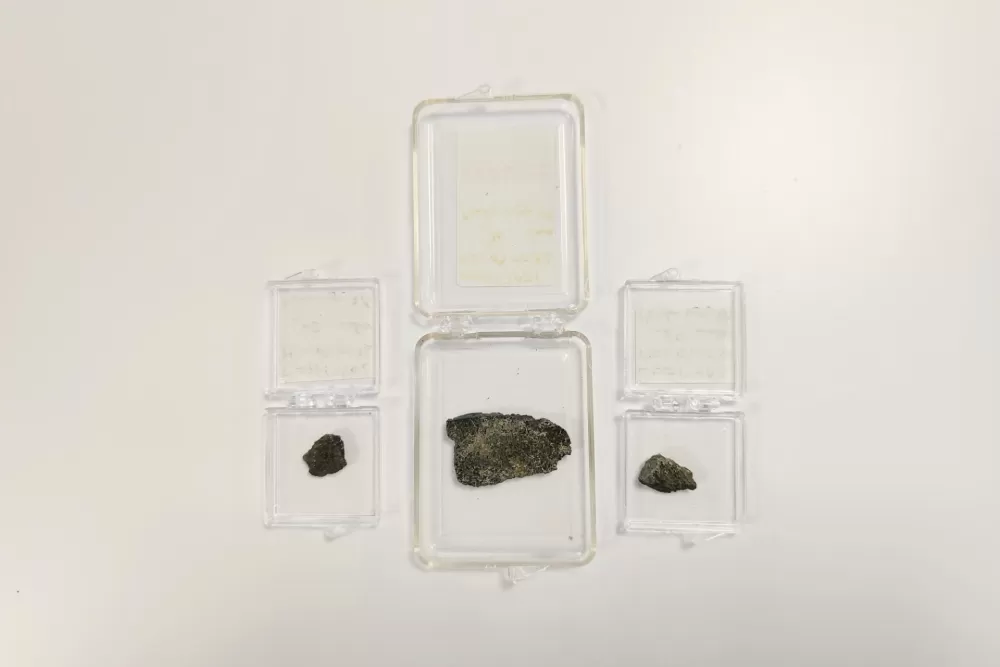
Scientists Report Finding Ballpoint Pen Ink Traces in Martian Meteorites – But It's Not What You Think
A recent scientific paper made waves by reporting the detection of organic compounds remarkably similar to ballpoint pen ink within samples of Martian meteorites. While the idea of extraterrestrial stationery is certainly amusing, the findings actually underscore a profound, ongoing challenge in astrobiology: the relentless problem of terrestrial contamination.
Imagine the headline: "Martians Used Ballpoint Pens!" It’s a sensational thought, isn’t it? The kind of thing that sends shivers down your spine, conjuring images of little green men scribbling notes on their alien iPads. Well, a recent scientific paper did indeed announce the detection of something akin to ballpoint pen ink inside precious samples of Martian meteorites. But let’s pump the brakes just a tiny bit, shall we? Because the reality, while less dramatic than alien stationery, is actually far more crucial for our quest to understand life beyond Earth.
The research, published in Planetary and Space Science by J.D.P. de Vera and his colleagues, didn't suggest little Martians were doodling. Instead, it highlighted a very real and persistent headache for astrobiologists: contamination. The scientists identified various organic compounds—things like polymers of cyanoacetylenes and amides—within fragments of famous Martian meteorites, including ALH84001, Nakhla, and Shergotty. And here’s the kicker: these specific compounds bear an uncanny resemblance to the chemical makeup of… you guessed it, everyday ballpoint pen ink.
Now, before your imagination truly runs wild, it's vital to understand that the researchers themselves were acutely aware of this highly sensitive issue. They didn't jump to conclusions about Martian stationery. Far from it! They rigorously discussed the possibility, even the strong likelihood, of terrestrial contamination. Think about it: these meteorite samples have been handled, stored, cut, and analyzed in laboratories here on Earth for years, if not decades. It only takes a tiny speck of ink from a researcher's pen, a mark on a piece of equipment, or even lingering residues from cleaning agents, to introduce these compounds.
The team went to great lengths, mind you, trying to rule out such earthly invaders. They performed extensive cleaning procedures, using a variety of solvents, meticulously preparing the samples. Yet, despite their best efforts, these ink-like signatures persisted. It really puts into perspective just how pervasive and tricky contamination can be, especially when you’re looking for minute traces of organic material that could potentially signal extraterrestrial life. The standards of cleanliness and isolation in astrobiology labs are already incredibly stringent, bordering on obsessive, for precisely this reason.
This finding, though seemingly disappointing for those hoping for alien art, is actually a powerful lesson. It’s a stark reminder of the immense challenges we face in accurately interpreting data from extraterrestrial samples. Every single discovery of organic molecules in a meteorite or a sample returned from Mars or an asteroid has to be viewed through the lens of potential contamination. It forces scientists to be incredibly skeptical, to scrutinize every step, and to always consider the earthly origins before leaping to cosmic conclusions.
So, no, Martians weren't writing grocery lists with Bic pens. What this fascinating study actually confirms is the relentless, silent battle against terrestrial traces in our pursuit of cosmic answers. It underscores the incredible rigor, the meticulous care, and frankly, the humility required in astrobiology. Because sometimes, the most profound discoveries aren't about what’s out there, but about the hidden complexities of what we bring along for the ride.
Editorial note: Nishadil may use AI assistance for news drafting and formatting. Readers can report issues from this page, and material corrections are reviewed under our editorial standards.












