
The Blockade Dilemma: Understanding the High Stakes of a Naval Standoff with Iran
- Nishadil
- April 14, 2026
- 0 Comments
- 4 minutes read
- 33 Views
- Save
- Follow Topic
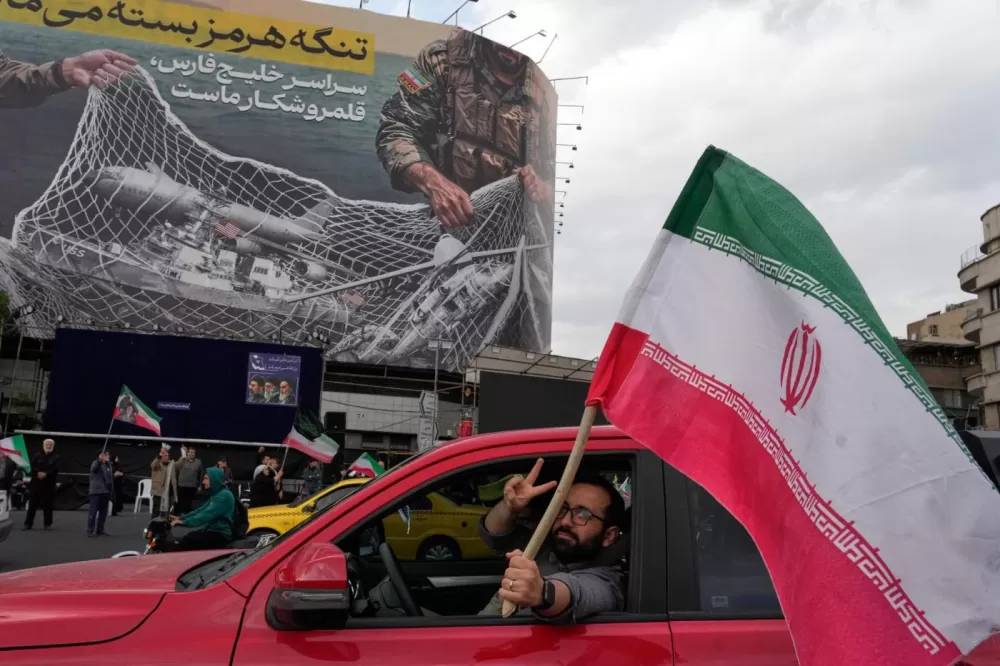
A Hypothetical US Blockade of Iran: Unpacking the Geopolitical Powder Keg
Exploring the immense complexities, legal quagmires, and terrifying risks of a potential US naval blockade against Iran.
When you hear the phrase 'naval blockade,' your mind might conjure images from old war movies – ships lined up, intercepting vessels in a dramatic show of force. But let's be real for a moment. Discussing a potential U.S. blockade against Iran isn't just a strategic exercise; it’s a deeply complex, incredibly risky proposition, absolutely riddled with legal pitfalls and geopolitical tremors that could shake the entire world.
At its core, a naval blockade is a military operation. Its purpose? To prevent goods, resources, or even people from entering or leaving a designated area by sea. Imagine a colossal, invisible wall of naval power, effectively sealing off a nation's maritime access. In the context of Iran, this would primarily target its extensive coastline, particularly its access to vital shipping lanes in the Persian Gulf and the Strait of Hormuz – a global chokepoint for oil transport.
Now, why would such a drastic measure even be considered? The backdrop, as many know, is a long history of strained relations, ongoing concerns about Iran's nuclear program, and its regional influence. Proponents might argue a blockade could cripple Iran's economy, forcing it to negotiate or comply with international demands without resorting to direct military invasion. It’s a coercive tool, meant to apply immense pressure.
However, and this is a colossal 'however,' the legality of such an act is incredibly murky, to say the least. Under international law, a blockade is generally considered an act of war. For it to be legitimate, it would typically require authorization from the United Nations Security Council (UNSC). Think about that for a second. With Russia and China holding veto power and historically opposing harsh measures against Iran, a UNSC resolution authorizing a U.S. blockade seems, well, extraordinarily unlikely. Without it, any unilateral blockade by the U.S. would be widely viewed as an illegal act of aggression, a blatant violation of international law. This would instantly isolate the United States on the global stage, turning many allies against it and potentially emboldening adversaries.
Beyond the legal quagmire, the practical challenges are mind-boggling. Iran possesses a significant naval capability, including fast attack craft and submarines. Its long coastline is incredibly difficult to completely seal off. Imagine the sheer number of ships and personnel required to patrol such a vast area, stopping, searching, and potentially seizing countless vessels from numerous nations. It’s not just military ships either; commercial tankers, cargo vessels carrying everything from food to electronics – all would be impacted. The potential for miscalculation, accidental targeting of civilian ships, or direct confrontations is almost guaranteed, rapidly escalating an already volatile situation into outright conflict.
And then there's the economic fallout, which, frankly, would be catastrophic for everyone, not just Iran. A blockade targeting the Persian Gulf or the Strait of Hormuz would send global oil prices skyrocketing into uncharted territory. The world economy, still grappling with various uncertainties, would face an unprecedented shock. Supply chains would buckle, and the cost of everything, everywhere, would surge. It’s a scenario that could easily trigger a global recession, perhaps even a depression.
Historically, blockades have often led to war. The Cuban Missile Crisis of 1962, for instance, saw a U.S. 'quarantine' of Cuba that brought the world to the brink of nuclear war. While circumstances differ today, the underlying principle of extreme provocation remains. Iran, let's remember, has repeatedly threatened to close the Strait of Hormuz itself in response to external pressure, which would further exacerbate global energy woes and almost certainly ignite a broader military conflict.
So, when you consider a U.S. blockade against Iran, you're looking at an option of last, last resort. It's a strategy fraught with immense dangers, capable of unleashing a cascade of unintended consequences. It's a legal tightrope walk, a logistical nightmare, and an economic time bomb all rolled into one. The global community would undoubtedly condemn it, allies would be strained, and the human cost, both within Iran and globally, would be truly immense. It's a powerful hypothetical, yes, but one that underscores the truly terrifying stakes in the already tense relationship between the U.S. and Iran.
Editorial note: Nishadil may use AI assistance for news drafting and formatting. Readers can report issues from this page, and material corrections are reviewed under our editorial standards.










