
The AI Revolution is Coming Home: Nvidia Predicts On-Device Intelligence by 2026
- Nishadil
- January 07, 2026
- 0 Comments
- 4 minutes read
- 79 Views
- Save
- Follow Topic
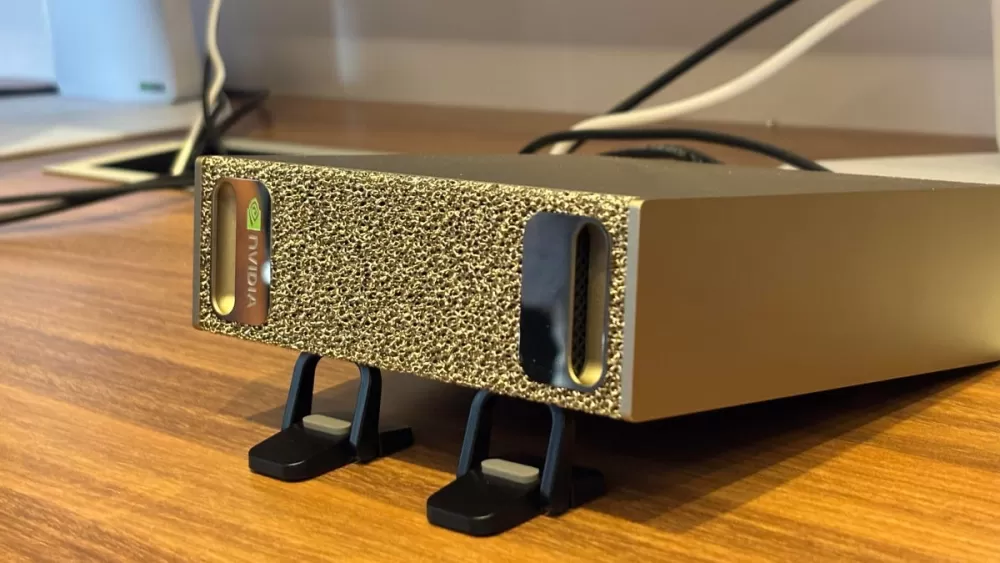
Nvidia's Jensen Huang Predicts On-Device AI Dominance by CES 2026, Shifting Focus from the Cloud
Nvidia's CEO Jensen Huang believes artificial intelligence will predominantly run on personal devices by CES 2026, ushering in a new era of faster, more private, and always-available AI experiences powered by RTX GPUs.
Imagine a world where the incredible power of artificial intelligence isn't always tethered to the vast, distant cloud, but lives right there on your personal computer, humming along quietly, instantly at your beck and call. Well, according to Nvidia's visionary CEO, Jensen Huang, that future isn't some far-off sci-fi fantasy; it's practically around the corner, poised to arrive by CES 2026.
For years now, when we've talked about AI – think ChatGPT, Midjourney, or even just smart assistants – the assumption has always been a powerful server farm somewhere, crunching numbers and sending results back to us over the internet. And frankly, that setup has been nothing short of transformative! But Huang, with that characteristic blend of confidence and foresight, suggests this cloud-centric model is reaching its practical limits, particularly when it comes to efficiency and cost at scale. It just doesn't make economic sense, he argues, to pay an internet tariff and run enormous data centers when the AI could do the heavy lifting locally.
The implications of such a shift are genuinely exciting, almost palpable. Picture this: instant responses from your AI assistant, no lag, no waiting for data to travel halfway across the globe. Think enhanced privacy, as your sensitive information stays securely on your device, never leaving its digital confines. And let's not forget the personalization potential – an AI that truly understands your habits, your preferences, adapting in ways a general cloud model simply can't, because it's learning directly from your usage, right there on your machine.
So, what's making this ambitious vision a tangible reality? Unsurprisingly, Nvidia itself plays a pivotal role. Huang highlights their RTX GPUs, those powerful graphics cards many gamers adore, as the bedrock for this on-device AI revolution. It's not just about pushing pixels anymore; these cards house specialized 'Tensor Cores,' which are practically tailor-made for accelerating AI and machine learning workloads. They are, in essence, the very engine that will drive these intelligent applications directly on your desktop or laptop.
This isn't just about faster chatbots, mind you. We're talking about AI-powered creativity tools that render complex graphics or video edits in a flash, smart productivity assistants that summarize lengthy documents or generate tailored content without an internet connection, and perhaps even entirely new applications we haven't even conceived yet. The idea is to empower every individual device with capabilities previously reserved for supercomputers or vast server farms. It’s a democratization of AI, if you will.
Huang's timeline, arriving by CES 2026, is certainly bold, but given the blistering pace of technological advancement, it feels less like a pipe dream and more like an impending reality. It echoes, in a way, the shift we saw decades ago from mainframe computers to personal computers – a decentralization of processing power that fundamentally changed how we interact with technology. This time, it's AI's turn to come home.
Editorial note: Nishadil may use AI assistance for news drafting and formatting. Readers can report issues from this page, and material corrections are reviewed under our editorial standards.












