
Texas' Ten Commandments Law: A Fiery Battle for the Soul of Public Education
- Nishadil
- April 22, 2026
- 0 Comments
- 4 minutes read
- 40 Views
- Save
- Follow Topic
Court Ruling on Texas Ten Commandments Law Ignites National Debate, Points Toward Supreme Court Showdown
A recent court decision concerning Texas's mandate to display the Ten Commandments in public schools has set the stage for a potentially landmark legal battle, rekindling the enduring debate over church and state separation and what truly belongs in our classrooms.
There's a deep rumble in the heart of Texas, and it's sending ripples across the nation. A recent court ruling, you see, has thrown a spotlight on the state’s controversial law demanding the display of the Ten Commandments in public school classrooms. It's more than just a legal squabble; it's a profound collision of deeply held beliefs about faith, education, and the very foundation of our constitutional freedoms.
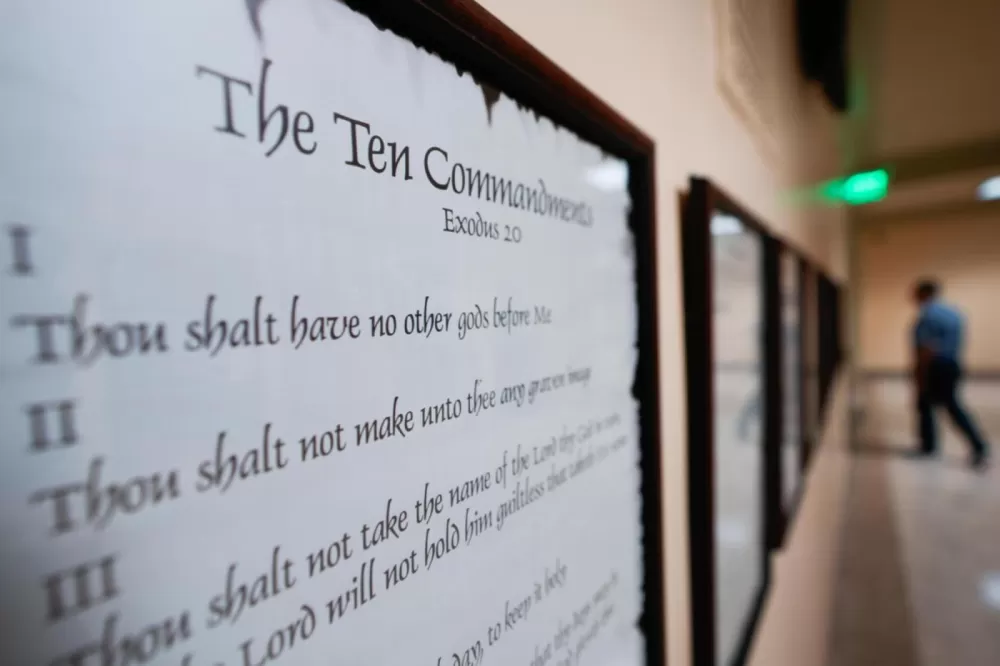
The Texas law, enacted fairly recently, requires public elementary and secondary schools to prominently exhibit the Ten Commandments – printed on a poster or framed, large and clear – in every classroom. Proponents, often state lawmakers and various faith-based groups, argue passionately that these tenets serve as a moral bedrock, a historical document offering guidance and wisdom. They believe integrating such principles into the school environment can positively influence young minds, reinforcing values they see as essential for a thriving society. For them, it's about acknowledging a crucial part of our heritage, not endorsing a specific religion.
However, the opposition is equally fervent, raising serious constitutional alarms. Organizations like the American Civil Liberties Union (ACLU) and various interfaith groups have swiftly challenged the mandate, arguing it's a blatant violation of the First Amendment's Establishment Clause. This clause, for those who might not recall, essentially prevents the government from establishing or endorsing a religion. To them, forcing students, regardless of their personal beliefs, to face a specific religious text daily crosses a critical line, effectively turning public schools into pulpits for a particular faith. It's about protecting every student's right to their own conscience, ensuring that school feels welcoming and inclusive for everyone, not just those who share the majority's religious views.
The recent court ruling, while perhaps not the final word, has certainly intensified the legal back-and-forth. Without getting lost in all the legal minutiae, the decision, as I understand it, suggests that the mandate likely oversteps the bounds of the First Amendment. It underscores the judiciary’s ongoing struggle to balance religious expression with the constitutional imperative of secular public institutions. This isn't just about whether a poster hangs on a wall; it’s about the message it sends to children from diverse backgrounds, including those of different faiths or no faith at all. Does it tell them they belong, or does it subtly exclude them?
Now, what makes this particularly gripping is the very real possibility that this case, or a similar one, could ultimately land on the desk of the U.S. Supreme Court. Our nation’s highest court has a long and sometimes complex history with cases touching on religion in public schools. Think back to cases regarding school prayer or religious instruction. A Supreme Court review would elevate this dispute from a state-level controversy to a landmark national precedent, potentially redefining the parameters of church-state separation for generations to come. The stakes, in other words, couldn't be higher.
It's fascinating to consider the broader implications, isn't it? This isn't an isolated incident; it’s part of a larger, ongoing cultural conversation about the role of religion in public life. From debates over prayer at football games to the display of religious symbols on public property, these issues continuously test the delicate balance enshrined in our Constitution. The Texas Ten Commandments law, and the fierce legal battle it has spawned, stands as a stark reminder that while our society values both religious freedom and secular governance, defining the precise boundary between the two is an eternally challenging, and often contentious, endeavor.
Ultimately, this isn't just a matter for legal scholars and judges; it affects parents, teachers, and most importantly, the students themselves. The outcome will shape not only what adorns classroom walls but also the very ethos of public education in Texas and, potentially, across the United States. It’s a powerful illustration of how our laws reflect, and sometimes clash with, our deepest societal values. We’ll certainly be watching this one unfold with great interest.
Editorial note: Nishadil may use AI assistance for news drafting and formatting. Readers can report issues from this page, and material corrections are reviewed under our editorial standards.









