
Safeguarding Democracy: The Critical Debate Over Election Commission Independence
- Nishadil
- April 05, 2026
- 0 Comments
- 3 minutes read
- 23 Views
- Save
- Follow Topic
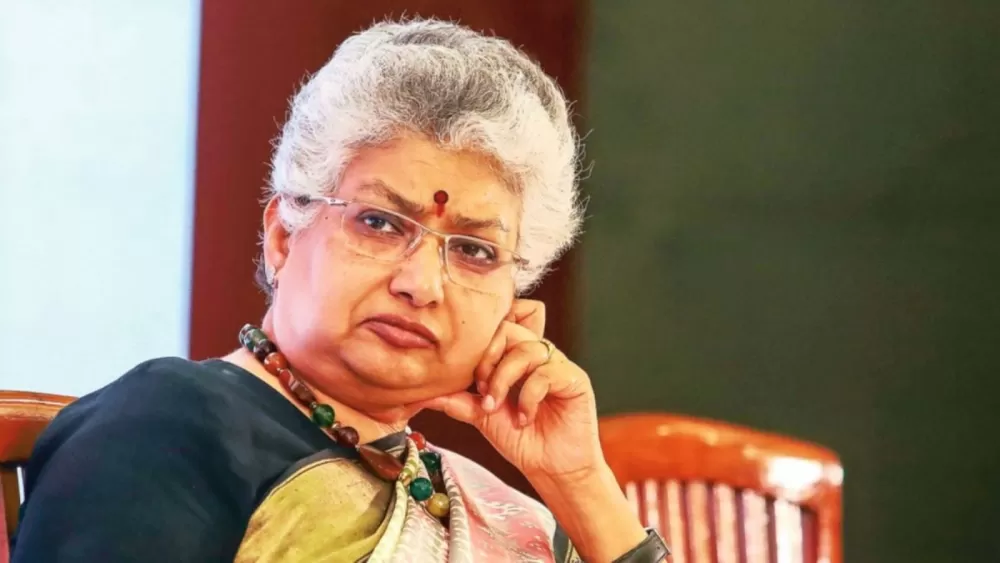
Justice Nagarathna Raises Alarm: Can Election Neutrality Truly Exist When 'Contestants' Pick the Umpires?
A Supreme Court judge has voiced critical concerns about the independence of India's Election Commission, questioning whether genuine neutrality is possible when those who contest elections influence the appointment of its members.
Picture, if you will, a crucial sporting event where one of the competing teams holds significant sway over who gets to officiate the match. Sounds a bit off, doesn't it? Well, that rather direct analogy cuts to the heart of a profound concern recently articulated by Supreme Court Justice B.V. Nagarathna. She's raised a truly vital question for our democracy: how can we genuinely assure the neutrality and impartiality of the Election Commission of India (ECI) if its very members are, in essence, chosen by those who frequently contest elections?
Her statement, delivered with a certain clarity and weight, boils down to this: "Neutrality cannot be assured if the EC is dependent on contestants." It’s a point that, frankly, resonates deeply when one considers the fundamental pillars of a free and fair electoral system. For any democracy to thrive, its election watchdog simply must stand above the political fray, immune to pressures and perceived biases. Without that unwavering perception of independence, public trust begins to erode, and the very foundation of electoral legitimacy comes into question.
This isn't just an abstract philosophical musing, you see; it's rooted in recent legislative changes. Just last year, the Indian Parliament enacted the Chief Election Commissioner and Other Election Commissioners (Appointment, Conditions of Service and Term of Office) Act, 2023. This law significantly altered the process of appointing the nation's top election officials. Prior to this, the Supreme Court had, in fact, suggested an interim mechanism, proposing a selection committee that included the Prime Minister, the Leader of the Opposition, and the Chief Justice of India. The idea there was to introduce a non-executive, judicial element, aiming for greater perceived impartiality.
However, the new Act departed from this suggestion. Under the current legal framework, the selection committee comprises the Prime Minister, a Union Cabinet Minister (nominated by the PM), and the Leader of the Opposition. It doesn't take much to notice the shift: the Chief Justice of India, a figure often seen as apolitical and independent, was replaced by another member of the executive. This configuration, critics argue, effectively grants the ruling government a majority in the appointment process, thus raising the very concerns Justice Nagarathna has so eloquently articulated.
Justice Nagarathna's remarks serve as a poignant reminder that the method of appointment isn't merely procedural; it directly impacts the spirit and perceived integrity of the institution itself. An Election Commission that is seen, even subtly, as being beholden to the executive, struggles to project the absolute fairness required to conduct elections where millions of votes and destinies are at stake. Her words underline an essential truth: for democracy to truly flourish, the arbiters of our electoral contests must not only be neutral but must also be seen to be absolutely, unimpeachably neutral, chosen by a process that leaves no room for doubt or suspicion. It's about safeguarding the very heartbeat of our democratic republic.
- India
- News
- Politics
- PoliticsNews
- SupremeCourt
- Democracy
- ElectionCommission
- IndianElections
- ElectionCommissionOfIndia
- ElectoralReforms
- CecGyaneshKumar
- Neutrality
- PoliticalProcess
- CurrentAffairs
- JusticeBVNagarathna
- ElectionProcess
- ChiefElectionCommissioner
- AppointmentProcess
- IndianExpressNews
- EciIndependence
Editorial note: Nishadil may use AI assistance for news drafting and formatting. Readers can report issues from this page, and material corrections are reviewed under our editorial standards.


