Russian State TV Hails Trump‑Putin Diesel Deal, Claims ‘Always Liked Trump’
- Nishadil
- October 13, 2026
- 0 Comments
- 4 minutes read
- 15 Views
- Save
- Follow Topic
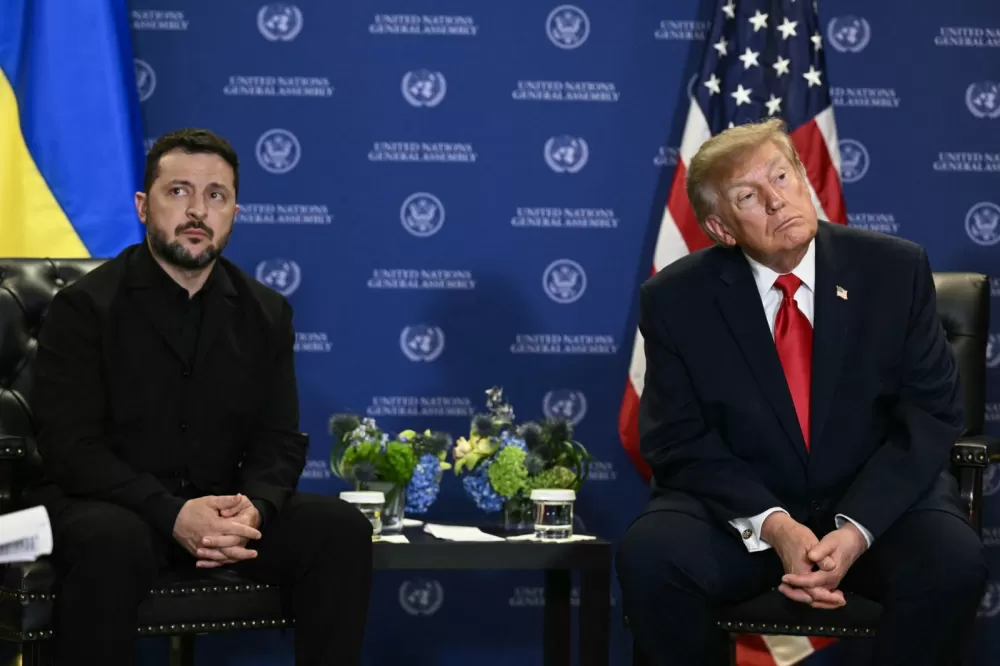
Moscow’s Channel 1 anchor Vladimir Solovyov gushes over the Trump‑Putin oil agreement, saying the president “always liked” him while critics warn the pact could bankroll Russia’s war
During a Sunday broadcast, pro‑Kremlin host Vladimir Solovyetov celebrated a new diesel‑export arrangement between Donald Trump and Vladimir Putin, praising the U.S. leader and downplaying the fallout for Ukraine.
On Sunday night the familiar smirk of Channel 1’s Vladimir Solovyov slid onto the screen, and he didn’t waste a second before patting Donald Trump on the back. The Russian‑state anchor was practically beaming as he recapped a phone call between the former U.S. president and Vladimir Putin that, according to Solovyov, sealed a “big‑diplomacy” deal to ship Russian diesel into the United States.
“Trump directly thanked the Supreme Commander‑in‑Chief,” Solovyov said, cueing a short clip of Trump expressing gratitude for the fuel that, he claimed, would help bring down the price at the pump. He went on, “If this deal comes to fruition, quite a bit of money will flow into our state coffers.” The presenter added a personal note, “I trusted Donald Trump, I felt that he would not let us down. I’ve always liked Trump, I always realized you had to calculate things with him.”
He then let the audience hear Trump’s own response to Ukrainian President Volodymyr Zelensky’s criticism, a remark that the Ukrainian leader said Russia should “get a new leader.” The segment was quickly shared on social media by Russia‑watcher Julia Davis, who runs the Russian Media Monitor.
Analysts, however, see a very different picture. John Hardie, deputy director of the Russia program at the Foundation for Defense of Democracies, warned that the arrangement could give Moscow a “free pass” to keep pounding Ukrainian infrastructure. “Washington is effectively giving Russia a source of cash that can fund its war machine,” he told Newsweek.
During the same broadcast, Solovyov praised Zelensky’s alleged lack of a mandate, echoing Kremlin rhetoric that the Ukrainian president’s term is illegitimate because of the wartime martial law. A member of Russia’s Federation Council, Alexei Kondratiev, jumped in to say the deal would not only be a political win for Trump but also a way to keep sanctions at bay until at least April, allowing Russia to secure “the goods we need for victory.”
The diesel deal itself is rooted in a perfect storm of supply problems. Global diesel prices have spiked after Ukraine struck Russian refineries, prompting Moscow to ban diesel exports. Add to that the fallout from Iranian‑backed Houthi attacks in the Red Sea, and you have a market scrambling for fuel. Trump announced on Truth Social that Russia would ship over 300,000 tons of diesel immediately, 500,000 tons in November, and a full million tons after that.
Did the plan move the needle on prices? On the Monday after the announcement, Brent crude slipped to about $103 a barrel, a modest dip, according to Wealth Club chief investment strategist Susannah Streeter. “It helped ease prices slightly, but the impact is limited given the broader Middle‑East tensions,” she said. Zelensky, for his part, dismissed the volumes as “nowhere near global consumption,” insisting Ukraine could still block the shipments if it wanted.
Critics also note that the deal flies in the face of the Lindsey Graham Act, a law passed after Russia’s 2022 invasion that penalizes purchases of sanctioned Russian oil. “Beyond the policy contradiction, the timing forces us to confront a profound moral failure,” said Yuriy Boyechko, CEO of Hope for Ukraine. Mark Montgomery of the FDD warned that the diesel will simply feed Moscow’s war machine, extending the conflict and causing more civilian casualties.
Trump, meanwhile, tried to balance the narrative by announcing a separate “energy ceasefire” between Russia and Ukraine. Zelensky told Axios that Kyiv hadn’t been consulted and asked for clarification, only to watch Russian forces later strike the Kharkiv City Thermal Power Plant No. 5, plunging parts of the city into darkness. Pro‑Moscow bloggers dismissed the ceasefire claim as propaganda, leaving the truth tangled in the fog of war.
In short, Solovyov’s gleeful celebration on Russian state TV captures a moment of diplomatic bravado that many in the West view as a dangerous gamble—one that could bankroll a war while offering only a faint, temporary sigh of relief at the gas station.
Editorial note: Nishadil may use AI assistance for news drafting and formatting. Readers can report issues from this page, and material corrections are reviewed under our editorial standards.