
Punjab's Lifelines at Stake? Farmers Up in Arms Over Centre's BBMB Rule Changes
- Nishadil
- April 19, 2026
- 0 Comments
- 3 minutes read
- 31 Views
- Save
- Follow Topic
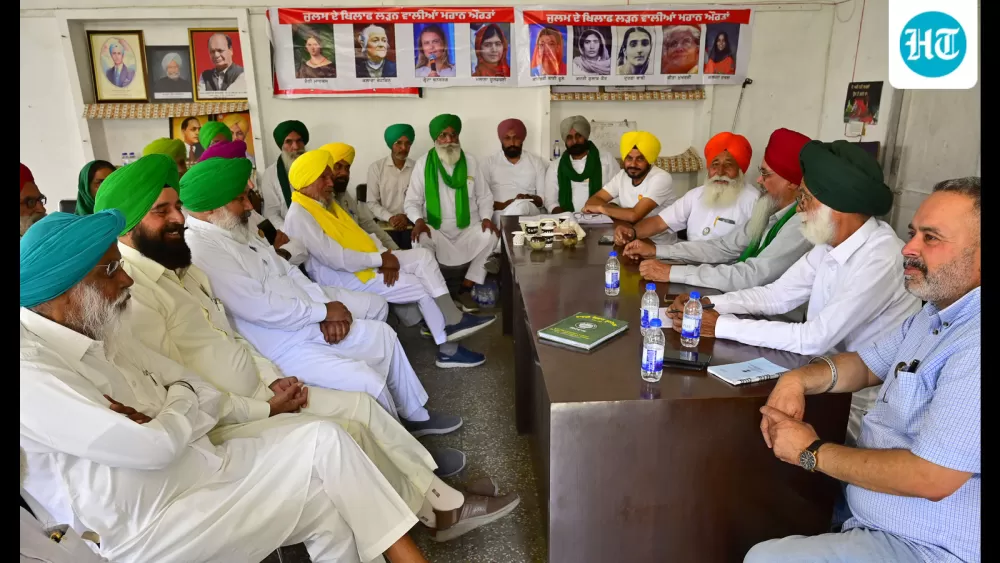
Farmers See Red: Centre's BBMB Shake-Up Sparks Outcry in Punjab
The Samyukt Kisan Morcha (SKM) is vehemently opposing the central government's recent changes to the Bhakra Beas Management Board (BBMB) rules. Farmers' unions argue these amendments undermine Punjab's traditional control over vital water and power resources, viewing it as a direct challenge to the state's long-held rights.
There's a palpable tension brewing in Punjab, particularly amongst its agricultural communities. The reason? A recent move by the central government concerning the Bhakra Beas Management Board (BBMB) that has ignited a firestorm of protest. The Samyukt Kisan Morcha (SKM), a prominent farmers' collective, isn't holding back, loudly denouncing these changes as nothing short of a 'blow' to Punjab's long-standing rights and, indeed, to the very spirit of federalism itself.
So, what exactly has caused such an uproar? Well, it boils down to an amendment in the BBMB rules. Historically, and this is a crucial point, the two full-time members overseeing vital areas like power and irrigation on the board have always hailed from Punjab and Haryana respectively. It was a well-understood arrangement, a nod to their status as successor states after the monumental Punjab Reorganization Act of 1966. But now, under the new directives, these pivotal positions can be filled by anyone from anywhere in India. You see the shift, don't you? It's a fundamental alteration to a long-established norm.
This isn't just a technical change, at least not in the eyes of the farmers. Leaders from the SKM, folks like Ruldu Singh Mansa, Surjeet Singh Phool, Darshan Pal, and Balbir Singh Rajewal, have been quick to condemn it, and quite vocally too. They're viewing this as a blatant attempt to erode Punjab's legitimate control over its own river waters. For them, it feels like a violation, a disregard for the very foundational principles laid out in the 1966 Act – the one that explicitly detailed the allocation of assets and liabilities, including the management of these critical river projects.
And frankly, the apprehension runs even deeper. Many are seeing this BBMB move as part of a larger pattern, perhaps a subtle but persistent effort to centralize control over resources that are intrinsically tied to states. The long-running disputes over the Satluj Yamuna Link (SYL) canal, for instance, immediately spring to mind for many. It's a sensitive subject, this issue of water sharing, and any perceived encroachment tends to fan the flames of discontent. The farmers, quite understandably, are demanding an immediate withdrawal of these new rules, viewing them as both unfair and potentially destabilizing.
In response to this significant perceived threat, the SKM isn't just voicing its anger; it's planning action. A key meeting of various farmers' organizations is already slated for March 22nd. This gathering is crucial, as it's where they'll strategize and decide on the precise course of future protests. One can only imagine the kind of robust, widespread agitation they might be contemplating if their demands aren't met. It’s a serious situation, truly.
Just to be clear, for those who might not be intimately familiar with it, the Bhakra Beas Management Board (BBMB) isn't some obscure entity. It's a really important body. This board is tasked with managing the monumental Bhakra Nangal project, along with several other associated projects. Its core mission is to ensure the benefits — primarily irrigation and power — are distributed effectively among its partner states: Punjab, Haryana, Rajasthan, and Himachal Pradesh. So, changing its composition isn't just bureaucratic red tape; it has real, tangible consequences for millions of people and vast agricultural lands.
Editorial note: Nishadil may use AI assistance for news drafting and formatting. Readers can report issues from this page, and material corrections are reviewed under our editorial standards.









