
Peering Into 2026: A Candid Look at the Economic Crossroads Ahead
- Nishadil
- January 06, 2026
- 0 Comments
- 4 minutes read
- 54 Views
- Save
- Follow Topic
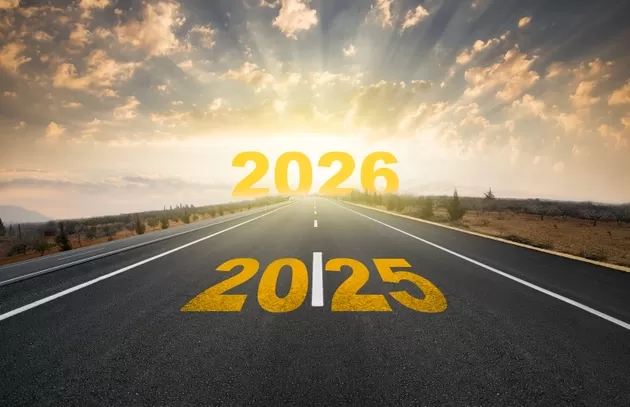
Navigating 2026: The Hopes, Headwinds, and Harsh Realities We Might Face
What does 2026 truly hold for the global economy and markets? We're peering into the crystal ball, exploring the potential triumphs, persistent challenges, and worst-case scenarios that could shape our financial futures.
You know, trying to peer into the future, especially two years out, feels a bit like trying to catch smoke with your bare hands. It's incredibly difficult, isn't it? Yet, here we are, already contemplating 2026, and it's a worthwhile exercise, I think, to prepare ourselves for the myriad possibilities. We're not talking about absolute certainties, of course, but rather a spectrum of potential outcomes that could truly shape our financial lives and the broader global landscape. It’s about being informed, not just hopeful or fearful, about what might be on the horizon.
Let's start with 'The Good,' because frankly, who doesn't love a bit of optimism? Imagine, if you will, a 2026 where the global economy finally finds its footing after all the recent turbulence. We might see inflation, that persistent headache we've all been dealing with, genuinely cooling down, allowing central banks to ease off the monetary brakes a bit. This could pave the way for more stable, maybe even slightly lower, interest rates, making borrowing less painful for businesses and consumers alike. And then there's the innovation! Think about how AI, biotech, and renewable energy are just burgeoning now. By 2026, these sectors could really hit their stride, driving fantastic corporate earnings and sparking a new wave of productivity. We could be looking at a truly robust market recovery, perhaps even a new bull market phase that feels, well, a lot more comfortable than what we've seen recently.
But then, we have to talk about 'The Bad,' don't we? Because life, and economics, are rarely ever just sunshine and rainbows. One of the biggest shadows looming is, without a doubt, geopolitical tension. Conflicts in places like Ukraine or the Middle East, or even escalating rhetoric around Taiwan, could easily disrupt supply chains again, sending energy prices through the roof. And let's not forget about inflation's stubborn side. While it might generally cool, certain sectors, particularly housing or services, could remain persistently sticky, keeping price pressures alive in ways we least expect. Then there's the elephant in the room: debt. Governments, corporations, even households, are carrying significant debt loads. This could easily lead to financial vulnerabilities or, perhaps, a 'rolling recession' where different sectors take turns struggling, even if the overall economy avoids a full-blown slump. And, of course, a major election year always adds a layer of uncertainty and potential volatility.
And now, for 'The Ugly.' This is where we consider those scenarios we sincerely hope never come to pass, but are important to acknowledge nonetheless. What if a true 'black swan' event swoops in? We're talking about something utterly unforeseen and catastrophic – a new global pandemic that shutters economies, a major cyberattack that cripples infrastructure, or perhaps a significant climate event that devastates entire regions. On the economic front, imagine a scenario where central banks, in their zeal to fight inflation, overtighten so much that it triggers a severe, synchronized global recession, perhaps even leading to a widespread financial crisis. International cooperation could fray further, making it harder to address global challenges. Extreme market volatility could become the norm, rather than the exception, pushing us into a prolonged, brutal bear market. And let's not discount the potential for social unrest, fueled by persistent inequality or political polarization, to bubble over and disrupt stability in unexpected ways.
So, where does that leave us? Well, certainly not with a definitive answer, but perhaps with a clearer perspective. 2026 isn't just going to be one thing; it's likely to be a complex mix of these 'Good,' 'Bad,' and 'Ugly' elements, unfolding in ways we can't fully predict today. The key, I believe, is to embrace a balanced outlook – to hope for the best, prepare for the worst, and remain adaptable to whatever comes our way. Whether it's making smart personal financial decisions or simply staying informed about the broader economic currents, a thoughtful, human approach to planning for the future feels more important now than ever before. After all, isn't that what genuine foresight is all about?
Editorial note: Nishadil may use AI assistance for news drafting and formatting. Readers can report issues from this page, and material corrections are reviewed under our editorial standards.


