NASA's Trailblazing StarBurst Mission Clears Crucial Hurdles, Poised to Unravel Cosmic Mysteries
- Nishadil
- January 16, 2026
- 0 Comments
- 3 minutes read
- 45 Views
- Save
- Follow Topic

StarBurst Mission Passes Critical Tests, Ready to Hunt Gamma-Ray Bursts
NASA's groundbreaking StarBurst mission, a small but mighty CubeSat, has successfully navigated a battery of rigorous tests, moving closer to its 2027 launch to detect high-energy cosmic events.
Imagine a tiny satellite, no bigger than a shoebox really, but packed with enough power to peer into the universe's most explosive secrets. That's NASA's StarBurst mission in a nutshell, and it just hit a massive milestone, successfully passing a gauntlet of critical tests. This isn't just a technical achievement; it's a giant leap closer to uncovering some of the cosmos' most enigmatic phenomena: gamma-ray bursts.
StarBurst, you see, is a specialized CubeSat – those miniature satellites that are becoming increasingly vital for space exploration. Its primary goal? To pinpoint and study gamma-ray bursts (GRBs), which are, frankly, the most powerful explosions in the universe since the Big Bang. We're talking about events that can release more energy in mere seconds than our Sun will over its entire ten-billion-year lifespan. Pretty mind-boggling, right? But it's not just GRBs; StarBurst is also designed to catch gravitational wave events and other transient high-energy cosmic wonders.
What makes StarBurst so special, particularly for its modest size, is its innovative use of scintillator technology. Think of it like a highly sensitive cosmic 'net' designed to capture those elusive gamma rays. It's built with four sophisticated scintillator detectors, which convert high-energy photons into flashes of visible light, allowing the spacecraft to detect even faint signals. This kind of sensitivity, especially from a CubeSat, is truly remarkable and promises to expand our observational capabilities significantly.
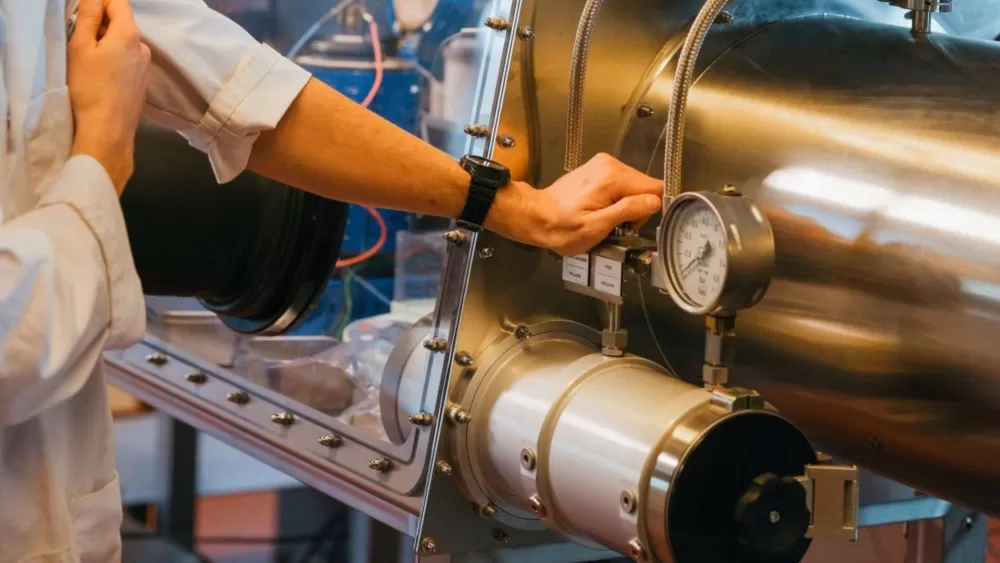
Getting ready for space isn't a walk in the park; it's a brutal obstacle course. The StarBurst team put their creation through the wringer at NASA's Goddard Space Flight Center in Greenbelt, Maryland. We're talking about tests designed to mimic the absolute worst conditions it might face, both during the violent jostling of a rocket launch and the unforgiving vacuum of space. There were intense vibration tests, shaking it relentlessly to ensure it could withstand the journey skyward. Then came the thermal vacuum tests, where the satellite was subjected to extreme temperature swings – from scorching heat to bitter cold – all while in a vacuum, just like deep space. And let's not forget the electromagnetic interference (EMI) tests, crucial for making sure its electronics play nice with each other and don't get scrambled by external radiation.
Passing these trials with flying colors is a huge deal. It means the StarBurst team, a fantastic collaboration between NASA Goddard and several partner institutions, has built a robust and reliable piece of hardware. It’s a testament to their dedication and engineering prowess, confirming that the CubeSat is structurally sound and ready for its ultimate challenge.
So, what's next for our cosmic detective? With these critical hurdles cleared, StarBurst is now on track for a potential launch as early as 2027. Once it's up there, orbiting our planet, it will serve as a crucial eye in the sky, working alongside larger observatories to provide a more comprehensive picture of these fleeting, high-energy events. Imagine the new discoveries, the mysteries it might unravel about stellar deaths, neutron star mergers, and the very fabric of spacetime itself. It's genuinely thrilling to think about the insights this little mission could bring.
Ultimately, StarBurst isn't just another satellite; it represents a significant step forward in our ability to observe and understand the most extreme phenomena in the universe. It's a testament to innovation, collaboration, and humanity's unyielding curiosity. We're on the cusp of a new era in gamma-ray astronomy, and this tiny CubeSat is leading the charge.
Editorial note: Nishadil may use AI assistance for news drafting and formatting. Readers can report issues from this page, and material corrections are reviewed under our editorial standards.