
Linux Gaming Just Got a Huge Boost: New VRAM Feature Unleashes Hidden Performance!
- Nishadil
- April 21, 2026
- 0 Comments
- 4 minutes read
- 36 Views
- Save
- Follow Topic
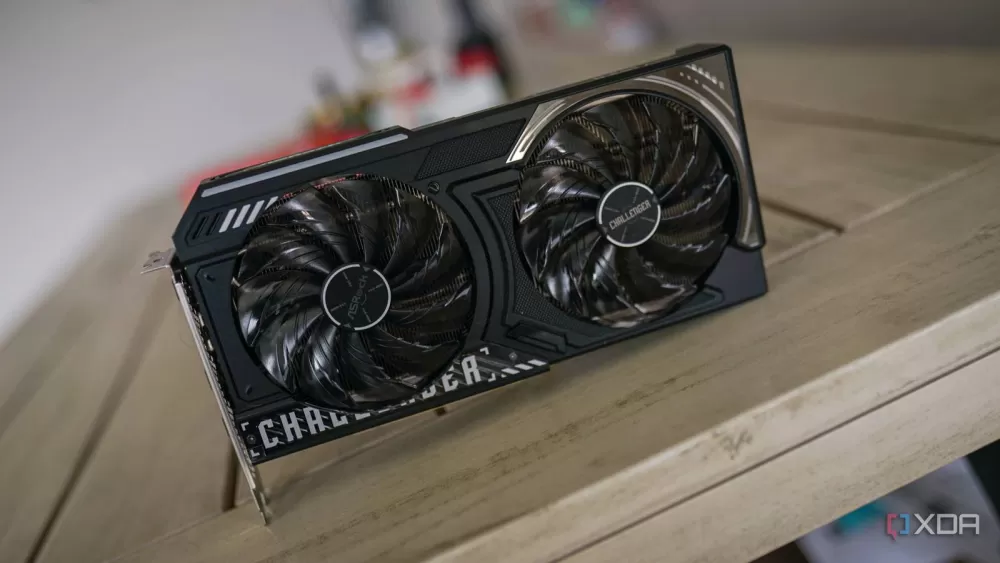
Linux 6.8 Kernel Introduces Groundbreaking VRAM Management That Can Triple Game Framerates
A groundbreaking VRAM-saving feature, `VM_MADV_POPULATE_READ`, in the Linux 6.8 kernel is dramatically improving gaming performance, with some titles seeing framerates nearly triple. This innovation, initially from Google and ported by Marc Aurele La France, smartly manages GPU memory to reduce stuttering and enhance fluidity, especially for games that push VRAM limits.
For years, Linux has been steadily carving out its niche as a serious gaming platform. We've seen incredible progress with Proton and native titles, making it easier than ever to dive into our favorite games. But let's be honest, there have always been those pesky technical hurdles, right? One of the biggest pain points, especially with modern, graphically intense games, has often been VRAM – or rather, running out of it.
Picture this: you're in the middle of an epic boss battle or exploring a vast, beautiful open world, and suddenly, everything stutters to a crawl. That jarring halt in fluidity? More often than not, it's your GPU scrambling because it’s run out of dedicated video memory and has to start fetching data from the much slower system RAM. It’s like trying to run a sprint while wearing lead boots.
Well, get ready for some truly exciting news because a new feature tucked away in the recently released Linux 6.8 kernel is poised to change that experience dramatically for many. It's called VM_MADV_POPULATE_READ, and while the name might sound a bit intimidatingly technical, its impact on gaming performance can be nothing short of revolutionary.
This isn't some brand-new, from-scratch invention for Linux desktop gaming, interestingly enough. Its roots trace back to Google, where it was initially developed for Android. But thanks to the diligent work of independent developer Marc Aurele La France, this clever VRAM-saving mechanism has been skillfully ported and integrated into the broader Linux kernel, making it available for us desktop users.
So, how does it actually work? Think of it like a super-smart librarian for your GPU's memory. Instead of blindly trying to cram every piece of data into VRAM, or haphazardly swapping things out when full, this feature provides a crucial hint to the kernel. Essentially, it tells the operating system, "Hey, this specific chunk of memory? We're probably going to need it very, very soon. Keep it on the GPU, please, or at least prepare it." By doing this, it allows the kernel to intelligently prioritize and manage VRAM, keeping actively used textures and assets close at hand, while less critical data can be safely offloaded to system RAM without causing a performance catastrophe.
The real magic, however, lies in the numbers, and the folks over at Phoronix, particularly Michael Larabel, have done some stellar testing. Their findings are genuinely eye-opening. Take for instance, The Talos Principle running on an Intel ARC A770 GPU. Before this feature, the game was chugging along at a rather dismal ~25 frames per second. But with VM_MADV_POPULATE_READ enabled? The framerate absolutely soared to nearly 70 FPS! That's almost tripling the performance from a simple kernel-level optimization. Seriously, it's mind-boggling!
It's not just Intel cards seeing the benefit either. Phoronix also tested Serious Sam 4 on an AMD Radeon RX 7900 XT, where the framerate jumped by over 50%. While these results are incredibly promising, it's important to temper expectations slightly. This isn't a universal magic bullet that will boost every single game equally. Some titles might see no change, or perhaps even a minor decrease, but for those specific scenarios where games are pushing VRAM limits hard – think high resolutions, ultra textures, or demanding open-world environments – this feature is a bonafide game-changer.
Ultimately, this isn't about making your system RAM as lightning-fast as dedicated VRAM; that's simply not possible. Instead, it's about preventing your GPU from needing to resort to that slower system RAM for critical, frequently accessed assets in the first place. It smartly avoids that performance cliff that many Linux gamers have unfortunately become all too familiar with.
So, if you're running a distribution with the Linux 6.8 kernel (or eagerly awaiting its arrival), you might just be in for a fantastic surprise. This feature marks another significant stride for Linux as a gaming platform, making it even more robust and enjoyable. It's an exciting time to be a Linux gamer, and frankly, I can't wait to see what other optimizations are on the horizon!
Editorial note: Nishadil may use AI assistance for news drafting and formatting. Readers can report issues from this page, and material corrections are reviewed under our editorial standards.












