Kentucky's Global Crossroads: Venezuela Takes Center Stage in Congressional Race
- Nishadil
- January 06, 2026
- 0 Comments
- 5 minutes read
- 62 Views
- Save
- Follow Topic

From Caracas to the Commonwealth: How Venezuela is Shaping Kentucky's 2026 Election Narrative
In a surprising turn of events, the distant humanitarian crisis in Venezuela has emerged as a critical, and often polarizing, issue in Kentucky's fiercely contested 2026 congressional race, prompting candidates to link global challenges directly to local concerns.
It’s early 2026, and the crisp winter air across Kentucky is already thick with political ambition. Campaign signs, a harbinger of the upcoming November election, are starting to dot the landscapes from the Ohio River to the Appalachian foothills. Yet, amidst the familiar debates on local infrastructure, job growth, and healthcare, something rather unexpected has elbowed its way into the spotlight: the complex, often tragic, situation in Venezuela.
It's a fascinating, perhaps even perplexing, development for many. Why, you might ask, is a nation thousands of miles away suddenly a key talking point in a Kentucky congressional race? Well, politicians, bless their hearts, are masters at connecting dots, aren't they? They're diligently working to draw lines between foreign policy, global economic stability, and the very real, everyday lives of Kentuckians. For some, it's about the moral imperative of freedom and democracy; for others, it touches on pocketbook issues like gas prices or the broader implications of international migration.
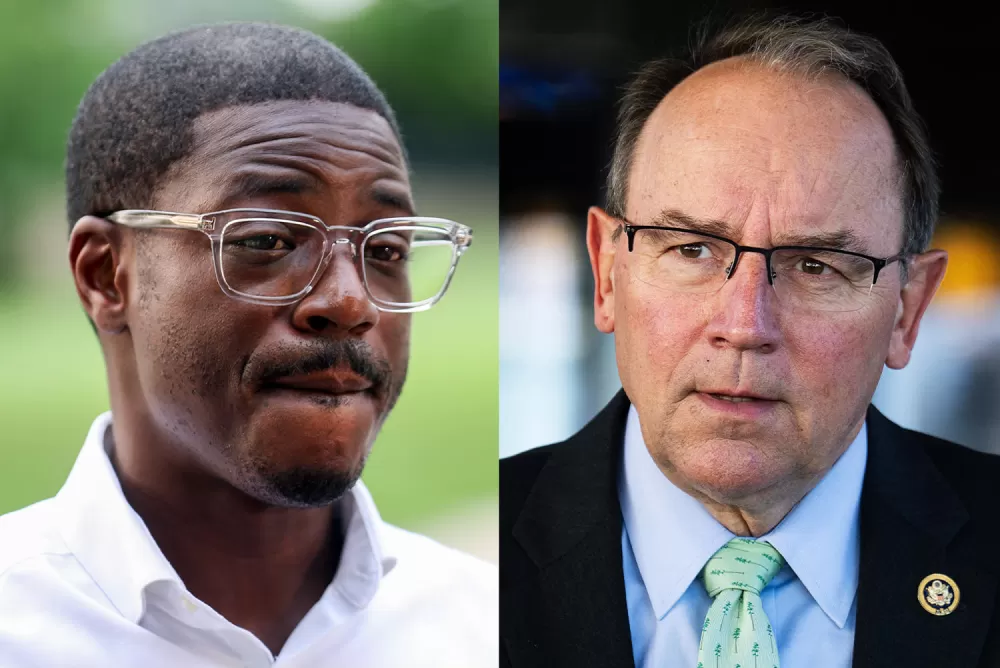
Take Representative Eleanor Vance, for instance, a seasoned incumbent in a particularly competitive district. She’s been remarkably outspoken, you know, really hammering home the human rights abuses and the steady erosion of democratic institutions under the Maduro regime. "Kentucky stands for freedom," she declared with conviction at a recent rally, her voice echoing, "and we simply cannot afford to turn a blind eye to tyranny, especially when its ripples invariably affect our own economy and national security." Vance often connects the ongoing instability there to global oil markets, which, let's be honest, tends to hit everyone directly at the gas pump.
Then there's her challenger, Robert "Bobby" Jenkins, a charismatic newcomer with a strong grassroots following. He, too, acknowledges the crisis in Venezuela, but his approach is distinctly different. He often pivots, gently but firmly, back to domestic concerns. "Our folks right here in Kentucky are worried about their jobs, about the skyrocketing costs of healthcare, about simply making ends meet," he asserts, often with that earnest, relatable gaze. "While global issues absolutely matter, we fundamentally need a representative who is laser-focused on bringing prosperity and stability right here, at home." Jenkins sometimes implies that current U.S. foreign policy toward Venezuela hasn't been particularly effective anyway, suggesting perhaps a re-prioritization of resources and attention.
So, what do the voters truly think about all this? It's a wonderfully mixed bag, I've found. I spoke to Mary Beth, a retired teacher from Lexington, who confided, "Venezuela? Honestly, dear, I'm much more concerned about my social Security benefits and the local school board." But then you engage with someone like Thomas, a young veteran from a rural county, and he offers a different perspective: "It's all connected, isn't it? Global stability, American leadership... it affects us all, one way or another." It's clear that both candidates face the delicate task of making a compelling, tangible case to bridge this perceived gap between the global and the local.
Ultimately, this isn't just about abstract foreign policy debates. It’s about how skillfully candidates articulate the very tangible impacts of these distant events. Can they truly convince voters that a struggling Venezuela means, say, higher gas prices in Louisville, or that a flow of migrants affects local social services? It's a remarkably delicate dance, requiring a blend of empathy, economic acumen, and effective communication.
As the campaign machine grinds on towards November 2026, the "Venezuela question," unlikely as it might seem on paper, will continue to echo across Kentucky's rolling hills and bustling valleys. It’s a testament, I suppose, to just how deeply intertwined our world truly is, even in a local congressional race. And it forces us, the voters, to really think beyond our immediate surroundings, doesn't it?
Editorial note: Nishadil may use AI assistance for news drafting and formatting. Readers can report issues from this page, and material corrections are reviewed under our editorial standards.