Jemele Hill and Cari Champion Call Out WNBA’s Media Restrictions
- Nishadil
- October 22, 2026
- 0 Comments
- 3 minutes read
- 9 Views
- Save
- Follow Topic
Veteran broadcasters say league’s policies are choking coverage at a crucial moment
Jemele Hill and Cari Champion argue that the WNBA’s media rules are limiting journalists just as the league enjoys record viewership and expansion plans.
The WNBA is riding a wave. Fresh faces like Caitlin Clark and Angel Reese have helped the league post its highest‑ever regular‑season average – roughly 771,000 viewers per game – and the playoffs have kept that momentum going. Game 1 of the Finals, featuring Reese’s Atlanta Dream against the Golden State Valkyries, pulled in a staggering 2.1 million eyes, the most‑watched opening game in league history.
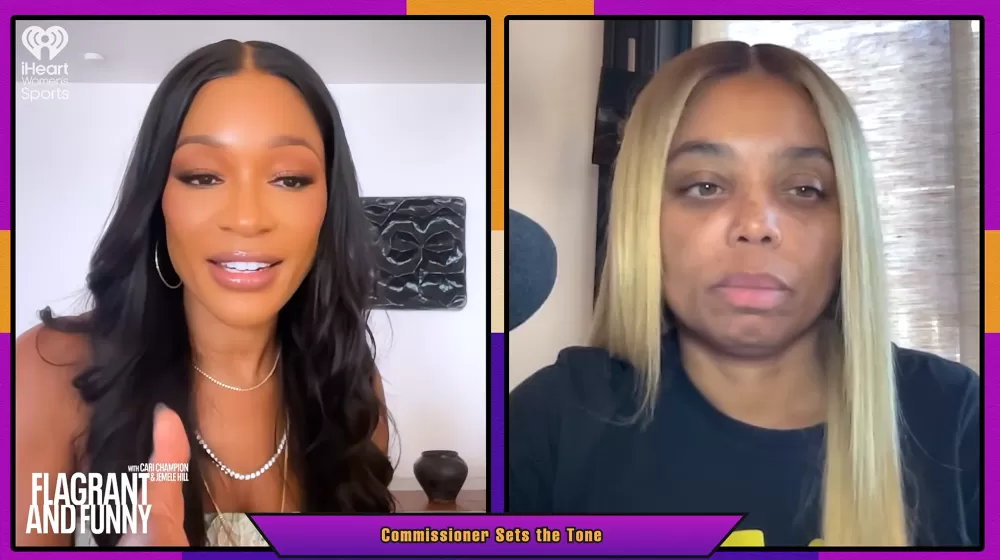
But amid the cheers, two seasoned voices in sports media are sounding a note of concern. On the “Flagrant and Funny” podcast, co‑hosts Jemelle Hill and Cari Champion argue that the league’s media policies are actually throttling that very growth.
“I think there’s some media policies that they need to address,” Hill said, pausing just long enough for the point to sink in. “Because I think some of them, frankly, are stifling to the growth of the league.”
She cited a specific incident from the semifinals: the Golden State Valkyries went three days without any media availability. “It’s the playoffs,” Hill added, “what are you doing? Every single day you want people talking about these women, writing about these women, especially during your signature time of year.”
Champion, meanwhile, highlighted a deeper cultural issue. She suggested that a lingering stereotype – that women can’t handle criticism – combined with front‑office nerves about negative press is prompting teams to clamp down on honest reporting.
“A lot of it has to do with the fact that we have heard from critics that women can’t take the critique,” Champion explained. “And a lot of journalists are tiptoeing around honest stories because franchises, the front offices, don’t like to be criticized.”
The pair pointed to a concrete example from June, when the Indiana Fever pulled Scott Agness’s credentials after he reported an injury the team wanted to keep under wraps. “That shows there might be some truth to what Cari’s saying,” Hill noted.
All this comes at a pivotal time. The WNBA is gearing up for an expansion push – three new franchises are slated to join by 2030 – and commissioner Cathy Engelbert will step down after this season. Champion hopes the incoming commissioner will usher in a more open‑handed era.
“They’ve used that approach for a very long time, quietly bullying certain journalists and letting them know they’re not welcome if they don’t play along,” Champion said. “You can’t do that when the league is growing. The communications infrastructure needs a mind‑update. This isn’t the W of 30 years ago. It’s the W of today, with different technology, different personalities, and a different pace.”
In short, Hill and Champion are asking the league to recognize that transparency isn’t a threat – it’s a catalyst. If the WNBA truly wants to keep its audience numbers climbing, it may need to give journalists a little more room to breathe.
Editorial note: Nishadil may use AI assistance for news drafting and formatting. Readers can report issues from this page, and material corrections are reviewed under our editorial standards.