Iran's Nuclear Conundrum: Unpacking the Global Game of Trust and Uranium
- Nishadil
- April 20, 2026
- 0 Comments
- 3 minutes read
- 39 Views
- Save
- Follow Topic
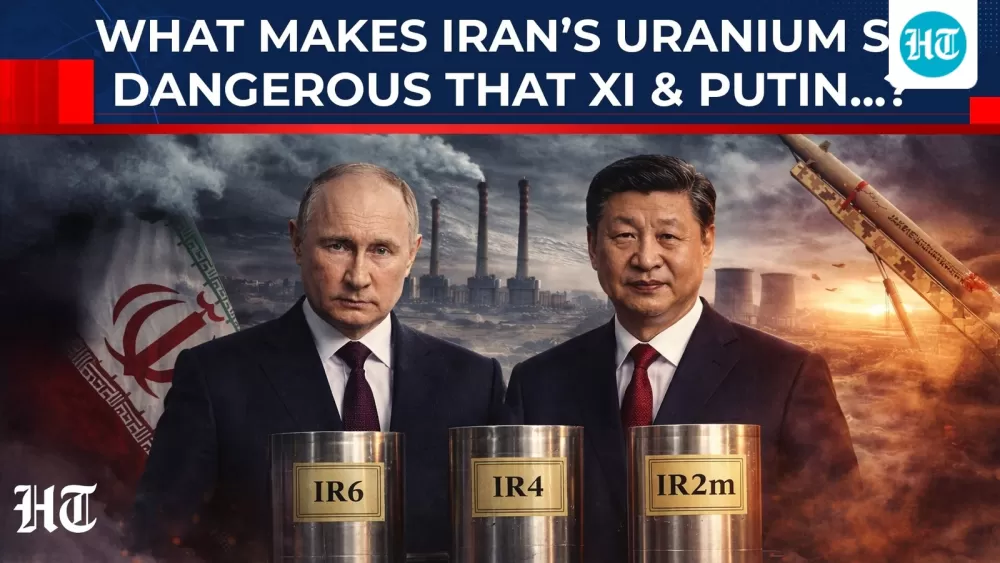
Behind the Veil of Mistrust: Why Iran's Uranium Stirs Global Fears and Fuels Geopolitical Chess Matches
The world watches Iran's nuclear program with trepidation, a situation made infinitely more complex by the interplay of global powers like Russia, China, and the US. Is the mistrust purely about non-proliferation, or are there deeper strategic truths at play, shaping a dangerous geopolitical landscape?
When we talk about Iran's uranium, it's never just about the element itself, is it? It's always a loaded conversation, instantly conjuring images of international tensions and profound mistrust. For decades, Iran has pursued its nuclear program, citing peaceful energy needs – electricity, medical isotopes, the usual justifications. Yet, the international community, particularly the West, has consistently viewed these ambitions through a prism of deep suspicion, fearing the ultimate goal is not power generation, but rather, power projection in its most devastating form: a nuclear weapon.
So, why the unwavering skepticism? Well, it's a complicated tapestry woven from past clandestine activities, a less-than-transparent history with international inspectors, and the inherently dual-use nature of nuclear technology. What one nation calls a civilian energy project, another sees as a hair's breadth from weaponization. The landmark Iran nuclear deal, the JCPOA, was supposed to be a circuit breaker, a way to provide strict oversight in exchange for sanctions relief. But, as we all know, that agreement fractured, leaving us right back in a perilous state of uncertainty and escalating enrichment levels.
Now, let's pull back the curtain a little and consider the grand geopolitical stage. When you bring figures like Russia's Putin, China's Xi, and the US, represented notably by the Trump administration's approach to the JCPOA, into the discussion, the plot thickens considerably. It’s not just about Iran and its nuclear intentions anymore; it becomes a multi-faceted strategic game. You can't help but wonder if the persistent mistrust surrounding Iran's nuclear program isn't just an organic outcome of their past actions, but also, in part, a convenient narrative for major global players.
Could it be that some powerful nations, for their own strategic gains, find a degree of ambiguity or even tension around Iran's nuclear program rather… convenient? It's a sobering thought, isn't it? Perhaps maintaining this high level of distrust offers leverage, a perpetual reason for sanctions, or a distraction from other global issues. Maybe it even serves to limit Iran's regional influence, keeping it isolated and dependent on certain allies. The 'terrifying truth' hinted at by some is that the great powers, with their conflicting interests and shifting alliances, might not always prioritize a stable, fully resolved Iran nuclear file if the status quo, however volatile, serves their broader geopolitical objectives.
The stakes, let's be utterly clear, couldn't be higher. A nuclear-armed Iran isn't just a regional headache; it's a global seismic shift. It could ignite a devastating arms race in the Middle East, a region already teeming with instability. The implications for international security, non-proliferation efforts, and the global balance of power are frankly terrifying to contemplate. Each step Iran takes towards higher enrichment, each pronouncement from its leadership, sends ripples of anxiety across capitals worldwide.
Ultimately, the issue of Iran's uranium isn't just about centrifuges and enrichment levels. It's a complex, deeply human story of national ambition, international fear, power dynamics, and a trust deficit that, for now, seems stubbornly impossible to bridge. And in this intricate dance, the actions and perceived motives of global giants like Russia, China, and the United States play a role just as critical as Iran's own choices, shaping a future that remains dangerously unpredictable.
Editorial note: Nishadil may use AI assistance for news drafting and formatting. Readers can report issues from this page, and material corrections are reviewed under our editorial standards.