Intel's Surprising New Identity: Why a Tech Giant Might Be Trading Like a Meme Stock
- Nishadil
- January 23, 2026
- 0 Comments
- 4 minutes read
- 50 Views
- Save
- Follow Topic

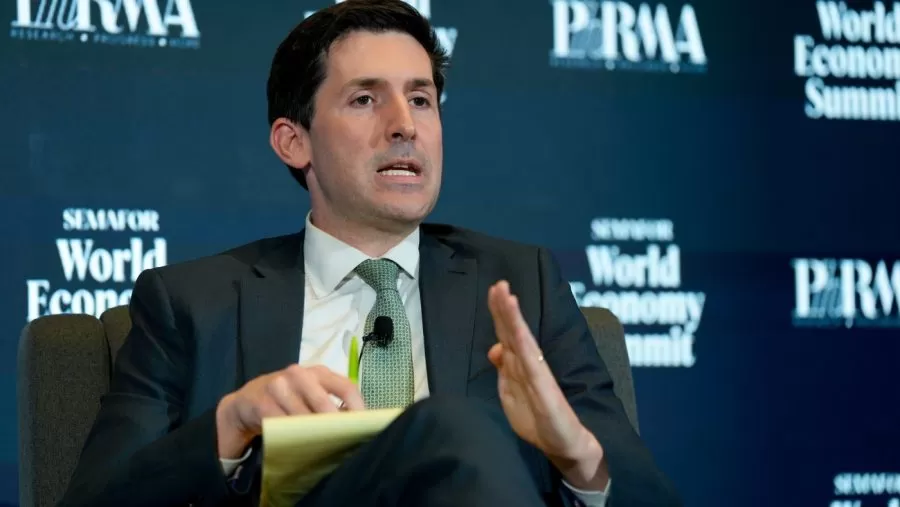
Gene Munster: Intel is Behaving Like a Meme Stock
Deepwater Capital's Gene Munster offers a provocative take, suggesting that Intel, despite its deep fundamentals, is exhibiting characteristics akin to a meme stock. This challenges traditional investment views.
Gene Munster, the insightful analyst from Deepwater Capital, has recently dropped a rather thought-provoking bomb on the investment world. His claim? That Intel, the venerable chip giant we’ve all known for decades, is, "at its most basic level," behaving like a meme stock. Now, that's quite a statement, isn't it?
We usually associate Intel with industrial might, cutting-edge technological innovation, and a bedrock presence in the global semiconductor industry. Its stock movements have traditionally been analyzed through the lens of earnings reports, market share gains, R&D breakthroughs, and strategic partnerships. To suddenly liken it to a "meme stock"—the volatile, retail-investor-driven realm of GameStop, AMC, and other heavily speculative equities—suggests a profound shift in how its market dynamics are being perceived. It makes you wonder, what exactly is going on?
So, what does it truly mean for Intel to be categorized as a "meme stock"? It implies that its stock price movements might be increasingly influenced by factors that extend far beyond traditional business fundamentals. Think about it: a meme stock's trajectory is often fueled by online chatter, social media sentiment, a collective narrative, and, crucially, coordinated (or at least highly enthusiastic) retail investor action. There's an emotional component, a sense of shared enthusiasm, and sometimes even a desire to 'stick it to the short-sellers' or champion an underdog story, which can create a significant detachment from a company's underlying financial performance or intrinsic value. It’s less about the balance sheet and more about the buzz.
For Intel, a company that has certainly faced its share of challenges in recent years—grappling with market share losses to fierce competitors like AMD, navigating complex manufacturing delays, and undergoing significant strategic shifts under CEO Pat Gelsinger—this perspective is particularly compelling. Perhaps retail investors, seeing Intel as a storied giant that's been down but not out, are jumping in. They might be fueled by a narrative of resurgence, betting on the "comeback kid" story. This collective belief could be driving up trading volumes and creating momentum that looks less like a calculated institutional play and more like the speculative fervor we’ve observed in classic meme stock phenomena. It's almost as if the market isn't just treating Intel as a technology titan, but as a project, a community-backed effort to see it regain its former glory.
Of course, let's be clear: Intel is no GameStop in terms of its core business. It still possesses enormous intellectual property, vast manufacturing capabilities across the globe, and a significant, fundamental market presence in essential technologies. Yet, Munster's observation points to a potentially dangerous blurring of lines. When a company with such deep, established fundamentals starts to exhibit meme-like behavior, investors need to tread with extreme caution. The volatility that frequently accompanies meme stocks can be exhilarating on the way up, but it can also be absolutely brutal and swift on the way down. It suggests that investment decisions might be made more on emotional waves and less on careful analysis of balance sheets, future product roadmaps, or long-term market trends.
So, as Intel continues its arduous fight in the intensely competitive semiconductor arena, Gene Munster's perspective serves as a powerful, albeit surprising, reminder. Investors shouldn't just look at the silicon; they need to understand the human psychology, the intricate social dynamics, and the often-unpredictable retail sentiment that might, quite surprisingly, be driving a significant portion of Intel's stock story right now. It's a complex picture, certainly not one for the faint of heart, and it underscores the ever-evolving nature of today's stock market.
- UnitedStatesOfAmerica
- News
- Technology
- BusinessNews
- Science
- ScienceNews
- Economy
- Markets
- Earnings
- TechStocks
- SemiconductorIndustry
- StockMarketAnalysis
- Neutral
- BreakingNewsMarkets
- RetailInvestors
- IntelStock
- IntelCorp
- InvestingStrategy
- BreakingNewsTechnology
- BreakingNewsEconomy
- StockVolatility
- GeneMunster
- MemeStock
- DeepwaterCapital
Editorial note: Nishadil may use AI assistance for news drafting and formatting. Readers can report issues from this page, and material corrections are reviewed under our editorial standards.