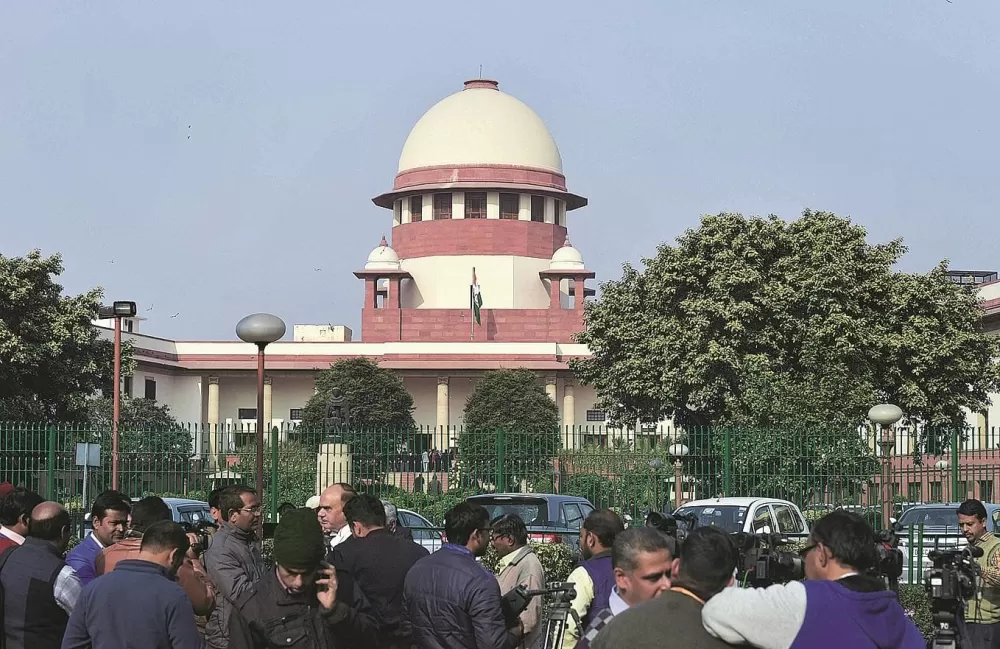
India's Democratic Pulse: The Call to Rename Raj Bhavans to Lok Bhavans
- Nishadil
- December 01, 2025
- 0 Comments
- 3 minutes read
- 47 Views
- Save
- Follow Topic

A Symbolic Shift: MHA Encourages States to Adopt 'Lok Bhavan' for Governor's Residences
In a meaningful step towards shedding colonial remnants, the Ministry of Home Affairs has suggested that states and Union Territories consider renaming their 'Raj Bhavans' to 'Lok Bhavans', emphasizing India's democratic values and commitment to public service.
Ever noticed how certain names just carry a historical weight? Well, India's Ministry of Home Affairs (MHA) certainly has, and they've recently floated an idea that, while seemingly small, speaks volumes about our nation's evolving identity. They've encouraged states and Union Territories to think about renaming the official residences of their Governors – you know, the stately 'Raj Bhavans' – to something more fitting: 'Lok Bhavans'.
It's quite a thoughtful suggestion, really, and it gets right to the heart of what India stands for today. The term 'Raj Bhavan', when you really break it down, feels a little bit like a relic from a bygone era. 'Raj' immediately conjures images of 'the Raj,' doesn't it? The British Raj, the era of colonial rule. It inherently suggests a seat of power that rules rather than serves. And in a vibrant democracy like ours, where the people are sovereign, that just doesn't quite sit right anymore.
Enter 'Lok Bhavan'. Ah, now that sounds much more like it! 'Lok' translates to 'people', making it the 'People's House'. It instantly shifts the perception, aligning these important buildings with the very essence of public service and democratic principles. It's about accessibility, about the Governor's role as a representative of the people, rather than an authoritarian figure. This subtle linguistic tweak carries immense symbolic power, aiming to truly reflect the spirit of India's Constitution.
Now, let's be clear, this isn't some stern directive handed down from on high. Far from it, actually. The MHA's communication, which apparently went out to all states and UTs back in March, is purely a suggestion. It’s an invitation for consideration, a gentle nudge for local administrations to reflect on this potential change and decide if it resonates with their own values and vision. That's a key detail, showing respect for state autonomy while still promoting a unified national identity free from colonial vestiges.
It's also interesting to note that this isn't a completely novel concept within India. For instance, Uttar Pradesh already has a prominent 'Lok Bhavan' which serves as the Chief Minister's office. This precedent demonstrates that the concept is not just viable but has already been embraced in significant ways. It shows a forward-thinking approach that many could certainly follow.
Ultimately, this push to rename 'Raj Bhavans' to 'Lok Bhavans' is part of a larger, ongoing national effort. It's about shedding the last remnants of our colonial past, from street names to governmental designations, and truly embedding our democratic ethos into every facet of public life. It's about making sure that every symbol, every name, truly represents an India that is for the people, by the people, and of the people. A small change, perhaps, but one with a profound message for the future.
Editorial note: Nishadil may use AI assistance for news drafting and formatting. Readers can report issues from this page, and material corrections are reviewed under our editorial standards.