India’s Struggle to Build a Battery‑Cell Ecosystem and the New PLI Hope
- Nishadil
- October 22, 2026
- 0 Comments
- 3 minutes read
- 10 Views
- Save
- Follow Topic
Why India’s First Battery‑Cell PLI Fell Short – and Whether a Fresh Incentive Can Turn the Tide
Electric vehicle sales are booming, but India still imports most of its lithium‑ion cells. A new ₹12,000‑crore PLI targeting raw‑material components may finally close the gap.
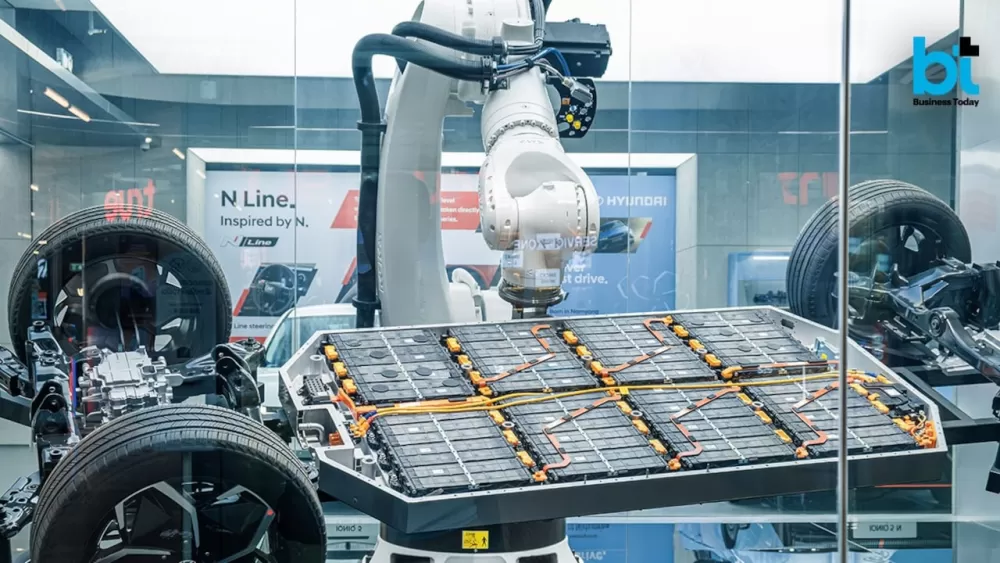
Electric cars and scooters are suddenly a common sight on Indian streets – the market jumped from a niche curiosity to about 8 % of new car sales and 11 % of two‑wheeler sales in just a few years. The surge helped shave off a chunk of the country’s fuel‑import bill, but it also turned the nation into a massive net‑importer of battery cells.
In July 2026, imports of lithium‑ion cells exploded by 159 % year‑on‑year, reaching ₹7,209 crore. Across the first quarter of FY 2026‑27, the figure swelled to a staggering ₹15,721 crore – roughly 85 % of it coming from China. The numbers tell a simple story: demand is roaring, supply is still far away.
The government tried to bridge the gap back in May 2021 with an ₹18,100‑crore Production‑Linked Incentive (PLI) for Advanced Chemistry Cells (ACC). On paper, the scheme promised 40 GWh of domestic capacity. In reality, apart from Ola Cell Technologies – which has barely scraped together 2.5 GWh of output – none of the approved beneficiaries have switched on a production line.
Ola’s shortfall is symptomatic. Most Indian firms lack the know‑how, the capital and the ecosystem to churn out high‑purity lithium‑ion cells. Even with a generous 20 GWh allocation under the ACC PLI, the company has yet to receive any cash incentive.
Seeing the stalled progress, policymakers are now rolling out a second, more focused PLI – a ₹12,000‑crore package aimed at the very building blocks of a cell: cathode and anode active materials, electrolytes, copper‑foil separators and the like. The idea is to nurture a home‑grown raw‑material supply chain before expecting companies to assemble full cells.
"Without the raw‑material components you’re just an assembler," says Anurag Choudhary, Chairman & MD of Himadri Speciality Chemical Ltd. Himadri is already betting big – a 2,000‑tonne cathode plant slated for Kolkata by December 2026, plus a massive 40,000‑tonne expansion planned for FY 28. The firm also runs a 200‑tonne anode facility in West Bengal, knowing that cathode and anode together eat up about 65 % of a cell’s cost.
But even cathode and anode production hinges on lithium carbonate, a material India does not mine. Himadri plans to import the lithium from the classic “Lithium Triangle” of Argentina, Bolivia and Chile, then process it locally – a step that could shave years off the import‑dependency timeline.
Industry veterans like Vikram Handa of Epsilon Advanced Materials warn that the challenges go deeper than just money. Over 90 % of cathode and anode active materials still flow from China, and the sector suffers from a chronic shortage of risk‑tolerant capital. "Investors want quick returns, but battery R&D needs patience and 8‑10 % of spending just on research," Handa notes.
In short, the new PLI might be the missing piece, but it can only work if the whole value chain is viewed as a single organism. Localising cells without localising their ingredients will keep the supply chain fragmented, leaving India forever dependent on overseas factories.
Whether the ₹12,000‑crore push can kick‑start that integrated ecosystem remains to be seen. All eyes are on the upcoming roll‑out, and on companies like Himadri that are willing to build the foundations from the ground up.
Editorial note: Nishadil may use AI assistance for news drafting and formatting. Readers can report issues from this page, and material corrections are reviewed under our editorial standards.