
Greta Thunberg's London Arrest: A New Chapter of Activism Under the Terrorism Act
- Nishadil
- December 24, 2025
- 0 Comments
- 3 minutes read
- 58 Views
- Save
- Follow Topic
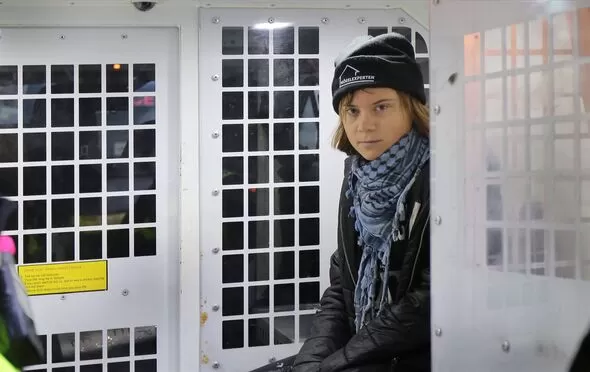
From Climate Icon to Palestine Protestor: Greta Thunberg's Arrest Sparks Controversy and Legal Scrutiny in London
Greta Thunberg was arrested in London during a pro-Palestine protest outside the Swedish embassy. Initially detained under the Terrorism Act for displaying a "Stand with Palestine" placard, she was later re-arrested on a public order offense, sparking widespread debate.
Greta Thunberg, a name that's become absolutely synonymous with youth climate activism around the globe, recently found herself caught up in a rather different kind of public drama. This time, it wasn't about scolding world leaders over carbon emissions, but an unexpected protest in London that saw her detained – and, for a moment, quite surprisingly, under a terrorism act, no less.
The scene unfolded outside the Swedish embassy, a location we usually associate with quiet diplomatic matters, certainly not high-profile arrests. On a brisk Saturday, Thunberg joined a larger demonstration, a vibrant show of solidarity with Palestinians and a protest against Israel's ongoing military actions in Gaza. There she was, amidst the throng, holding a placard that was simple yet so powerfully direct: "Stand with Palestine." It was this very act, seemingly straightforward, that initially led to her detention.
What truly caught everyone's attention, and quite naturally, sparked a fair bit of heated public debate, was the nature of that initial charge. Authorities apprehended Thunberg, along with several other activists, under Section 11 of the Terrorism Act 2000. Now, for many of us, hearing a globally recognized climate activist linked to such a serious piece of legislation felt incredibly jarring. The section, you see, broadly addresses "supporting a proscribed organisation." You can imagine the ripple effect; the headlines practically wrote themselves the moment that detail emerged.
However, the situation quickly morphed into a bit of a legal tightrope walk. After her initial detention, she was de-arrested – essentially, released from that specific terrorism charge – only to be almost immediately re-arrested on a public order offense. This kind of dynamic shift in charges isn't entirely unheard of during the often-chaotic ebb and flow of protest situations. Still, it certainly shines a light on the complex challenges authorities grapple with when trying to manage demonstrations, especially those laden with such deeply felt political and emotional dimensions.
It's worth remembering, of course, that this isn't exactly Greta's first brush with the law. She's been detained on multiple occasions across various countries, from the intense coal mine protests in Germany to similar demonstrations in Norway. Yet, the initial invocation of the Terrorism Act truly marked a noticeable escalation in how officialdom chose to respond to her activism. It moved beyond the more common public disturbance charges, into something far more weighty in its potential implications.
Ultimately, this incident powerfully underscores the intensifying global dialogue surrounding the Israel-Palestine conflict and, critically, the fundamental right to peaceful protest. When a figure of Thunberg's international stature gets involved, these conversations inevitably amplify. It really compels us to take a much closer look at where the lines are drawn between legitimate activism, freedom of expression, and what precisely constitutes a threat to public order or, indeed, national security. It leaves many of us pondering the delicate balance authorities must constantly strive to maintain, and the wider message such arrests might send to protestors everywhere.
Editorial note: Nishadil may use AI assistance for news drafting and formatting. Readers can report issues from this page, and material corrections are reviewed under our editorial standards.













