Fitbit Edge vs. Inspire 3: Which Google Tracker Fits Your Lifestyle?
- Nishadil
- October 21, 2026
- 0 Comments
- 4 minutes read
- 7 Views
- Save
- Follow Topic
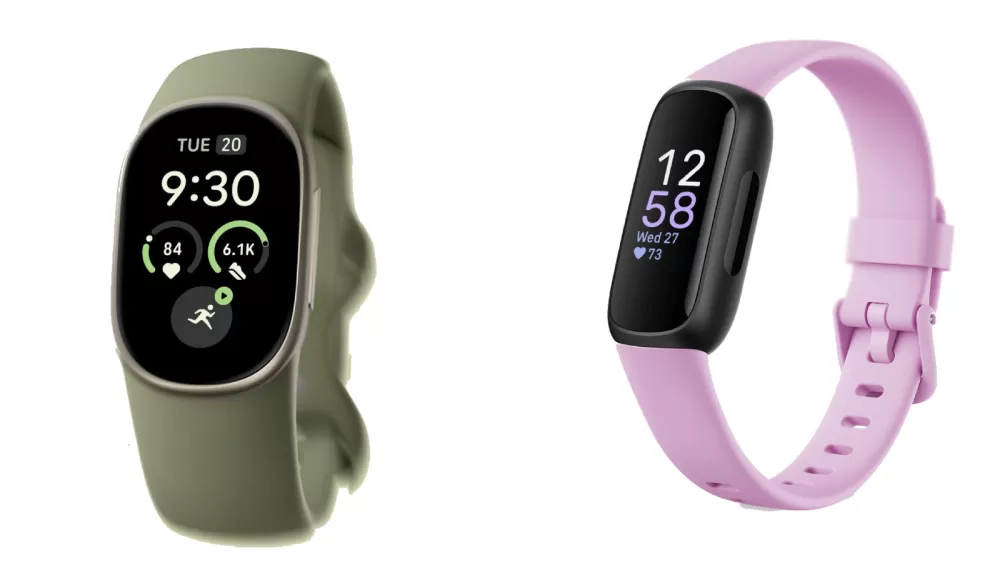
A side‑by‑side look at Google’s new Edge and the budget‑friendly Inspire 3 – screen, GPS, health sensors and more.
Google’s latest Fitbit Edge tries to bridge the gap between a simple tracker and a full‑blown smartwatch. Here’s how it stacks up against the cheaper Inspire 3.
Google just dropped the Fitbit Edge, a sleek little device that feels a bit more like a watch than a band. It’s sitting on a recycled‑aluminum case, boasts a slightly wider AMOLED screen and, at $180, carries a price tag that’s noticeably heftier than the $99.95 Inspire 3.
First off, the display. Both Edge and Inspire 3 use AMOLED panels, but the Edge’s screen is about 6.9 mm (roughly a quarter of an inch) wider. It’s not a massive jump, yet the extra real‑estate makes scrolling through stats feel less cramped. In terms of size, the two are almost twins: the Edge measures 39.2 × 25.5 × 11.5 mm, while the Inspire 3 is 39.3 × 18.6 × 11.8 mm. The difference? The Edge feels a touch bulkier, thanks to its metal housing.
Speaking of housing, the Edge’s case is 100 % recycled aluminum and feels solid in the hand – more like something you could wear to a meeting than to the gym. The Inspire 3, by contrast, sticks with a plastic frame that’s lighter but perhaps a tad less premium. Color options also diverge: Edge comes in olive green, black, white, a coral‑peach hue, and even a limited‑edition Steph Curry orange that pushes the price up to $220. Inspire 3 offers pink, orange, and black, keeping things simpler.
One of the most practical upgrades is the Edge’s built‑in GPS. Google claims it improves location accuracy by about 40 % compared to relying on your phone’s GPS. The real win? You can leave your smartphone at home during a run and still get precise distance and pace data. The Inspire 3, unfortunately, still leans on your phone for GPS info.
Bluetooth also got a boost – the Edge ships with Bluetooth 5.4, allowing you to pair wireless earbuds directly to the watch. That means you can listen to music or podcasts without juggling a phone. Speaking of music, the Edge lets you control playback, send quick replies to messages, and even glance at the weather, all from your wrist. A Google Maps integration is on the horizon, too. Inspire 3 supports basic calendar notifications, but that’s about it.
When it comes to fitness tracking, the Edge really tries to be the jack‑of‑all‑trades. It automatically detects up to 100 different movement types and offers more than 50 dedicated exercise modes. The Inspire 3 can recognise about 20 activities. Edge also adds niche metrics like “cardio load,” “target cardio load,” floors climbed, and heart‑rate data while you’re on a treadmill or elliptical – goodies that could matter to serious athletes.
Health‑monitoring sensors get a similar upgrade. Both devices give you continuous heart‑rate monitoring and SpO₂ readings, but the Edge goes further with an ECG app that can flag irregular rhythms (AFib detection). It also provides monthly insights on blood pressure and insulin resistance, and it can ingest external blood‑glucose data for deeper analysis. The Edge packs a skin‑temperature sensor, gyroscope and altimeter, which together improve GPS accuracy and add context to your workouts. Inspire 3 sticks to the basics – optical heart‑rate, blood‑oxygen and an accelerometer for speed.
Battery life is where the cheaper band still shines. The Edge promises up to a week on a single charge, while the Inspire 3 can stretch to ten days. In practice, most users will charge the Edge a couple of times a week and probably won’t notice the difference unless they’re a heavy‑night‑owl. Both are rated 5 ATM (ISO 22810:2010), meaning they’re safe for rain, showers, and shallow‑water swimming, but not deep dives. The Edge also earned an IP68 dust‑resistance rating, a spec the Inspire 3 lacks, so the Edge is a bit more rugged in dusty environments.
All things considered, the Fitbit Edge feels like a middle ground between a minimalist tracker and a full‑featured smartwatch. It gives you more premium materials, richer health data and the freedom to leave your phone behind, yet it doesn’t go as far as the Pixel Watch 5 with its cellular calls and app ecosystem. If the Pixel Watch feels overkill and you want a little more than what the Inspire 3 offers, the Edge might just be the sweet spot.
Editorial note: Nishadil may use AI assistance for news drafting and formatting. Readers can report issues from this page, and material corrections are reviewed under our editorial standards.