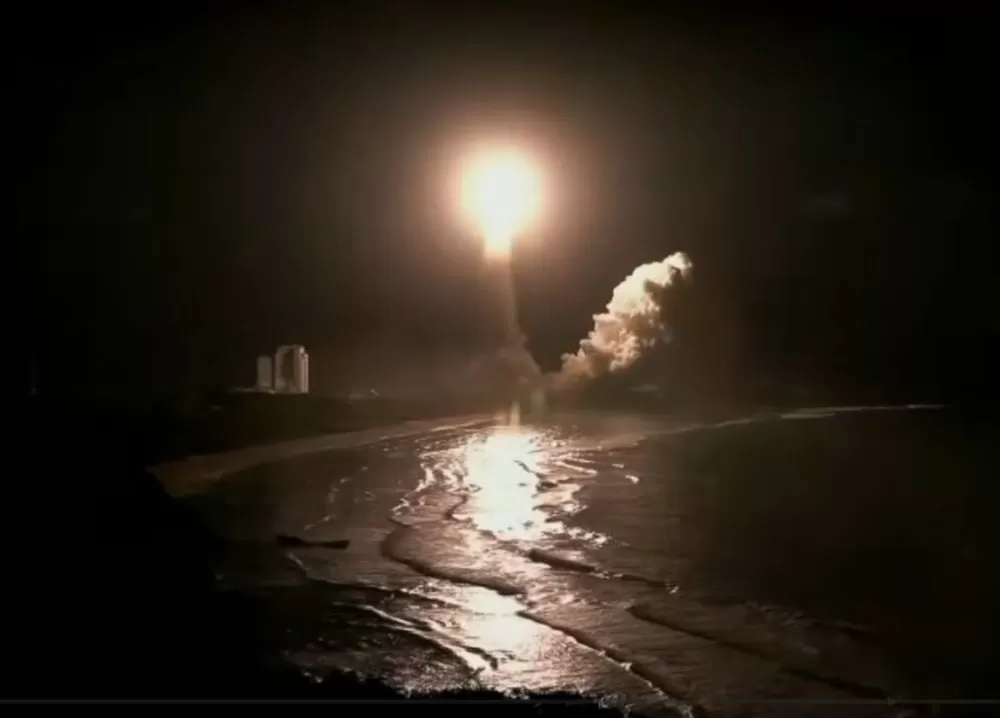
Europe's Vega-C Rocket and South Korea's KOMPSAT-7: A New Chapter in Space Exploration
- Nishadil
- December 02, 2025
- 0 Comments
- 3 minutes read
- 51 Views
- Save
- Follow Topic

Vega-C's Crucial Return: Carrying South Korea's Advanced Earth Observer, KOMPSAT-7, to Orbit
Europe's Vega-C rocket is gearing up for a truly pivotal launch, poised to carry South Korea's highly anticipated KOMPSAT-7 Earth observation satellite into space. This mission isn't just another launch; it's a critical moment for both European space endeavors, marking Vega-C's vital return to flight after past challenges, and a monumental step forward for South Korea's independent space capabilities, all while strengthening invaluable international collaboration.
You know, there are some moments in space exploration that just feel a bit more significant, don't they? And the upcoming launch of Europe's Vega-C rocket, carrying South Korea's state-of-the-art KOMPSAT-7 Earth observation satellite, absolutely falls into that category. It’s not merely a rocket launching a payload; it’s a story of resilience, ambition, and international partnership unfolding right before our eyes.
For the European space community, particularly Arianespace and the European Space Agency (ESA), this mission carries a tremendous weight. Let's be honest, getting a rocket back into reliable service after an anomaly is no small feat. Vega-C, a medium-lift launcher, has been undergoing meticulous checks and preparations following its VV22 failure, which saw the loss of two Airbus Pléiades Neo satellites. This flight, then, is a critical validation, a reassertion of its capabilities and, frankly, Europe's competitive standing in the global launch market. A successful launch here isn't just about this one mission; it's about building confidence for future contracts and cementing its place alongside its heavier-lift sibling, Ariane 6.
But the story doesn't end there, not by a long shot. The star passenger, KOMPSAT-7 (or Korea Multi-Purpose Satellite-7), is quite something for South Korea. This isn't just any satellite; it's designed to be a significant upgrade in their Earth observation capabilities. We're talking about high-resolution imagery that will be absolutely crucial for everything from detailed land management and resource monitoring to disaster response and even national security. Imagine the power of seeing our planet with such clarity, helping us understand climate change, track environmental shifts, and respond more effectively to natural calamities. For South Korea, it's a huge leap towards greater independence and sophistication in space technology, solidifying their role as a serious player in the global space arena.
The synergy between these two components – the robust European launcher and the advanced Korean satellite – truly highlights the power of international cooperation. Europe provides a reliable ride to orbit, and South Korea contributes a cutting-edge instrument that benefits not just their nation but potentially the wider scientific community. It's a win-win, a beautiful dance of engineering prowess and shared scientific ambition.
So, as we await the countdown, there’s a palpable sense of anticipation. This mission is a testament to the hard work of countless engineers, scientists, and mission controllers across continents. It's a reminder that even in the face of setbacks, the drive to explore, to understand, and to innovate propels us ever forward. Here's hoping for a flawless flight and a new, bright chapter for both Vega-C and KOMPSAT-7, enriching our understanding of our precious home planet.
Editorial note: Nishadil may use AI assistance for news drafting and formatting. Readers can report issues from this page, and material corrections are reviewed under our editorial standards.