Delhi's Lost Legacy: The Wetland That Vanished Amidst a Bureaucratic Blame Game
- Nishadil
- December 10, 2025
- 0 Comments
- 5 minutes read
- 74 Views
- Save
- Follow Topic
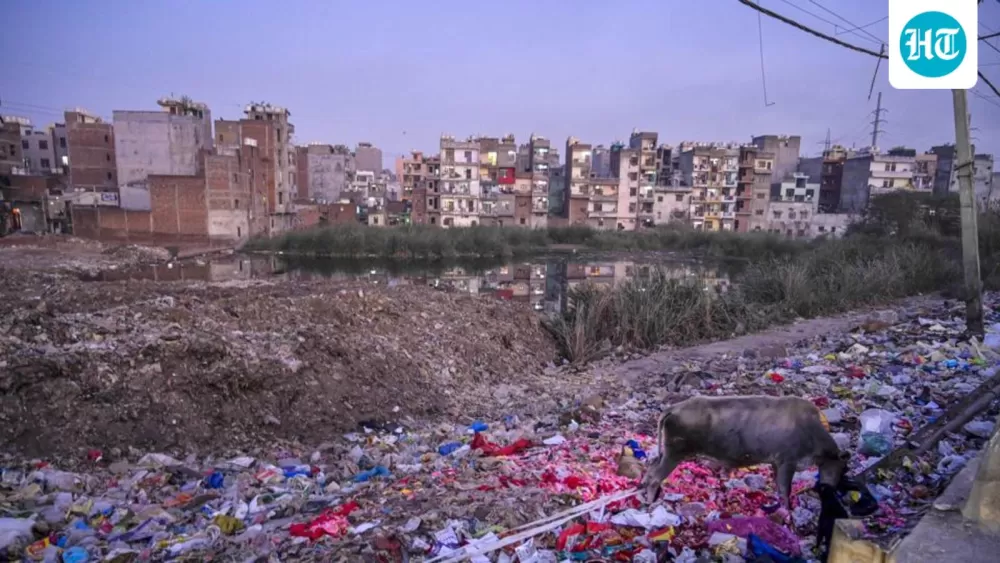
The Ghost of Jhatikra-Mitraon: Delhi's Agencies Play Blame Game Over Vanished Wetland
A vital wetland complex in Southwest Delhi, Jhatikra-Mitraon, has disappeared under layers of concrete and waste, leaving agencies like DDA, Forest Department, and I&FC locked in a frustrating cycle of blame, with accountability nowhere in sight.
There's a quiet tragedy unfolding in the bustling heart of Delhi, a tale of an ecosystem lost, replaced by concrete and neglect. Picture this: a vibrant wetland, teeming with life, once acting as a crucial lung for the city, simply… vanished. Yes, you heard that right. The Jhatikra-Mitraon wetland complex, a designated natural treasure in Southwest Delhi, is gone, swallowed up by illegal construction, relentless encroachment, and mountains of dumped waste. It’s a disappearance that beggars belief, and what’s even more disheartening is the frustrating blame game now playing out amongst the very agencies tasked with protecting such vital spaces.
Now, why should we care so deeply about a "wetland"? Well, these aren't just puddles; they're nature's superheroes. They recharge our groundwater, which is incredibly precious in a city like Delhi. They act as natural sponges, soaking up excess rainwater and preventing floods – a blessing during monsoon season, wouldn't you agree? And let's not forget their role as bustling habitats for countless bird species and diverse flora. Losing Jhatikra-Mitraon isn't just losing a patch of land; it's losing a critical part of Delhi's environmental resilience and its natural heritage, a fact that should trouble us all.
Today, if you were to visit the site, you'd be hard-pressed to find any trace of that natural beauty. Instead, what greets you are stark signs of human encroachment: structures rising where water once pooled, boundaries pushed far beyond their legal limits, and the unsightly mounds of debris and waste that often accompany unchecked urbanisation. It's a sad transformation, from a thriving natural area to what many might describe as an ecological wasteland, a stark testament to a profound failure of oversight.
And so, the finger-pointing begins. At the heart of this bureaucratic tangle is the Delhi Development Authority (DDA), an agency with a rather significant role in Delhi's land use and planning. Their stance, somewhat predictably, is that the land isn't even theirs. "Oh no," they seem to say, "that falls under the Forest Department's purview." They do admit to having cleared some encroachments back in 2017, but then, in a classic bureaucratic loop, suggest the problem just "reappeared." Furthermore, they claim to have transferred certain portions of the land to the Irrigation and Flood Control Department (I&FC). It's a bit like passing a hot potato, isn't it?
But hold on a minute, because the Forest Department isn't accepting that hot potato quite so readily. They vehemently deny ownership of the entire wetland complex. While they acknowledge receiving land from the DDA around 2013-14, they clarify that this transfer was specifically for a plantation in Mitraon, not the broad wetland area itself. In fact, they quickly pivot, pointing an accusing finger right back at the DDA, suggesting it was the DDA that permitted the initial constructions and allowed the situation to spiral. And just for good measure, they also throw some blame I&FC's way, arguing that their failure to maintain a crucial canal running through the area contributed significantly to the wetland's demise. It’s a tangled web, indeed.
Naturally, the Irrigation and Flood Control Department has its own version of events. Yes, they confirm, there's a drain or canal that they manage in the vicinity. However, they insist that the DDA never transferred any land specifically for the wetland to them – only the land directly related to the drain itself. Their mandate, they argue, is to maintain this particular channel, not to manage the sprawling wetland surrounding it. So, in essence, they’re saying, "We’re responsible for the pipeline, not the entire ecosystem it runs through." It’s a very precise, almost legalistic interpretation of responsibility, leaving the wetland’s fate hanging in the balance.
This isn't a new problem that sprung up overnight. The Jhatikra-Mitraon complex was actually identified as a wetland in a 2017 survey, clearly marking its importance. And let’s not forget that the Delhi High Court itself stepped in back in 2021, issuing orders for the protection of identified wetlands. Yet, here we are. Ecologists and environmental experts are understandably dismayed, stressing that such ecosystems are not only vital for groundwater and flood control but also irreplaceable bastions of biodiversity. Their loss, they warn, will have ripple effects across the city's already fragile environment. It's a stark reminder of what happens when environmental protection falls through the cracks of inter-agency squabbles.
The disappearance of the Jhatikra-Mitraon wetland is more than just an environmental setback; it’s a glaring symptom of a deeper systemic issue. When multiple government agencies, each with a slice of responsibility, can engage in an endless loop of blame, who truly stands accountable for such profound ecological destruction? This isn't just about a lost wetland; it’s about Delhi's future, its environmental health, and the urgent need for a cohesive, coordinated approach to protect its remaining natural heritage. One can only hope that concrete action, not just continued finger-pointing, will emerge before more of our precious natural spaces silently vanish.
Editorial note: Nishadil may use AI assistance for news drafting and formatting. Readers can report issues from this page, and material corrections are reviewed under our editorial standards.