Corporate Window: Beijing’s Strategic Gwadar Gamble
- Nishadil
- September 07, 2026
- 0 Comments
- 4 minutes read
- 18 Views
- Save
- Follow Topic

Why China keeps pouring money into a struggling port in Balochistan
A decade after CPEC was announced, Gwadar remains a ghost town. Yet Beijing persists, driven by geopolitics rather than profit.
When President Xi Jinping waved the flag for the China‑Pakistan Economic Corridor (CPEC) back in 2015, the tiny fishing hamlet of Gwadar suddenly glittered like a promise of riches. The plan was simple on paper – a highway, a rail line and a deep‑water port linking Kashgar in China’s Xinjiang region to the Arabian Sea. In theory, the project would have turned Pakistan’s poorest province into a bustling gateway for trade.
Reality, however, is a lot messier. More than ten years later, Gwadar looks oddly quiet. The massive concrete structures – the $168 million Eastbay Expressway, the $320 million new international airport – sit mostly unused. The streets are still lined with fishing boats, not container trucks. The grand vision that was once heralded as a "crown jewel" of CPEC has, for most locals, turned into a source of frustration.
The biggest snag isn’t a lack of engineering skill; it’s security. Since 2018 the outlawed Baloch Liberation Army (BLA) has repeatedly targeted Chinese workers and construction sites. The attacks of 31 January, when coordinated strikes rattled twelve districts of Balochistan, reminded Beijing that its presence is far from safe. Yet China keeps the lights on, funding roads, rail and an airport that, to the surprise of many, opened with a ribbon‑cutting ceremony in January 2025 but still sees hardly any flights.
Why the stubborn persistence? Aasim Sajjad Akhtar, a political‑economy professor in Islamabad, argues it’s a classic case of “sunk cost”. China has already sunk billions into the region, and retreat would mean admitting a strategic defeat. More importantly, the port is part of a larger maritime playbook – a network of overseas footholds that includes Sri Lanka’s Hambantota, Equatorial Guinea’s Bata and, of course, Gwadar. These sites act less as profit‑generating hubs and more as insurance policies, ensuring Beijing can keep shipping lanes open even when the U.S. or other powers try to choke them.
Gwadar’s location amplifies its allure. Sitting at the mouth of the Strait of Hormuz – the choke point through which roughly a fifth of the world’s oil flows – the port gives China a potential alternative route should the strait ever be closed. The recent flare‑up between the United States and Iran, which briefly threatened to shut the Hormuz passage, sparked a wave of optimism in Islamabad. Pakistani officials celebrated the arrival of two cargo vessels, the MV HOM Leader and MV Dolphin 103, hailing them as harbingers of a new trade boom.
But that optimism is fragile. The boost came not from organic growth but from a geopolitical crisis that could evaporate as quickly as it appeared. When the Gulf stabilises, the artificial advantage disappears, and Gwadar’s emptiness returns. Still, Beijing seems comfortable with that risk. As Peter Frankopan of Oxford notes, the port functions more like “geopolitical insurance” than a profit centre – a logistics, energy and naval hub built for long‑term resilience rather than immediate returns.
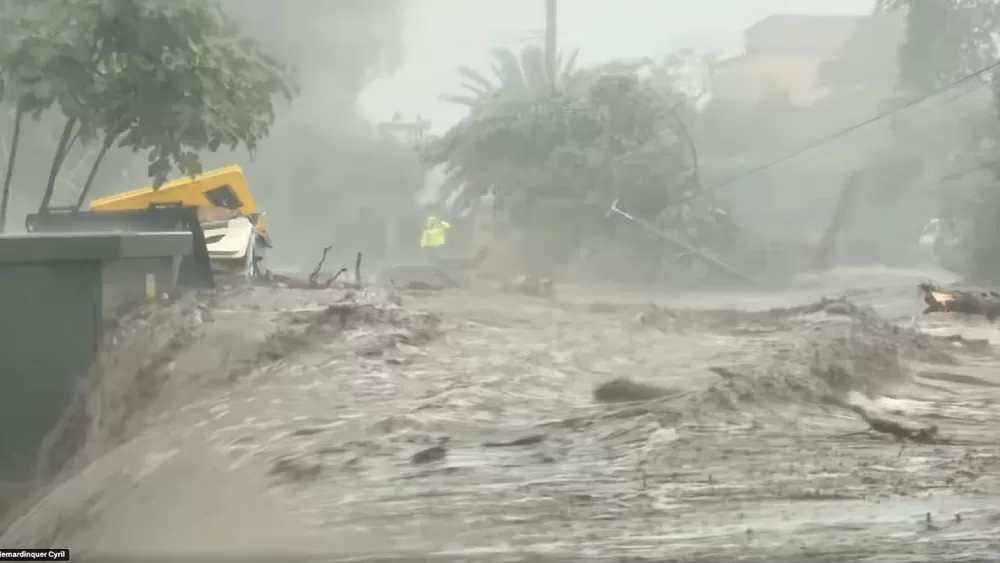
On the ground, the story feels even more personal. Thousands of Chinese engineers and laborers live in a fenced enclave, cut off from the surrounding Baloch communities. The Eastbay Expressway, for instance, slices through traditional fishing routes, leaving local fishermen angry and distrustful. Nasir Rahim Sohrabi, a social activist from Gwadar, summed it up bluntly: “If it rains, the whole town floods. The development is for the Chinese, not for us.” Those sentiments echo across the province, where many view the massive Chinese footprint as a form of neo‑colonialism.
So where does this leave Gwadar? In the short term, it remains a largely underused port, a showcase of concrete ambition without the commerce to match. In the longer view, it is a chess piece in Beijing’s grand game of securing sea lanes, protecting trade routes and, perhaps, projecting naval power into the Indian Ocean. The price Pakistan pays is a mix of stalled economic promise and an ever‑present security dilemma.
For now, the road ahead is anything but smooth. The next few years will test whether the Chinese‑built infrastructure can ever attract the traffic it was designed for, or whether it will remain an expensive monument to geopolitical ambition, waiting for the next crisis to make it relevant.
Editorial note: Nishadil may use AI assistance for news drafting and formatting. Readers can report issues from this page, and material corrections are reviewed under our editorial standards.