
China's Audacious Billion-Dollar Asteroid Hunt: A Glimpse into Our Cosmic Future
- Nishadil
- July 07, 2026
- 0 Comments
- 4 minutes read
- 33 Views
- Save
- Follow Topic
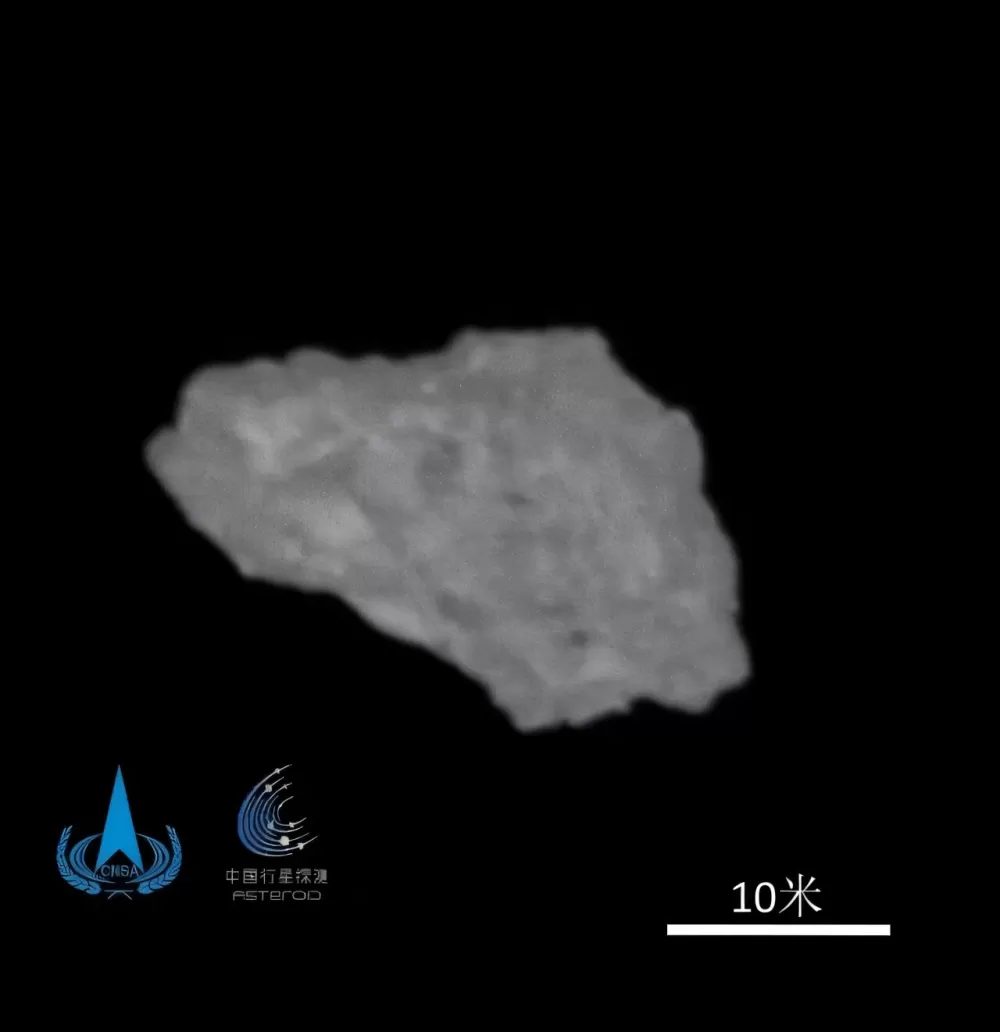
China Aims for Billions: ZhengHe Probe to Tackle Elusive Asteroid Kamo'oalewa in 2026
In a truly bold move for space exploration, China is gearing up to launch its ZhengHe probe in 2026, targeting the mysterious asteroid Kamo'oalewa. This mission isn't just about science; it's a high-stakes quest to potentially retrieve billions in precious metals from a cosmic wanderer.
There's something inherently thrilling about space exploration, isn't there? That primal urge to look up, to wonder what lies beyond, and then, remarkably, to actually go and find out. Well, prepare yourselves, because China is about to embark on a mission that feels straight out of a sci-fi novel, a truly audacious journey set for 2026. They're planning to send a space probe, aptly named ZhengHe after a famous Chinese explorer, on a daring quest to a tiny, elusive asteroid called Kamo'oalewa. And trust me, this isn't just any old rock – it's a cosmic jackpot, potentially worth billions.
Kamo'oalewa, for those unfamiliar, is quite the peculiar character in our solar neighborhood. It’s what scientists call a quasi-satellite, meaning it doesn't orbit Earth directly like our Moon, but rather, it dances around the sun in such a way that it appears to follow Earth. It’s a kind of celestial companion, if you will, staying relatively close to us for centuries at a time. Picture a tiny, speedy pebble – no bigger than a couple of city buses, maybe 40 to 50 meters across – constantly performing a cosmic ballet. It's truly fascinating, and quite frankly, a little humbling to think about.
Now, let's talk about why this particular rock has captured so much attention, especially from the engineers and scientists in China. The big draw? Its potential composition. Experts believe Kamo'oalewa could be incredibly rich in precious metals, the kind we prize here on Earth: platinum, rhodium, and other rare elements that command eye-watering prices on the global market. We're talking about a value that could easily stretch into the billions, a truly mind-boggling sum for a chunk of space debris. Imagine the implications, not just for scientific discovery, but for future resource acquisition! It's enough to make you pause and dream a little, isn't it?
Of course, reaching this cosmic treasure chest is no walk in the park. Kamo'oalewa is not only small but also spins rather rapidly, making it an incredibly challenging target for any spacecraft, let alone one tasked with collecting samples. This isn't just a fly-by; the ZhengHe probe aims to actually touch down, gather precious material, and then, in an unprecedented feat for a quasi-satellite, bring those samples safely back to Earth. The engineering prowess required for such a maneuver is simply astounding, a testament to human ingenuity and perseverance.
Beyond the potential financial windfall, there's immense scientific curiosity surrounding Kamo'oalewa. One leading theory, which is just captivating to consider, suggests this asteroid might actually be a fragment of Earth's own Moon, perhaps knocked off by an ancient impact. If that proves true, analyzing its composition could offer invaluable insights into the Moon's formation and the early history of our solar system. It’s a thrilling prospect, connecting our familiar lunar neighbor to this distant, tiny wanderer.
This mission, the ZhengHe project, is a clear indicator of China's rapidly accelerating ambitions in space. They've already made significant strides with their own space station, lunar explorations, and Mars missions, demonstrating a robust and growing capability. The Kamo'oalewa mission, while complex, positions China at the forefront of what many believe will be the next frontier of space exploration: asteroid mining and the utilization of off-world resources. It's not just about what we can learn; it's about what we might eventually use to build a future among the stars.
Ultimately, this isn't just a mission; it's a statement. It's a bold declaration of intent, pushing the boundaries of what's possible and hinting at a future where humanity might routinely venture out into the asteroid belt, not just for science, but for sustenance. As the ZhengHe probe prepares for its 2026 launch, we can only watch with bated breath, eager to see what incredible secrets this billion-dollar asteroid, Kamo'oalewa, is ready to reveal.
Editorial note: Nishadil may use AI assistance for news drafting and formatting. Readers can report issues from this page, and material corrections are reviewed under our editorial standards.


