Ceramic Electrolyzer Doubles Clean Hydrogen Output Without Extra Power
- Nishadil
- October 24, 2026
- 0 Comments
- 2 minutes read
- 5 Views
- Save
- Follow Topic
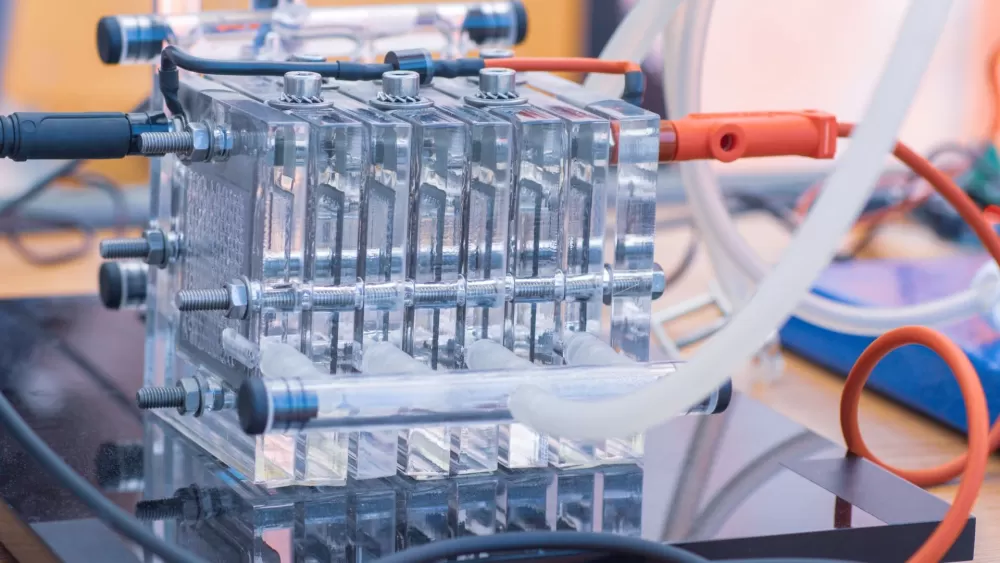
Scientists create a durable ceramic cell that harvests twice as much hydrogen from steam, using no additional electricity
Researchers at the University of Groningen have built a ceramic electrolyzer that splits steam into hydrogen at high temperature, delivering double the yield with stable performance over 500 hours.
What if we could pull twice as much clean hydrogen out of the same stream of steam, without plugging in another kilowatt of electricity? That’s exactly what a team of engineers at the University of Groningen think they’ve achieved.
Traditional electrolyzers churn through liquid water, blasting it with electricity to split the H₂O molecules. The process works, but it’s a power‑hungry beast – you have to heat the water first and then push a hefty current through it. The new approach swaps the liquid for steam and lets the heat that already exists in many heavy‑industry plants do the heavy lifting.
Enter the Protonic Ceramic Electrolyzer Cell, or PCEC. Operating somewhere between 400 °C and 650 °C, the cell uses a ceramic membrane that only lets tiny hydrogen ions (H⁺) slip through. Those ions recombine on the other side to form pure H₂ gas, neatly separated from oxygen and other by‑products. No extra purification steps needed – a big cost saver.
The real breakthrough, however, lay in the electrode design. Lead researcher Dr. Vassilis Kyriakou and his crew fashioned a self‑assembling electrode from a perovskite oxide matrix. When heated in air, the material magically sprouted praseodymium‑oxide nanoparticles across its surface, creating a forest of active sites. A quick acid wash bumped the catalyst density even higher.
Put together, the cell ran non‑stop for more than 500 hours, never losing its spark. It managed to convert over 95 % of the electrical current straight into hydrogen while delivering twice the production rate of earlier ceramic cells. In plain English, you get double the clean fuel for the same power input.
Why does this matter? Most industrial hydrogen today is ripped from natural gas, a process that belches out carbon dioxide. If factories can tap their own waste heat to power a PCEC, they could feed “Power‑to‑X” processes with genuinely green hydrogen, slashing fossil‑fuel dependence across sectors from fertilizer production to plastics manufacturing.
It’s still early days, but the results feel like stumbling onto a hidden shortcut in a familiar city – you’ve been driving the same route for years, then suddenly a faster, smoother road appears. As Dr. Kyriakou put it, the discovery was a rabbit‑hole‑turn‑into‑wonderland moment, and the promise of cleaner, cheaper hydrogen is the treasure at the end.
Editorial note: Nishadil may use AI assistance for news drafting and formatting. Readers can report issues from this page, and material corrections are reviewed under our editorial standards.