Breakthrough at Johns Hopkins APL: Fast‑Track Production of Hypersonic‑Ready Materials
- Nishadil
- September 07, 2026
- 0 Comments
- 3 minutes read
- 46 Views
- Save
- Follow Topic

FAST CAR2 could slash months‑long carbon‑carbon fabrication to days
Johns Hopkins Applied Physics Lab researchers have unveiled FAST CAR2, a new method that speeds up carbon‑carbon composite manufacturing, potentially cutting costs and opening the door to quicker hypersonic vehicle production.
When you hear the term “carbon‑carbon,” you might picture a super‑light, super‑strong material that can survive the blistering heat of re‑entry or a hypersonic dash across the sky. In reality, it’s carbon fibers baked inside a solid carbon matrix – think of carbon‑fiber‑reinforced plastic, but replace the resin with pure carbon. The result? A material that’s feather‑light, incredibly stiff, and almost magically tolerant of extreme temperatures.
That magical combo has landed it in rocket nozzles, missile nose cones, aircraft brakes and the heat shields of daring missions like NASA’s Parker Solar Probe. The catch? Making it is a painfully slow, labor‑intensive affair that can drag on for months.
Enter FAST CAR2, the brainchild of a team at Johns Hopkins Applied Physics Lab (APL). As Sal Nimer, assistant manager of APL’s Science of Extreme and Multifunctional Materials program, puts it, “That speed is what makes FAST CAR2 so compelling.” The new technique replaces the traditional, incremental carbon‑filling steps with a single, rapid squeeze‑and‑heat cycle.
Traditionally, you start with a porous lattice of carbon fibers and then try to coax carbon into every microscopic gap. Two main routes exist: force a carbon‑rich gas through the structure over and over, or soak the lattice in a carbon‑laden resin and then pyrolyze it. Both require repeated passes because a single run never fills everything perfectly.
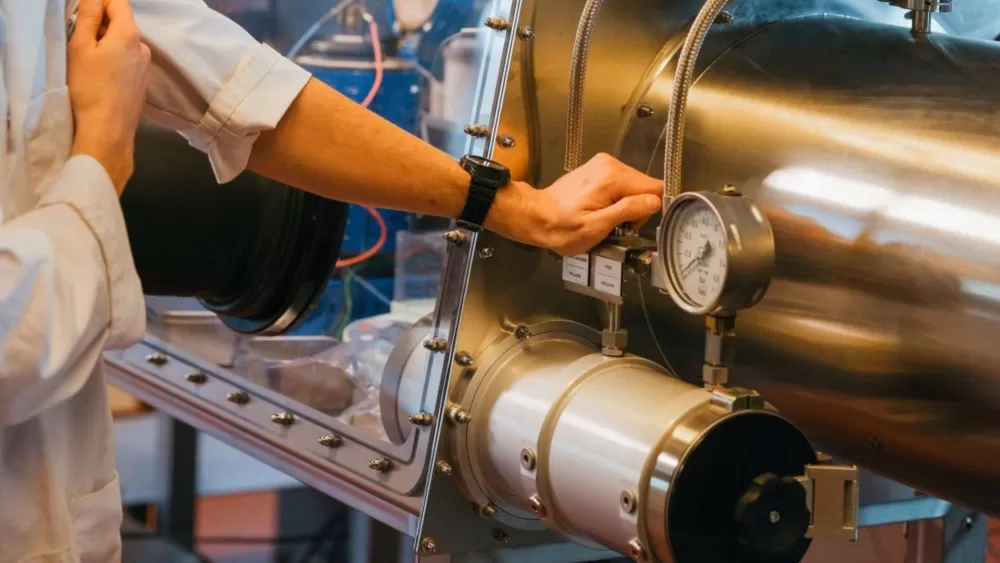
FAST CAR2 flips the script. The researchers dump a carbon‑bearing powder straight into the pre‑form, then apply a massive electric current while simultaneously pressing the whole thing. The current generates intense, almost instantaneous heating, while the press squeezes the particles together. In minutes, the carbon matrix densifies, producing a solid composite that would have taken weeks or months using older methods.
William Fahy, an APL materials engineer who co‑led the project, emphasizes the impact: “Carbon‑carbon is one of the most important materials for thermal protection systems. Making it faster, cheaper, and more reliable could reshape everything from hypersonic missiles to reusable launch vehicles.”
Right now, the complete workflow – from cutting the fiber pre‑form to the final heat‑treatment – still spans a few days, but that’s a monumental leap from the months‑long timelines that have held the industry back. The team is already eyeing larger presses that could handle bigger parts, which would open doors to full‑scale rocket nozzles and hypersonic vehicle skins.
“Scaling is always the hard part,” Fahy admits, “but seeing how quickly this all came together makes us optimistic about where it can go.” If the technology lives up to its promise, we could soon see hypersonic shields and rocket components rolling off production lines at a pace that matches the speed of the vehicles they protect.
In short, FAST CAR2 isn’t just a new manufacturing trick; it’s a potential game‑changer for any high‑performance aerospace application that relies on carbon‑carbon’s unique blend of lightness, strength, and heat resistance.
Editorial note: Nishadil may use AI assistance for news drafting and formatting. Readers can report issues from this page, and material corrections are reviewed under our editorial standards.