Apple’s ‘Reference Image’ Takes on AI‑Manipulated Photos
- Nishadil
- September 17, 2026
- 0 Comments
- 6 minutes read
- 6 Views
- Save
- Follow Topic

Inside Apple’s Mammoth Effort to Prove a Photo Is Exactly What the Sensor Captured
Apple unveils a new ‘Reference Image’ system with the iPhone 18 Pro, a cryptographically‑signed digital negative designed to prove photos haven’t been tampered with by AI.
When you snap a picture on the latest iPhone 18 Pro, you might assume the file that lands in your library is exactly what the camera saw. That assumption is becoming risky, though—AI tools can now rewrite a photo so convincingly that even experts have a hard time spotting the difference. Apple’s answer? A heavyweight called Apple Reference Image, essentially a tamper‑proof digital negative that travels with the picture, proving it’s untouched.
The idea was first teased alongside the iPhone 18 Pro launch, and a day later Apple’s Security Research team released a deep‑dive blog post. The post is dense—full of cryptographic jargon and hardware details—but the takeaway is simple: Apple wants a chain of trust that starts at the sensor and ends up in a private cloud, with no single point where a bad actor could slip in a fake.
Why does this matter? In recent months the line between a genuine photo and an AI‑generated composite has blurred dramatically. Photorealism alone can no longer guarantee authenticity. And because modern cameras already apply sophisticated processing before you ever see the raw file, proving a picture’s integrity is trickier than just signing the raw sensor data.
Existing provenance standards, like the Coalition for Content Provenance and Authenticity (C2PA), tack on metadata after the image is captured. Apple argues that this after‑the‑fact approach leaves a window where the file can be altered before the provenance tag is attached. Moreover, C2PA links the image to a public identity, which could expose journalists, activists, or anyone in a precarious situation.
Apple’s solution weaves security into every step of the imaging pipeline. First, there’s the concept of “semantic authenticity”: the reference image must be a true representation of what the sensor recorded, and any transformation must be publicly verifiable. To achieve that, Apple bypasses the usual post‑capture processing and signs the pixel data the instant the shutter clicks, while the sensor firmware is locked down from making any further changes.
That signing isn’t done by the main processor alone. The Secure Enclave—Apple’s dedicated cryptographic co‑processor—adds its own signature to metadata that lives beyond the sensor, such as digital zoom levels. Together, these signatures create a cryptographic fingerprint that ties the photo to a specific piece of hardware.
But Apple doesn’t stop at the device. Once the signed raw data leaves the phone, it’s handed off to Private Cloud Compute (PCC). In the cloud, the image undergoes demosaicing, tone‑mapping, and compression—the same steps the phone would normally perform—but in a way that can be audited. The cloud builds that do this work are logged in an append‑only, tamper‑proof transparency log, so anyone can later verify that the “negative” wasn’t altered during development.
Resilience is another pillar of the system. Apple acknowledges that attackers could try to tamper with the sensor itself, jailbreak the phone, or launch sophisticated cryptographic assaults. To counter that, each sensor gets a unique signing identity at the factory, and the Secure Enclave creates a matching identity. When a photo is later verified, the system checks that the two identities still belong to the same device—a sort of hardware‑level handshake.
On the cryptographic front, Apple is looking ahead to a future where quantum computers might break today’s algorithms. The final signature on a Reference Image is a hybrid, post‑quantum combo of RSA‑3072 and ML‑DSA‑87, aiming to stay secure even if quantum attacks become a reality.
And because no system is infallible, Apple built in a revocation mechanism. If a sensor’s confidence score drops—say the hardware is compromised—the cloud simply refuses to sign any new images from that chip. Existing signed images can also be revoked, preventing them from being presented as trustworthy later on.
Privacy, surprisingly, is not an afterthought; it’s baked in. Traditional provenance schemes often require a photographer or organization to attach a known identity to an image, which can be dangerous for people in repressive regimes. Apple’s model lets the image be verified without ever revealing who took it. The signing service works without retaining the image data, and the cloud never sees the unencrypted photo—mirroring how Apple handles other personal data like Siri requests.
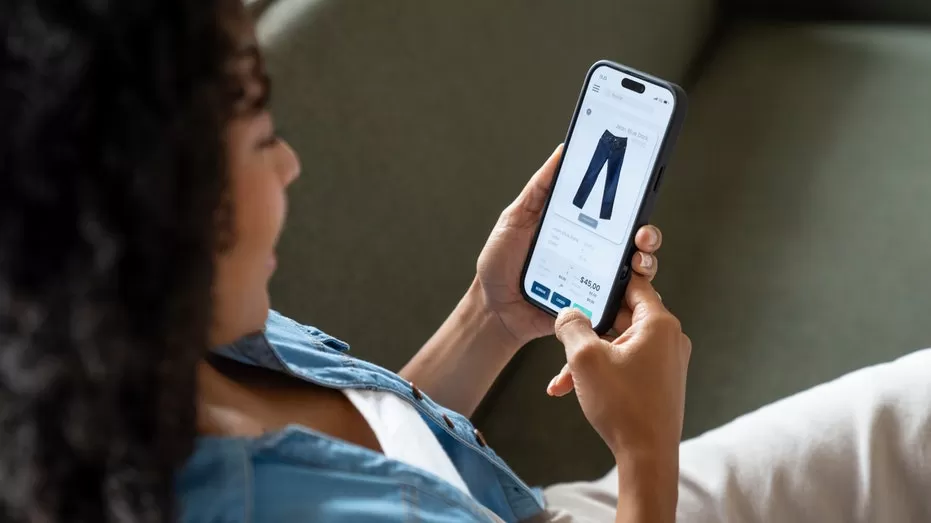
In practice, a user will see a small “Reference Image” thumbnail next to the regular photo in the Photos app. Tapping it brings up a verification screen that confirms the picture’s authenticity, shows a confidence score, and indicates whether the image has ever been revoked. It’s a subtle UI addition, but it carries a massive amount of under‑the‑hood work.
All of this is part of Apple’s broader push to fight misinformation and protect creators. By giving photos a built‑in, hardware‑rooted proof of origin, Apple hopes to restore a bit of faith in visual media—a faith that’s been eroded by deep‑fakes and AI‑enhanced editing.
Whether the industry will adopt a similar approach remains to be seen, but Apple’s effort is undeniably ambitious. It’s a reminder that as AI grows more powerful, the tools we use to verify truth must evolve just as quickly.
Editorial note: Nishadil may use AI assistance for news drafting and formatting. Readers can report issues from this page, and material corrections are reviewed under our editorial standards.