America's Brain Drain: Scientists Flee U.S. Amid Funding Cuts and Political Interference
- Nishadil
- October 20, 2026
- 0 Comments
- 5 minutes read
- 12 Views
- Save
- Follow Topic
A Growing Exodus: Why Top Researchers Are Leaving the U.S. for Greener Pastures Abroad
The United States is experiencing a significant exodus of top scientific talent, driven by severe funding cuts and the increasing politicization of research under the Trump administration. Researchers are seeking more stable and supportive environments in countries like Finland, the UK, Australia, and China, raising serious concerns about America's future innovation and global scientific leadership.
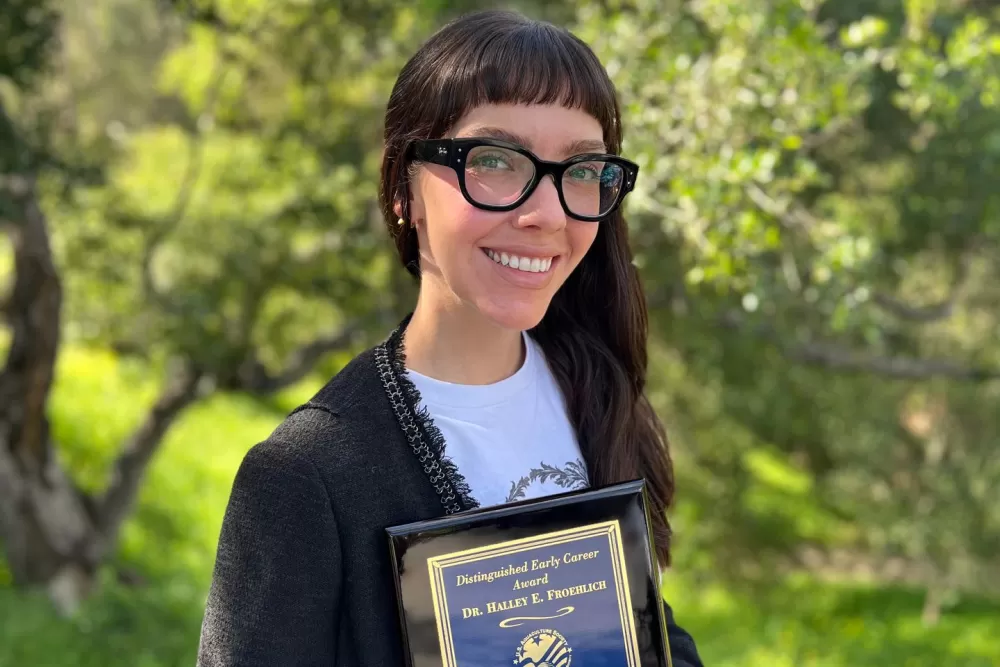
Halley Froehlich now wakes up to the quiet hum of Helsinki, the Baltic Sea shimmering outside her apartment window. It’s a far cry from the bustling labs she once knew in the U.S., where she researched how fish, shellfish, and seaweed respond to our changing climate. For Halley, a gifted scientist, the decision to leave wasn't made lightly. After two years of frustratingly delayed federal grants and a growing fear about the future of scientific inquiry back home, she packed her bags. Finland, recognizing her talent, offered her a research position at the University of Helsinki. And honestly, who can blame her for taking it?
This isn't just one isolated incident, a solitary brain drain. Halley's story is, sadly, becoming a common refrain among the scientific community. A quiet exodus is underway, with talented researchers increasingly abandoning the United States. They’re seeking refuge in countries like Canada, France, Belgium, and Finland, all of which are actively touting new recruits from American institutions. The reason? A cocktail of significant funding cuts and the unsettling politicization of science, policies that really started to ramp up during the Trump administration's tenure.
While putting an exact number on this national shift is tricky, there's a palpable sense among scientists and professional organizations that something unprecedented, and deeply concerning, is happening. Tobin Smith, who heads government relations for the Association of American Universities, put it pretty bluntly: "You can almost talk to any vice president for research at a university and they will tell you of one or two top faculty that they've lost." It's not just a trickle; it's a steady stream, affecting the very core of our academic institutions.
Consider Christine Stawitz, for instance. She left the U.S. National Oceanic and Atmospheric Administration (NOAA) to become a research software engineer at the University of Birmingham in England. Or the dynamic duo, biologists James Letts and Maria Maldonado – originally from Canada and Argentina, respectively – who earned their doctorates in New York and worked at the University of California, Davis. They've since moved their groundbreaking work to Monash University in Australia. And perhaps the most telling departure? Omar Yaghi, a brilliant chemist and 2025 Nobel Prize winner, who, just this year, left his prestigious post at the University of California, Berkeley, to direct an artificial intelligence lab at China's Tsinghua University. These aren't minor players; these are scientific heavyweights.
The data, frankly, paints a stark picture. Since the Trump administration's second term began, an astonishing sum of up to $174 billion in federal grants has been either cut or frozen. This kind of financial uncertainty casts a long shadow over research projects, making it incredibly difficult for scientists to plan for the long term. A report from the Business for Federal Research Funding Coalition in April highlighted this perfectly.
It's hitting new talent hard, too. Last March, for example, early-career biomedical scientists were a staggering 20 percentage points less likely to stay in the U.S. compared to previous years. And get this: 2025 saw physics Ph.D. graduates leaving the U.S. at the highest rate in three decades, according to the American Institute of Physics. Even the pipeline itself is shrinking; major research institutions accepted a noticeable 15% fewer applicants for doctoral programs this fall compared to last year. That’s a huge drop, and it really makes you wonder about the future.
When asked, White House spokesperson Liz Huston tried to spin it, stating the administration remains "committed to upholding scientific integrity." She pointed to some specific initiatives and the fact that "overall federal funding for research and development remains strong." But for many on the ground, those words ring hollow, especially with the persistent fear that scientific decisions are being swayed by political agendas rather than pure data.
And there's another major concern on the horizon: a proposed rule from the Office of Management and Budget (OMB). This rule, currently delayed by Congress until a final decision is made this December, could potentially grant political appointees far more control over how federal funding is distributed. Imagine a world where scientific merit takes a backseat to political favor – it's a chilling thought for anyone dedicated to objective research.
Yes, the U.S. is still a scientific powerhouse, no doubt about it. Even if other countries open their doors wide, they likely can't absorb every single American scientist looking to leave. But make no mistake, the current erosion of talent and trust is deeply problematic. The effects might not be fully apparent tomorrow or next year, but experts warn it could take a decade or even longer for the U.S. scientific enterprise to truly feel the profound and lasting impact of these decisions. It's a situation that demands our serious attention.
Editorial note: Nishadil may use AI assistance for news drafting and formatting. Readers can report issues from this page, and material corrections are reviewed under our editorial standards.