
Alabama’s Unusual Casino Deal: A Riverboat That Doubles as a Marine Conservation Reef
- Nishadil
- July 06, 2026
- 0 Comments
- 3 minutes read
- 29 Views
- Save
- Follow Topic
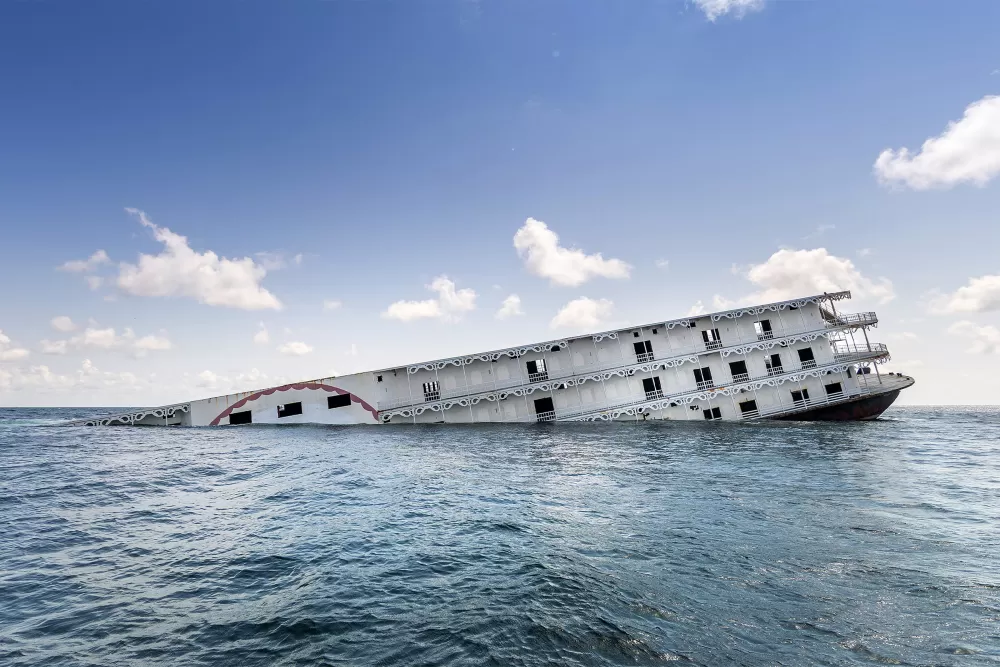
Gov. Kay Ivey backs a river‑boat casino that will also serve as an artificial reef, sparking debate over economics and ecology.
In a surprising blend of gambling and environmental stewardship, Alabama’s government approved a river‑boat casino designed to act as an artificial reef. The move aims to boost tourism while protecting marine life, but critics question whether the plan truly balances profit and preservation.
When you think of a casino, you probably picture neon lights, ringing slot machines and the occasional martini‑sipping high roller. Alabama, however, is trying to add a splash of marine science to that picture. Earlier this month, Governor Kay Ivey signed legislation that gives the green light to a river‑boat casino on the Mobile River—but with a twist: the vessel’s hull will be fitted with a network of concrete modules that are intended to function as an artificial reef.
It sounds like a win‑win on paper. The casino operator, Gulf Coast Gaming, argues that the reef structures will attract fish, crustaceans and even sea turtles, thereby bolstering local fisheries and biodiversity. At the same time, the casino is projected to generate up to $200 million in annual tax revenue, a figure that policymakers hope will help fund road repairs, schools, and other public projects.
Of course, the idea hasn’t won universal applause. Environmental groups are skeptical, pointing out that artificial reefs can sometimes become ecological traps—places where marine life gathers only to be more vulnerable to predators or pollution. "We’re not convinced that tossing concrete into the river is a silver bullet for conservation," said Dr. Maya Ortiz, a marine biologist at the University of Alabama‑Birmingham. "It needs careful monitoring, and there are better ways to protect habitats than relying on a casino’s goodwill."
Supporters counter that the project includes a rigorous monitoring plan, overseen by the Alabama Department of Conservation and Natural Resources. Sensors will track water quality, fish population changes, and the structural integrity of the reef modules. If anything goes awry, the plan calls for immediate removal or remediation—a safety net that, according to officials, should allay most concerns.
Financially, the casino promises to create roughly 1,200 jobs during construction and another 500 permanent positions once it opens. Local chambers of commerce are already chanting about the potential spillover effects: new hotels, restaurants, and retail stores, all hoping to capture the foot traffic that a glittering river‑boat might draw.
Yet, the timing raises eyebrows. Alabama’s budget has been tight, and some legislators argue that the state should prioritize education and healthcare over gambling‑driven revenue. "We need to ask ourselves whether a casino is the best path forward for our communities," warned State Senator Lisa Howard, who voted against the bill.
In the end, the project sits at the intersection of two very different worlds—entertainment and ecology. Whether the artificial reef will truly become a thriving underwater habitat or end up as a gimmick attached to a neon‑lit ship remains to be seen. What is clear, however, is that Alabama is willing to experiment, blending a little bit of fun with a dash of science in the hopes of striking a balance that benefits both people and the planet.
Editorial note: Nishadil may use AI assistance for news drafting and formatting. Readers can report issues from this page, and material corrections are reviewed under our editorial standards.









