
A World Weaponized: S. Jaishankar's Stark Warning on Global Dynamics
- Nishadil
- April 05, 2026
- 0 Comments
- 3 minutes read
- 32 Views
- Save
- Follow Topic
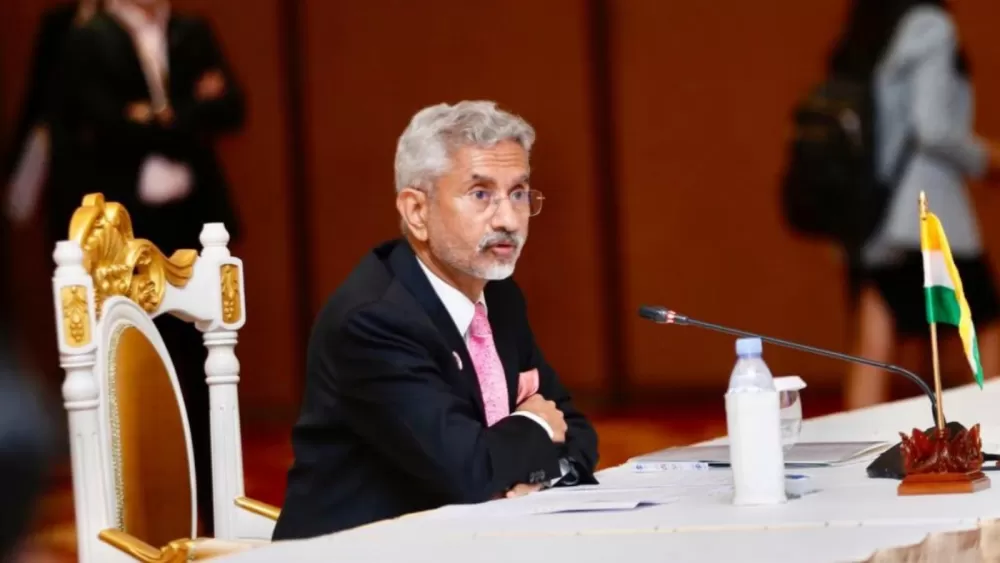
EAM Jaishankar Highlights a World Where Everything, Even Trade, is a Strategic Tool
External Affairs Minister S. Jaishankar recently articulated a compelling and somewhat disquieting vision of the global landscape, where the lines between diplomacy, economy, and conflict are increasingly blurred, and seemingly benign elements are now strategic tools.
Have you ever paused to consider just how interconnected, and perhaps, how tense our world has truly become? This was the very sentiment echoing from External Affairs Minister S. Jaishankar recently, as he spoke at the launch of a new book. His central argument? That in today's global theatre, nearly "everything is being leveraged, if not actually weaponised." It’s a notion that truly makes you think, isn't it?
Jaishankar wasn't just speaking in abstract terms; he painted a vivid picture of how tourism, cross-border connectivity, even the very data we generate daily, are now instruments of strategic influence. Think about it: trade agreements, once purely economic, can quickly become bargaining chips. Even something as vital as vaccine distribution during a global pandemic has, regrettably, shown tendencies towards "vaccine nationalism." It's a stark reminder that almost every interaction, every commodity, every piece of information, now carries a strategic weight, ready to be exploited.
But Jaishankar's insights didn't stop there. Speaking at the launch of "The Art of Strategic Patience: India and China" by former diplomat Vijay Gokhale, he touched upon the delicate balance of strategic patience. He acknowledged its historical wisdom, a quality often lauded in diplomacy. Yet, he posed a crucial question: In an era where every interaction feels like a chess move, where boundaries are constantly tested and aggression lurks beneath the surface, can we afford to be just patient? It's a challenge to traditional diplomatic thinking, urging a re-evaluation of how nations navigate prolonged, complex rivalries, especially in the context of the India-China dynamic that Gokhale's book so meticulously explores.
Indeed, gone are the days, it seems, of clear-cut distinctions between peace and war. We're operating in a perpetual "grey zone," a twilight world where economic pressures, technological dominance, and information battles are the new fronts. This isn't just theory; it’s the palpable reality of international relations today. Everything from intellectual property rights to the control of critical supply chains is becoming fair game in a constant, often undeclared, strategic contest.
It certainly paints a challenging landscape for any diplomat, wouldn't you agree? For India, a nation navigating its complex neighbourhood and a rising global stature, these observations from its External Affairs Minister serve as a potent reminder. The country must remain acutely vigilant, agile, and strategically savvy to protect its interests in this constantly shifting, often weaponized, global arena. It's a call for sharper foresight and adaptable statecraft.
Ultimately, Jaishankar’s words compel us to look beyond conventional understanding and recognize the hidden leverage in every aspect of our interconnected world. It's a stark, almost disquieting, reminder that the chessboard of global power has grown infinitely more intricate, demanding a new level of awareness and strategic dexterity from all players.
- India
- News
- UsNews
- Top
- TopNews
- IsraelNews
- InternationalRelations
- EnergyCrisis
- IndiaChinaRelations
- SJaishankar
- WarNews
- EconomicLeverage
- GlobalStrategy
- StrategicPatience
- IndianForeignPolicy
- GreyZoneWarfare
- IranConflict
- Usisrael
- UsIranWar
- IranWar
- IranUsNews
- WestAsiaConflict
- IranAndIsrael
- UsIranNews
- IranUsWar
- WestAsiaWar
- AttackOnIran
- IranUS
- UsIsraelWar
- IsraelIran
- IranWarNews
- IsraelUsIranWar
- UsWar
- WarOnIran
- IsraelIranNews
- IranAttackIsrael
- UsIsraelIran
- UsToAttackIran
- IranAttackOnUs
- UsAndIran
- IranAttackNews
- WarInIranAndIsrael
- IsraelWarNews
- DidIranAttackUs
- UsAndIsraelAttackIran
- IranIsraelWarToday
- IsraelUsAttackIran
- KhameneiNews
- IranAttackToday
- UsAndIsrael
- IsraelIranWarNews
- UsAttackIranToday
- IranAndIsraelWar
- WarInIran
- UsAttackInIran
- WeaponizedEconomy
- DiplomacyChallenges
Editorial note: Nishadil may use AI assistance for news drafting and formatting. Readers can report issues from this page, and material corrections are reviewed under our editorial standards.


