
A Pontiff's Unflinching Stance: Pope Leo Declares No Fear of Trump Amidst Iran War Tensions
- Nishadil
- April 14, 2026
- 0 Comments
- 3 minutes read
- 33 Views
- Save
- Follow Topic
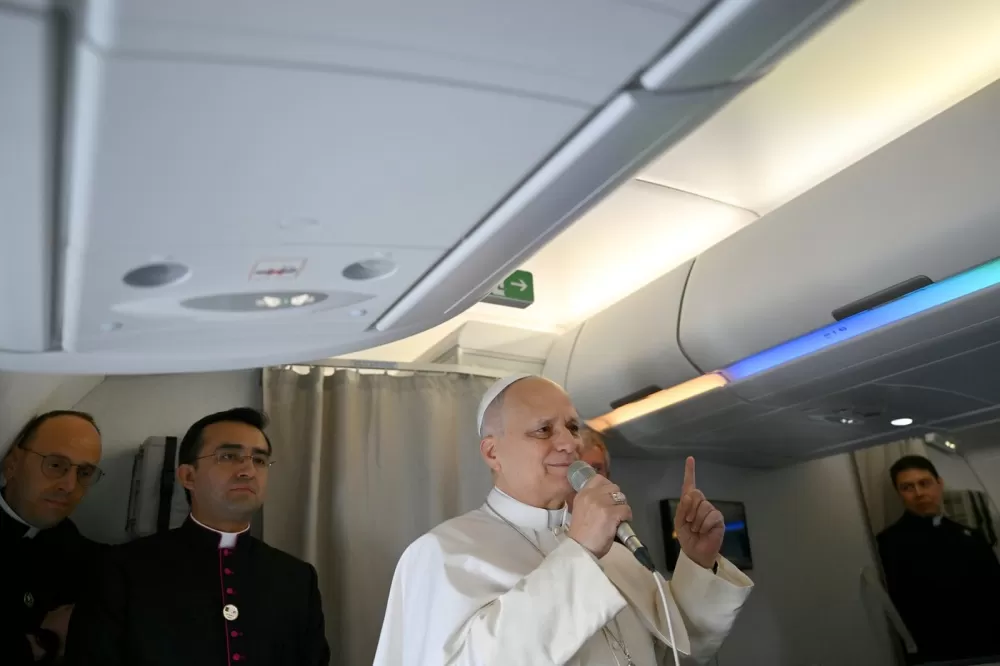
The Gospel vs. Geopolitics: Pope Leo's Bold Challenge to Trump on War
In a surprising move that reverberated globally, Pope Leo recently stated he does not fear former President Trump, firmly pushing back against bellicose rhetoric surrounding the Iran conflict. Citing the enduring wisdom of the Gospel, the Pontiff championed peace and dialogue over the looming specter of war. It's a striking clash of moral authority against political power.
Well, here’s a story you don't hear every day, is it? We've got Pope Leo, the venerable head of the Catholic Church, stepping into the geopolitical ring with a rather direct message for none other than former President Trump. And really, it’s quite the statement: Pope Leo has declared, quite unequivocally, that he simply does not fear Trump. It’s a bold stance, especially when you consider the weighty context of a simmering feud over the very real possibility of war with Iran.
It seems the Pontiff isn’t one to shy away from uncomfortable truths or challenging powerful figures. His response, we’re told, is rooted deeply in the Gospel – a foundation that, for him, transcends mere political posturing. When tensions run high, and the drums of war begin to beat a little louder, it’s often religious leaders who are called upon to offer a different path, a moral compass if you will. And Pope Leo, bless his heart, appears to be doing just that, pushing back against what many perceive as a hawkish stance emanating from certain political corners.
One might wonder, what exactly prompted such a candid declaration? While the specifics of the ‘feud’ aren’t always laid bare for all to see, it’s clear the Pope's comments come amidst a backdrop of considerable friction surrounding the Iran nuclear deal and broader US foreign policy towards the Middle East. Trump’s administration, during its tenure, certainly wasn't shy about its robust approach to international relations, and let’s be honest, that often put it at odds with the more conciliatory, dialogue-focused stance championed by the Vatican.
So, when Pope Leo says he doesn't fear Trump, it’s not just a personal sentiment; it's a profound statement of principle. He’s essentially affirming that the spiritual message of peace, forgiveness, and diplomatic engagement, as taught in the Gospels, holds a higher authority. It's a reminder that even in the face of immense political and military power, there's another kind of power – a moral one – that insists on a different way forward. No doubt, his words are meant to resonate with people of faith, and indeed, anyone concerned about the human cost of conflict.
This isn't just some casual observation from the Pope; it’s a deliberate pushback. He’s advocating, quite passionately, for dialogue and negotiation over confrontation, for humanitarian concerns over strategic interests. It's a classic example of the spiritual realm asserting its voice in temporal affairs, urging caution and compassion when the world seems to be teetering on the brink. And frankly, that's a message many are eager to hear, particularly when the alternative feels so heavy and fraught with peril.
Ultimately, Pope Leo's words serve as a powerful testament to the enduring message of peace that lies at the heart of Christian teaching. He’s not playing a political game here; he’s upholding what he believes to be fundamental truths. And in doing so, he reminds us all that even when faced with formidable earthly power, there’s always room – and indeed, a profound necessity – for a voice that champions humanity’s better angels, guiding us away from the brink of war and towards a future built on understanding, not fear.
Editorial note: Nishadil may use AI assistance for news drafting and formatting. Readers can report issues from this page, and material corrections are reviewed under our editorial standards.












