A Dangerous Precedent? The Karur Stampede Probe and India's Federal Fault Lines
- Nishadil
- December 03, 2025
- 0 Comments
- 3 minutes read
- 47 Views
- Save
- Follow Topic

Tamil Nadu vs. CBI: The Supreme Court's Decision Sparks a Federalism Debate
The tragic Karur stampede has inadvertently ignited a crucial constitutional debate, as Tamil Nadu contests the Supreme Court's decision to transfer the probe to the CBI, citing concerns over state autonomy and a 'dangerous precedent' for India's federal structure.
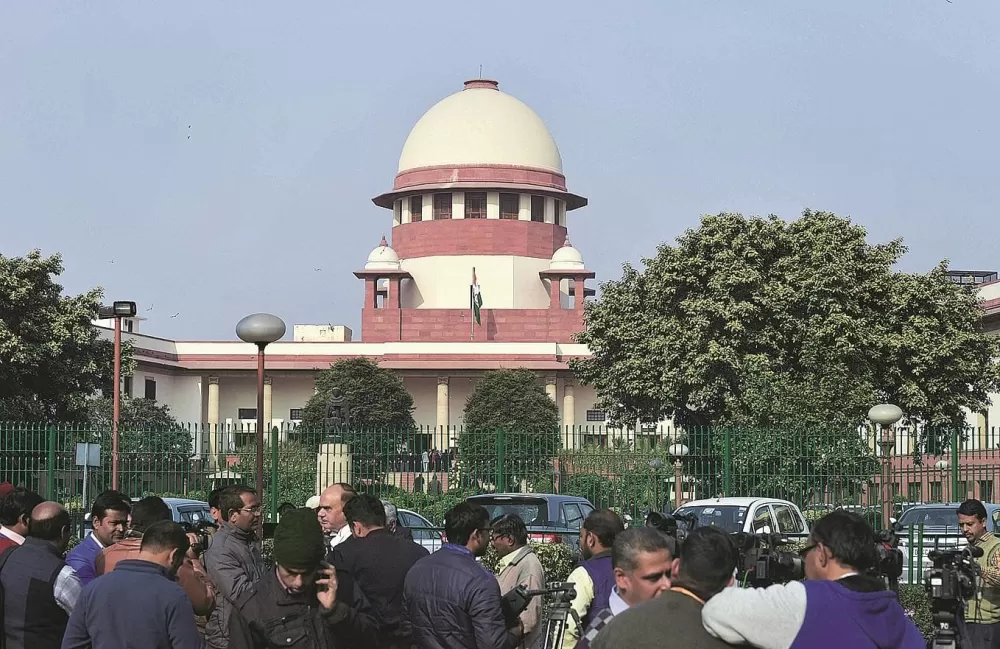
The echoes of tragedy often reverberate far beyond the initial heartbreaking event, sometimes sparking entirely new, complex debates. Such is the case with the devastating stampede that occurred in Karur, Tamil Nadu, a truly sorrowful incident where lives were lost during a public distribution event. While the quest for justice and accountability for the victims is paramount, a recent development has inadvertently pushed this human tragedy into the heart of a significant constitutional discussion: the Supreme Court's decision to shift the investigation to the Central Bureau of Investigation (CBI).
Now, you might think, isn't it good to have a thorough investigation? And yes, absolutely. But the Tamil Nadu government, through its fervent objections before the highest court, has raised some profoundly critical questions. Their stance isn't just about this specific case, mind you; it's a deep-seated concern about federal principles and the delicate balance of power that defines India as a Union of States. In essence, they argue that moving the probe to the CBI, especially when state police were already actively engaged and a judicial commission had been appointed, sets a rather 'dangerous precedent.'
It really makes you wonder, doesn't it? If the Supreme Court can routinely transfer investigations to a central agency, even in cases where the state machinery is functioning, what does that imply for state autonomy? India, after all, prides itself on its federal structure, where states have considerable powers, including law and order. The Tamil Nadu government's submission underscores a fundamental point: such transfers should ideally be reserved for only the most exceptional circumstances, where state agencies are demonstrably unable or unwilling to conduct a fair probe. Otherwise, it risks becoming a backdoor for central agencies to encroach upon state jurisdictions.
This isn't just a squabble over jurisdiction; it touches upon the very foundational principles of our nation. When states feel their investigative powers are being undermined, it inevitably leads to questions about the erosion of federalism. It suggests a potential slippery slope where central agencies, rather than complementing state efforts in complex inter-state or national security cases, might start to supplant them in more localized matters. The state's plea to the Supreme Court essentially highlighted that local police are, by design, closer to the ground, understand local nuances, and are equipped to handle such investigations efficiently.
One can't help but feel the weight of this debate. On one side, there's the imperative to deliver justice swiftly and unequivocally for those affected by the Karur tragedy. On the other, there's the equally vital need to uphold the constitutional framework and ensure that the delicate dance between central and state powers remains harmonious. Tamil Nadu's resistance isn't necessarily about obstructing justice; rather, it appears to be a spirited defense of a principle they believe is essential for the healthy functioning of a diverse, federal nation.
Ultimately, the Supreme Court's eventual decision will undoubtedly have ramifications far beyond the Karur stampede case itself. It will likely redefine the parameters for CBI involvement in state matters, influencing how future tragic incidents are investigated and, perhaps more significantly, shaping the evolving dynamics of federalism in India. It's a tightrope walk, to be sure, balancing justice with constitutional propriety, and one that demands careful consideration from all involved.
Editorial note: Nishadil may use AI assistance for news drafting and formatting. Readers can report issues from this page, and material corrections are reviewed under our editorial standards.